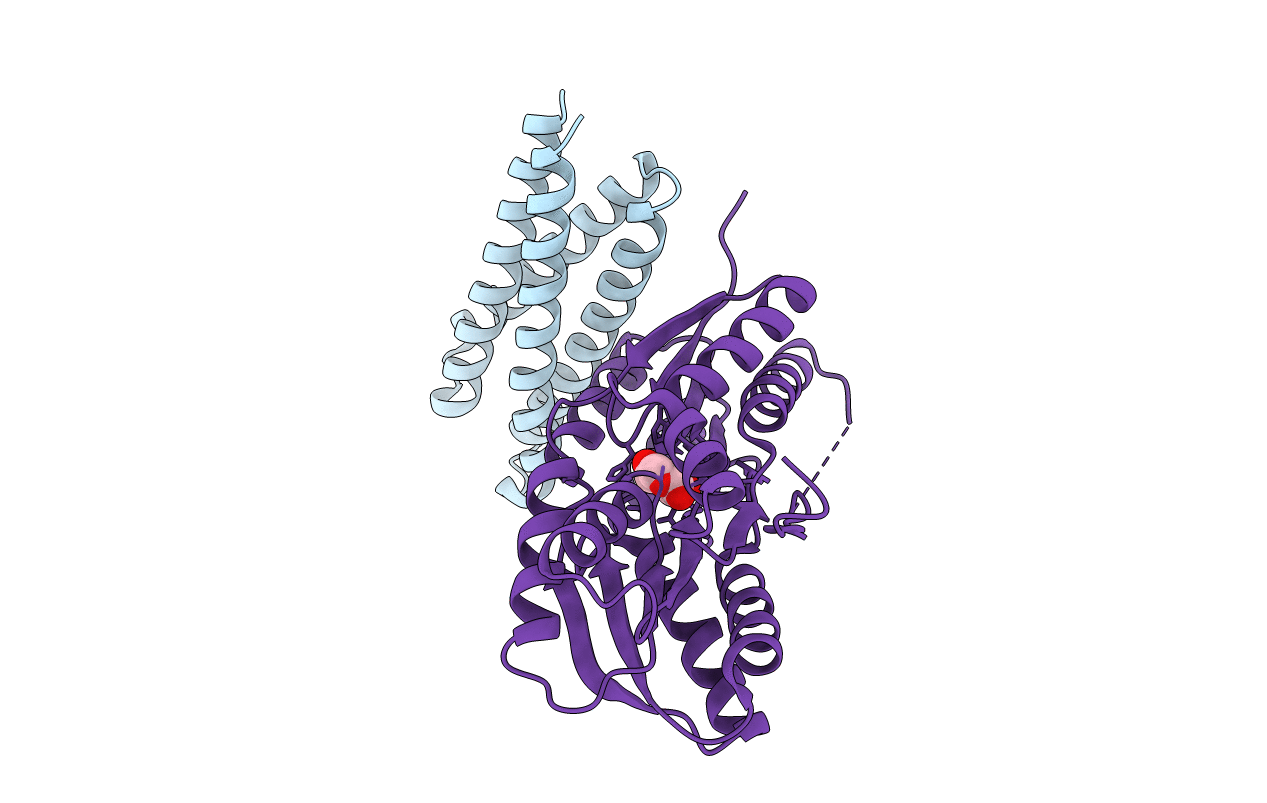
5XSJ image
Deposition Date 2017-06-14
Release Date 2017-08-02
Last Version Date 2024-05-29
Entry Detail
PDB ID:
5XSJ
Title:
XylFII-LytSN complex
Biological Source:
Method Details:
Experimental Method:
Resolution:
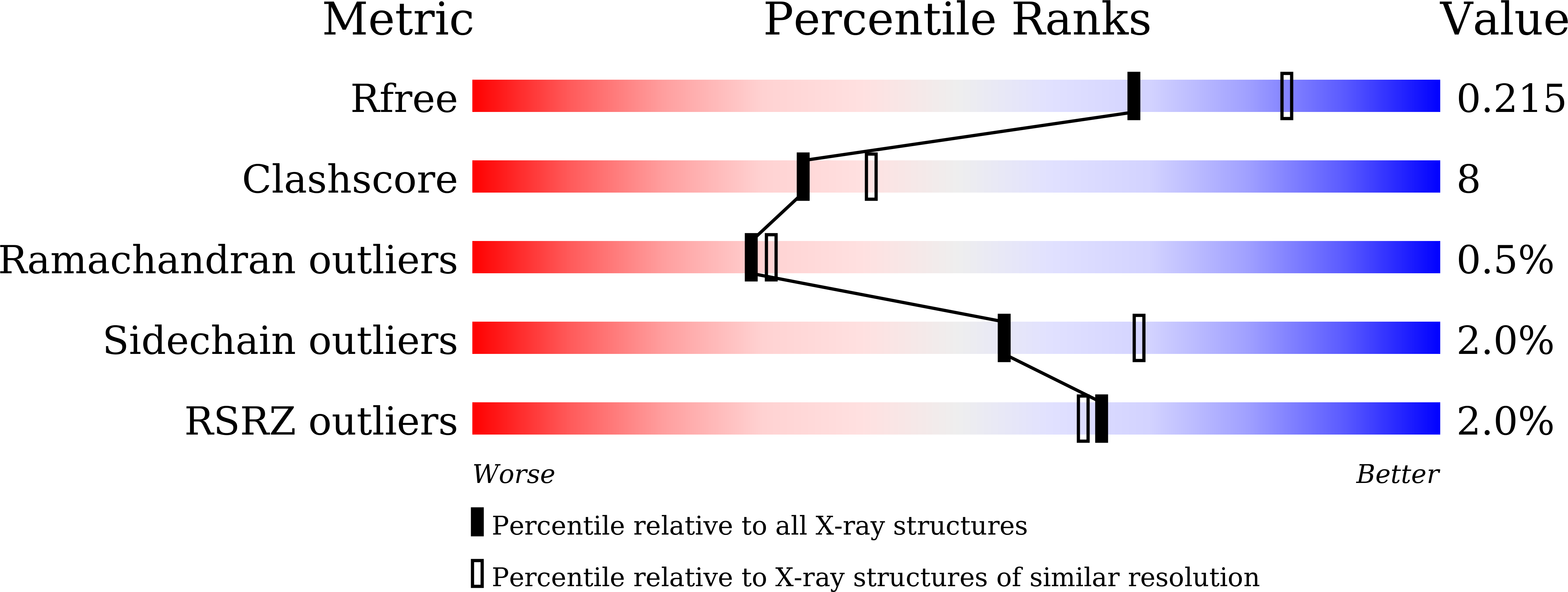
2.20 Å
R-Value Free:
0.21
R-Value Work:
0.19
R-Value Observed:
0.19
Space Group:
C 2 2 21
Macromolecular Entities
Structures with similar UniProt ID
Protein Blast
Polymer Type:polypeptide(L)
Molecule:Signal transduction histidine kinase, LytS
Gene (Uniprot):Cbei_2378
Chain IDs:B (auth: L)
Chain Length:148
Number of Molecules:1
Biological Source:Clostridium beijerinckii (strain ATCC 51743 / NCIMB 8052)
Structures with similar UniProt ID
Protein Blast
Polymer Type:polypeptide(L)
Molecule:Periplasmic binding protein/LacI transcriptional regulator
Gene (Uniprot):Cbei_2377
Chain IDs:A (auth: X)
Chain Length:306
Number of Molecules:1
Biological Source:Clostridium beijerinckii (strain ATCC 51743 / NCIMB 8052)
Ligand Molecules
Primary Citation
Molecular mechanism of environmental d-xylose perception by a XylFII-LytS complex in bacteria
Proc. Natl. Acad. Sci. U.S.A. 114 8235 8240 (2017)
PMID: 28716923 DOI: 10.1073/pnas.1620183114

Abstact

d-xylose, the main building block of plant biomass, is a pentose sugar that can be used by bacteria as a carbon source for bio-based fuel and chemical production through fermentation. In bacteria, the first step for d-xylose metabolism is signal perception at the membrane. We previously identified a three-component system in Firmicutes bacteria comprising a membrane-associated sensor protein (XylFII), a transmembrane histidine kinase (LytS) for periplasmic d-xylose sensing, and a cytoplasmic response regulator (YesN) that activates the transcription of the target ABC transporter xylFGH genes to promote the uptake of d-xylose. The molecular mechanism underlying signal perception and integration of these processes remains elusive, however. Here we purified the N-terminal periplasmic domain of LytS (LytSN) in a complex with XylFII and determined the conformational structures of the complex in its d-xylose-free and d-xylose-bound forms. LytSN contains a four-helix bundle, and XylFII contains two Rossmann fold-like globular domains with a xylose-binding cleft between them. In the absence of d-xylose, LytSN and XylFII formed a heterodimer. Specific binding of d-xylose to the cleft of XylFII induced a large conformational change that closed the cleft and brought the globular domains closer together. This conformational change led to the formation of an active XylFII-LytSN heterotetramer. Mutations at the d-xylose binding site and the heterotetramer interface diminished heterotetramer formation and impaired the d-xylose-sensing function of XylFII-LytS. Based on these data, we propose a working model of XylFII-LytS that provides a molecular basis for d-xylose utilization and metabolic modification in bacteria.

Legend

Protein

Chemical

Disease

Primary Citation of related structures
Feedback Form
Name
Email
Institute
Feedback