5XKU image
Deposition Date 2017-05-09
Release Date 2017-11-29
Last Version Date 2024-10-30
Entry Detail
PDB ID:
5XKU
Keywords:
Title:
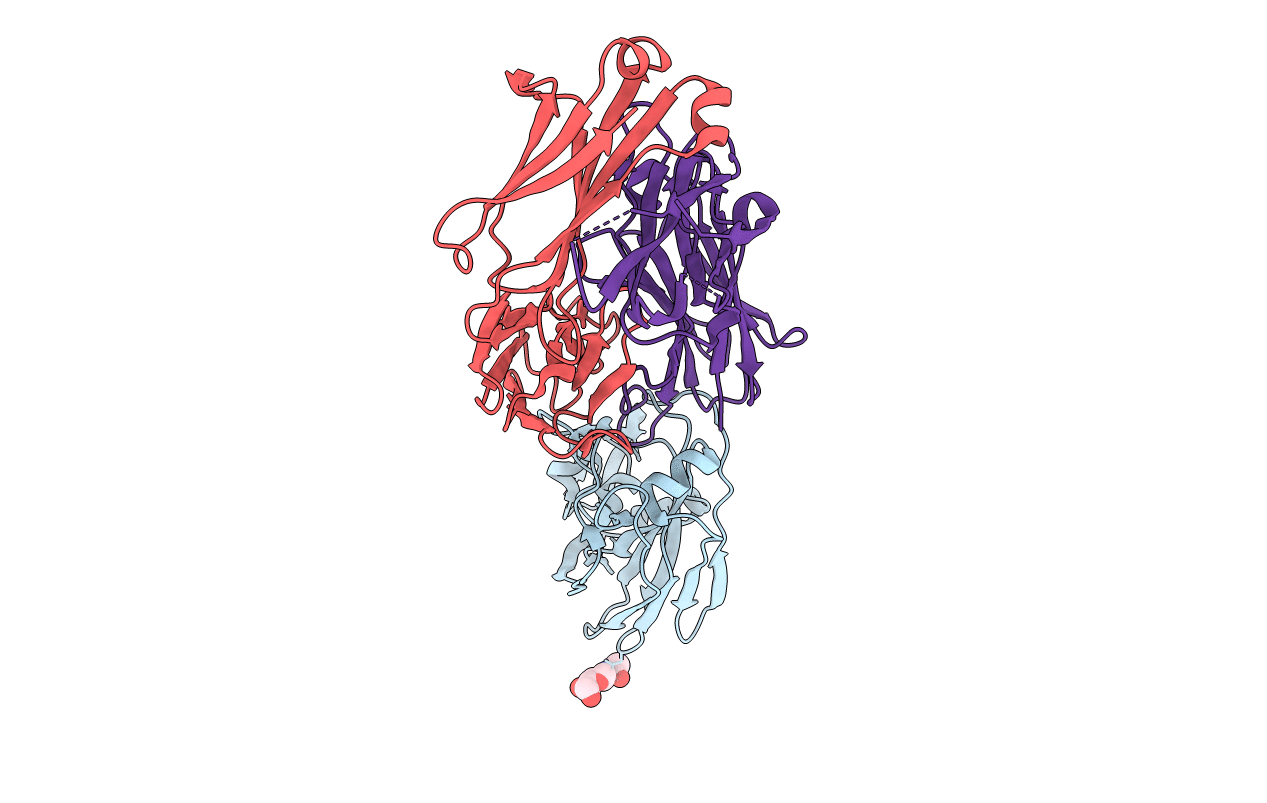
Crystal structure of hemagglutinin globular head from an H7N9 influenza virus in complex with a neutralizing antibody HNIgGA6
Biological Source:
Source Organism(s):
Influenza A virus (Taxon ID: 11320)
Homo sapiens (Taxon ID: 9606)
Method Details:
Experimental Method:
Resolution:
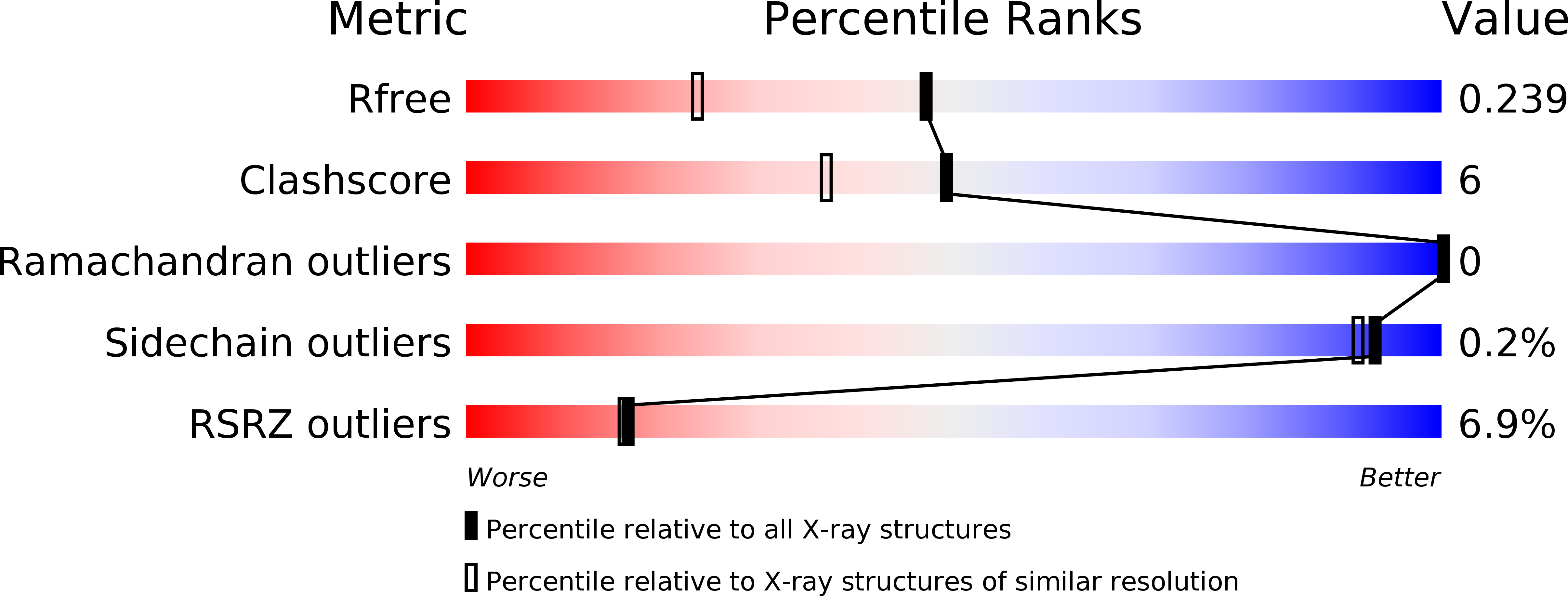
1.78 Å
R-Value Free:
0.24
R-Value Work:
0.20
R-Value Observed:
0.20
Space Group:
P 41 21 2
Macromolecular Entities
Structures with similar UniProt ID
Protein Blast
Polymer Type:polypeptide(L)
Molecule:Influenza a virus
Chain IDs:A
Chain Length:328
Number of Molecules:1
Biological Source:Influenza A virus
Polymer Type:polypeptide(L)
Molecule:HNIgGA6 light chain
Chain IDs:B
Chain Length:219
Number of Molecules:1
Biological Source:Homo sapiens
Polymer Type:polypeptide(L)
Molecule:HNIgGA6 heavy chain
Chain IDs:C
Chain Length:233
Number of Molecules:1
Biological Source:Homo sapiens
Ligand Molecules
Primary Citation
Structural Insight into a Human Neutralizing Antibody against Influenza Virus H7N9
J. Virol. 92 ? ? (2018)
PMID: 29212936 DOI: 10.1128/JVI.01850-17

Abstact

Since its first emergence in East China in early 2013, many cases of avian influenza A H7N9 have been reported. The disease has extended to 22 provinces in mainland China and some surrounding areas. Strategies to combat viral infection are urgently needed. We previously isolated a human monoclonal antibody, HNIgGA6, that neutralized the H7N9 virus both in vitro and in vivo In this study, we determined the crystal structure of viral hemagglutinin (HA) globular head bound to the fragment antigen-binding region (Fab) of HNIgGA6. The crystal structure shows that the tip of the HNIgGA6 heavy-chain complementarity-determining region 3 (HCDR3) directly interposes into the receptor binding site (RBS) and mimics, in many respects, the interaction of the sialic acid receptor. Three residues at Y98, H183, and E190, which are critical to human cellular receptor binding, are also essential for HNIgGA6 recognition. Meanwhile, dual mutations at V186G and L226Q in RBS were able to disrupt viral HA1 binding with the antibody. Our study provides a better understanding of the mechanism for protective antibody recognition and a sound foundation for the design of therapeutic drugs and vaccines against H7N9 influenza.IMPORTANCE Neutralization by antibody is one of the most important mechanisms for a host to defend against viral infections. Human-originated antibody HNIgGA6 was generated in response to the natural infectious H7N9 virus and showed potential for use in suppression of H7N9 infection, with possible therapeutic implications. The crystal structure of the HNIgGA6/HA1 complex provided new insight into the protective immune response to H7N9 virus in humans, as well as possibilities for the development of effective H7N9 pandemic vaccines and antiviral molecules.

Legend

Protein

Chemical

Disease

Primary Citation of related structures
Feedback Form
Name
Email
Institute
Feedback