5XJ3 image
Deposition Date 2017-04-29
Release Date 2018-04-25
Last Version Date 2024-10-23
Entry Detail
PDB ID:
5XJ3
Keywords:
Title:
Complex structure of ipilimumab-scFv and CTLA-4
Biological Source:
Source Organism:
Homo sapiens (Taxon ID: 9606)
Host Organism:
Method Details:
Experimental Method:
Resolution:
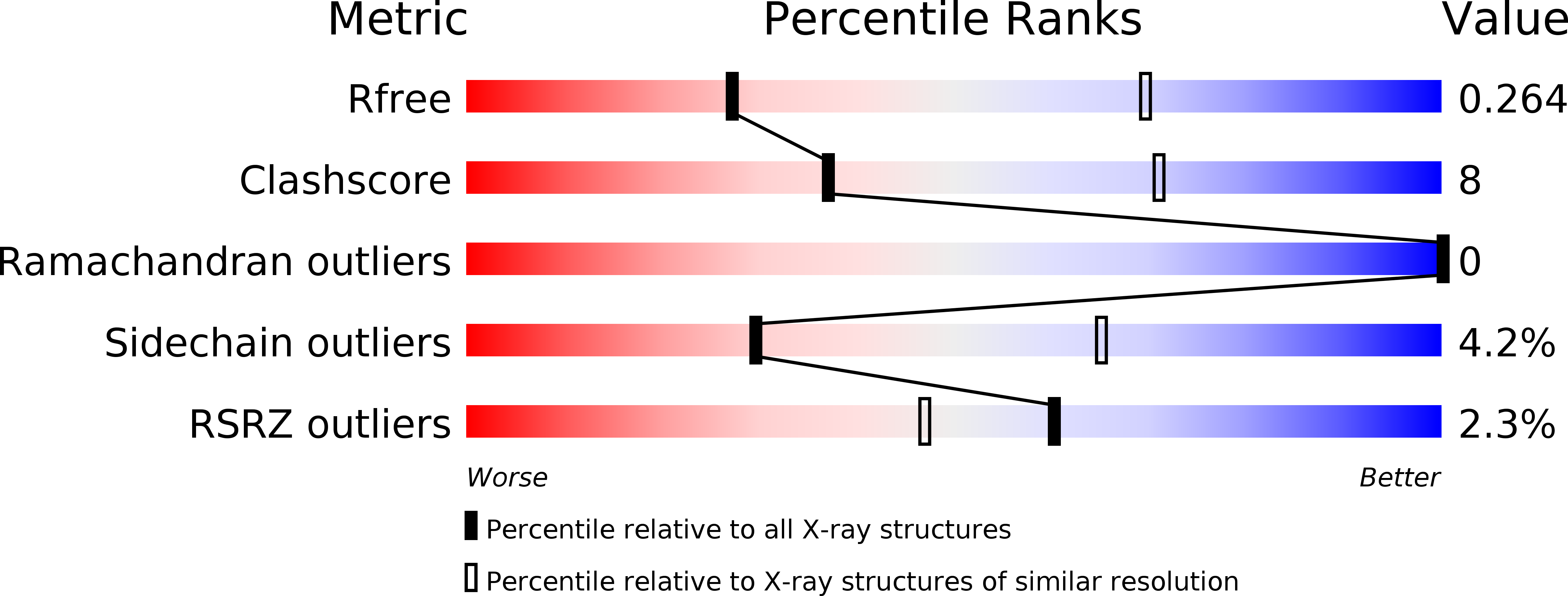
3.20 Å
R-Value Free:
0.26
R-Value Work:
0.22
R-Value Observed:
0.22
Space Group:
P 2 21 21
Macromolecular Entities
Polymer Type:polypeptide(L)
Molecule:ipilimumab-VH
Chain IDs:A, D, G, J
Chain Length:118
Number of Molecules:4
Biological Source:Homo sapiens
Polymer Type:polypeptide(L)
Molecule:ipilimumab-VL
Chain IDs:B, E, H, K
Chain Length:109
Number of Molecules:4
Biological Source:Homo sapiens
Structures with similar UniProt ID
Protein Blast
Polymer Type:polypeptide(L)
Molecule:Cytotoxic T-lymphocyte protein 4
Gene (Uniprot):CTLA4
Chain IDs:C, F, I, L
Chain Length:127
Number of Molecules:4
Biological Source:Homo sapiens
Ligand Molecules
Primary Citation
Remarkably similar CTLA-4 binding properties of therapeutic ipilimumab and tremelimumab antibodies
Oncotarget 8 67129 67139 (2017)
PMID: 28978021 DOI: 10.18632/oncotarget.18004

Abstact

Monoclonal antibody based immune checkpoint blockade therapies have achieved clinical successes in management of malignant tumors. As the first monoclonal antibody targeting immune checkpoint molecules entered into clinics, the molecular basis of ipilimumab-based anti-CTLA-4 blockade has not yet been fully understood. In the present study, we report the complex structure of ipilimumab and CTLA-4. The complex structure showed similar contributions from VH and VL of ipilimumab in binding to CTLA-4 front β-sheet strands. The blockade mechanism of ipilimumab is that the strands of CTLA-4 contributing to the binding to B7-1 or B7-2 were occupied by ipilimumab and thereafter prevents the binding of B7-1 or B7-2 to CTLA-4. Though ipilimumab binds to the same epitope with tremelimumab on CTLA-4 with similar binding affinity, the higher dissociation rate of ipilimumab may indicate the dynamic binding to CTLA-4, which may affect its pharmacokinetics. The molecular basis of ipilimumab-based anti-CTLA-4 blockade and comparative study of the binding characteristics of ipilimumab and tremelimumab would shed light for the discovery of small molecular inhibitors and structure-based monoclonal antibody optimization or new biologics.

Legend

Protein

Chemical

Disease

Primary Citation of related structures
Feedback Form
Name
Email
Institute
Feedback