5XCT image
Deposition Date 2017-03-23
Release Date 2017-10-04
Last Version Date 2024-10-16
Entry Detail
PDB ID:
5XCT
Keywords:
Title:
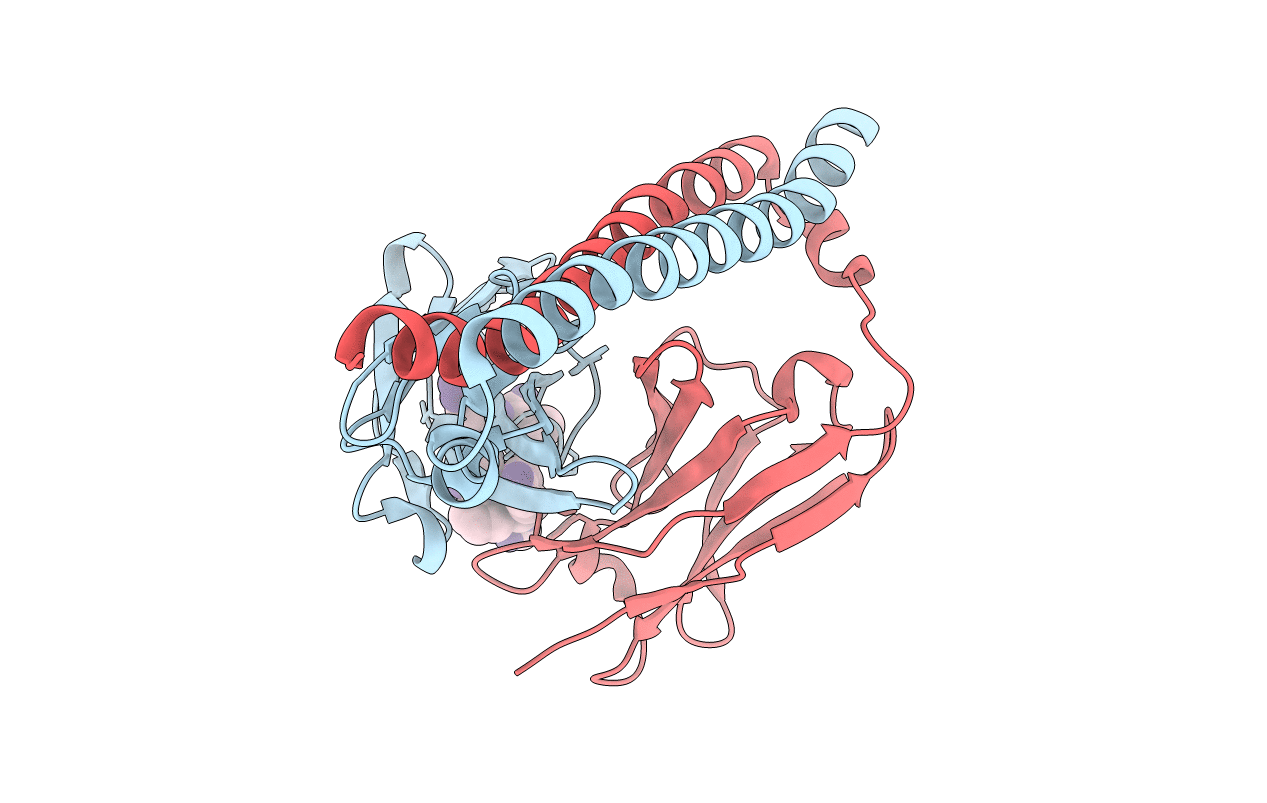
Crystal structure of P20.1 Fv-clasp fragment with its antigen peptide
Biological Source:
Source Organism:
Mus musculus (Taxon ID: 10090)
Homo sapiens (Taxon ID: 9606)
Host Organism:
Method Details:
Experimental Method:
Resolution:
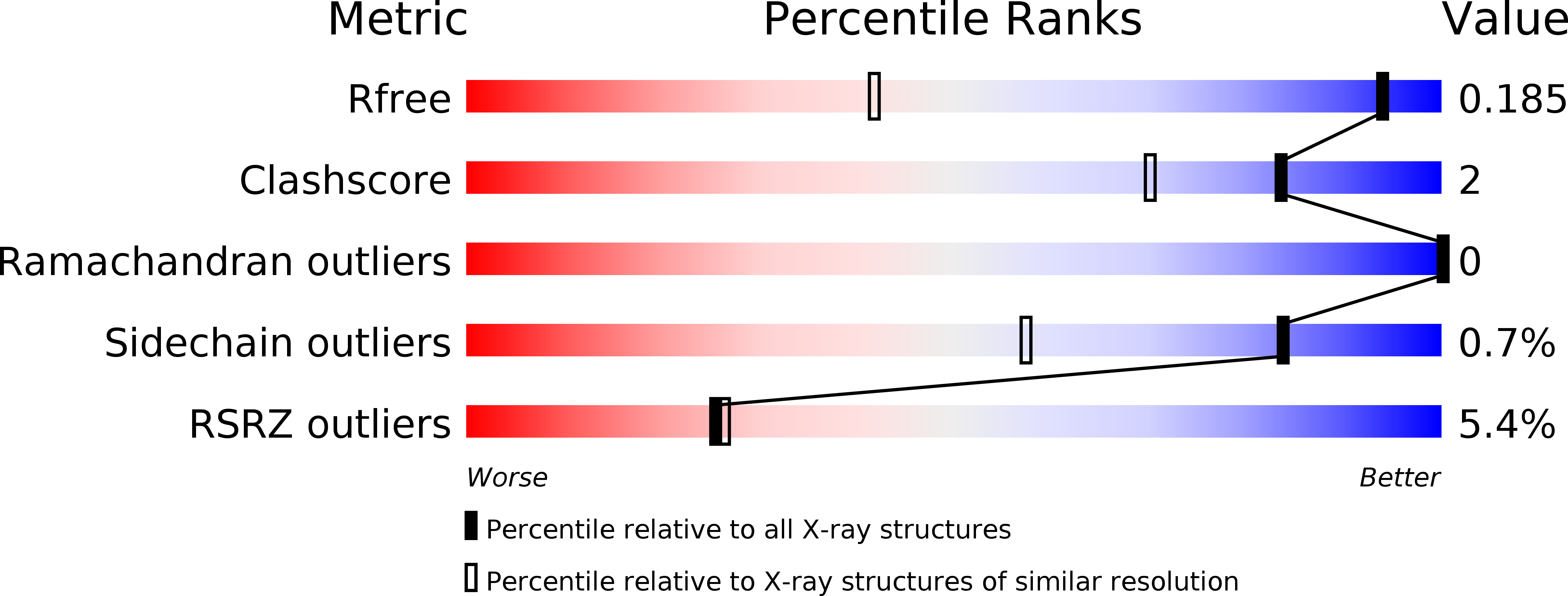
1.17 Å
R-Value Free:
0.18
R-Value Work:
0.15
R-Value Observed:
0.15
Space Group:
P 1 21 1
Macromolecular Entities
Polymer Type:polypeptide(L)
Molecule:VH(S112C)-SARAH chimera
Chain IDs:A
Chain Length:168
Number of Molecules:1
Biological Source:Mus musculus, Homo sapiens
Polymer Type:polypeptide(L)
Molecule:VL-SARAH(S37C)chimera
Chain IDs:B
Chain Length:163
Number of Molecules:1
Biological Source:Mus musculus, Homo sapiens
Polymer Type:polypeptide(L)
Molecule:C8 peptide
Chain IDs:C
Chain Length:8
Number of Molecules:1
Biological Source:Homo sapiens
Ligand Molecules
Primary Citation
Fv-clasp: An Artificially Designed Small Antibody Fragment with Improved Production Compatibility, Stability, and Crystallizability
Structure 25 1611 1622.e4 (2017)
PMID: 28919443 DOI: 10.1016/j.str.2017.08.011

Abstact

Antibody fragments are frequently used as a "crystallization chaperone" to aid structural analysis of complex macromolecules that are otherwise crystallization resistant, but conventional fragment formats have not been designed for this particular application. By fusing an anti-parallel coiled-coil structure derived from the SARAH domain of human Mst1 kinase to the variable region of an antibody, we succeeded in creating a novel chimeric antibody fragment of ∼37 kDa, termed "Fv-clasp," which exhibits excellent crystallization compatibility while maintaining the binding ability of the original IgG molecule. The "clasp" and the engineered disulfide bond at the bottom of the Fv suppressed the internal mobility of the fragment and shielded hydrophobic residues, likely contributing to the high heat stability and the crystallizability of the Fv-clasp. Finally, Fv-clasp antibodies showed superior "chaperoning" activity over conventional Fab fragments, and facilitated the structure determination of an ectodomain fragment of integrin α6β1.

Legend

Protein

Chemical

Disease

Primary Citation of related structures
Feedback Form
Name
Email
Institute
Feedback