5XAZ image
Deposition Date 2017-03-15
Release Date 2017-08-02
Last Version Date 2024-03-27
Entry Detail
PDB ID:
5XAZ
Title:
Crystal structure of full length native tylp, a tetr regulator from streptomyces fradiae
Biological Source:
Source Organism:
Method Details:
Experimental Method:
Resolution:
2.30 Å
R-Value Free:
0.25
R-Value Work:
0.20
R-Value Observed:
0.20
Space Group:
P 1 21 1
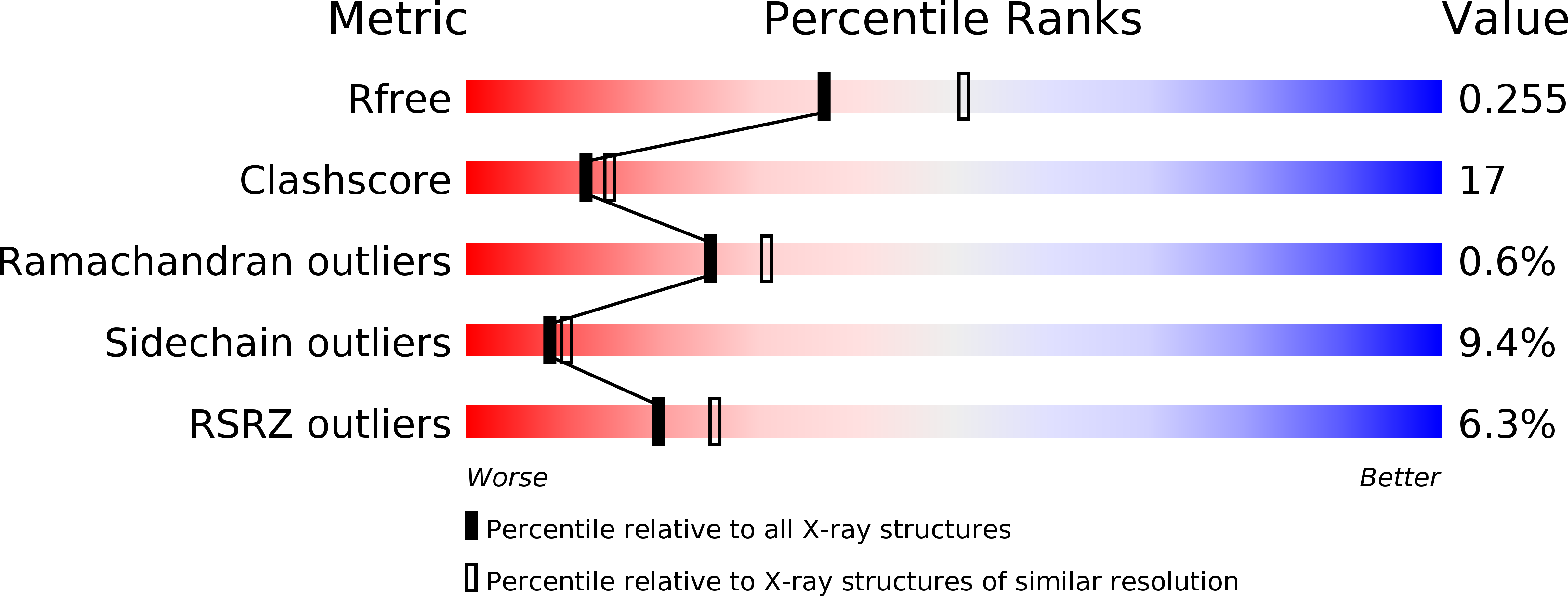
Macromolecular Entities
Structures with similar UniProt ID
Protein Blast
Polymer Type:polypeptide(L)
Molecule:Gamma-butyrolactone receptor protein
Gene (Uniprot):tylP
Mutagens:R113A
Chain IDs:A, B (auth: H), C (auth: B), D (auth: C), E (auth: D), F (auth: E), G (auth: F), H (auth: G)
Chain Length:228
Number of Molecules:8
Biological Source:Streptomyces fradiae
Primary Citation
Functional insights into the mode of DNA and ligand binding of the TetR family regulator TylP from Streptomyces fradiae
J. Biol. Chem. 292 15301 15311 (2017)
PMID: 28739805 DOI: 10.1074/jbc.M117.788000

Abstact

Tetracycline repressors (TetRs) modulate multidrug efflux pathways in several pathogenic bacteria. In Streptomyces, they additionally regulate secondary metabolic pathways like antibiotic production. For instance, in the antibiotic producer Streptomyces fradiae, a layered network of TetRs regulates the levels of the commercially important antibiotic tylosin, with TylP occupying the top of this cascading network. TetRs exist in two functional states, the DNA-bound and the ligand-bound form, which are allosterically regulated. Here, to develop deeper insights into the factors that govern allostery, the crystal structure of TylP was solved to a resolution of 2.3 Å. The structure revealed that TylP possesses several unique features; notably, it harbors a unique C-terminal helix-loop extension that spans the entire length of the structure. This anchor connects the DNA-binding domain (DBD) with the ligand-binding domain (LBD) via a mix of positively charged and hydrogen-bonding interactions. Supporting EMSA studies with a series of ΔC truncated versions show that a systematic deletion of this region results in complete loss of DNA binding. The structure additionally revealed that TylP is markedly different in the orientation of its DBD and LBD architecture and the dimeric geometry from its hypothesized Streptomyces homologue CprB, which is a γ-butyrolactone regulator. Rather, TylP is closer in structural design to macrolide-binding TetRs found in pathogens. Supporting molecular dynamic studies suggested that TylP binds a macrolide intermediate in the tylosin pathway. Collectively, the structure along with corroborating biochemical studies provided insights into the novel mode of regulation of TetRs in antibiotic-producing organisms.

Legend

Protein

Chemical

Disease

Primary Citation of related structures
Feedback Form
Name
Email
Institute
Feedback