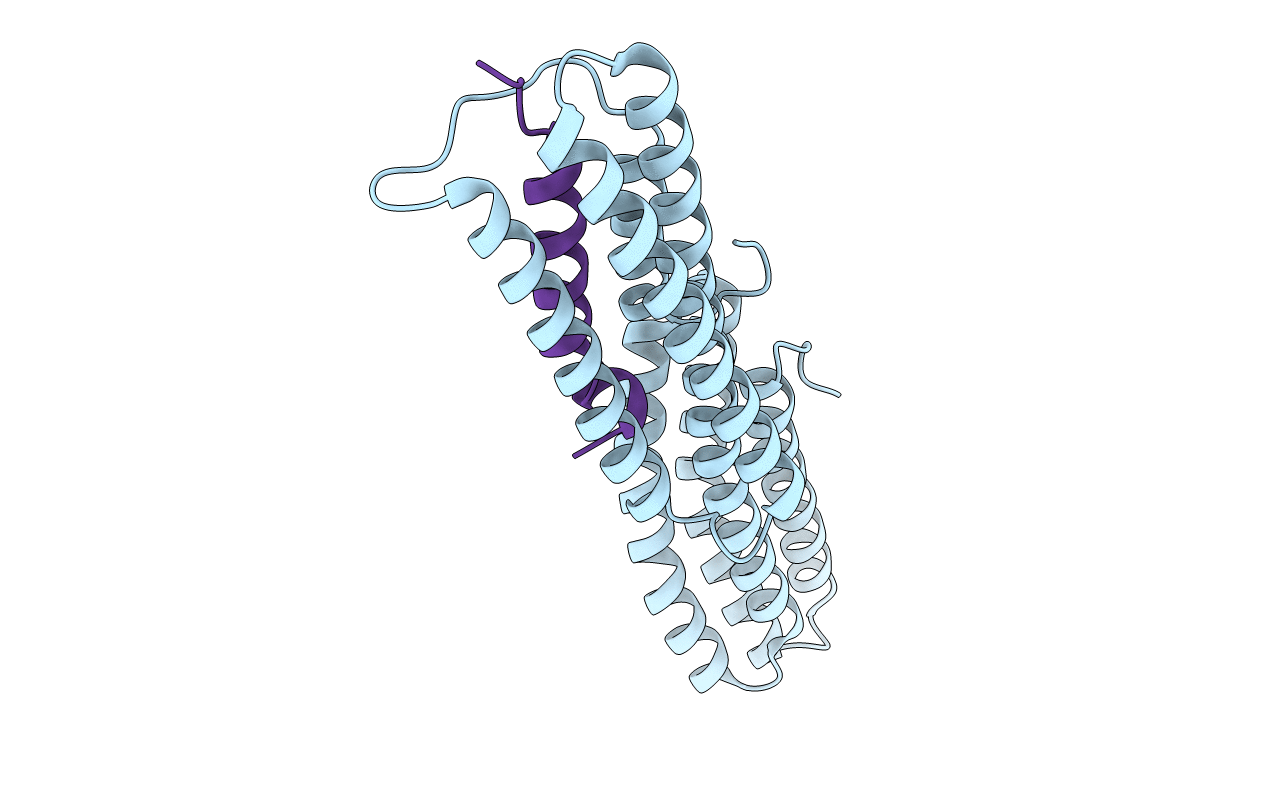
5XA5 image
Deposition Date 2017-03-11
Release Date 2017-08-30
Last Version Date 2024-03-27
Entry Detail
PDB ID:
5XA5
Keywords:
Title:
Crystal structure of HMP-1-HMP-2 complex
Biological Source:
Source Organism:
Host Organism:
Method Details:
Experimental Method:
Resolution:
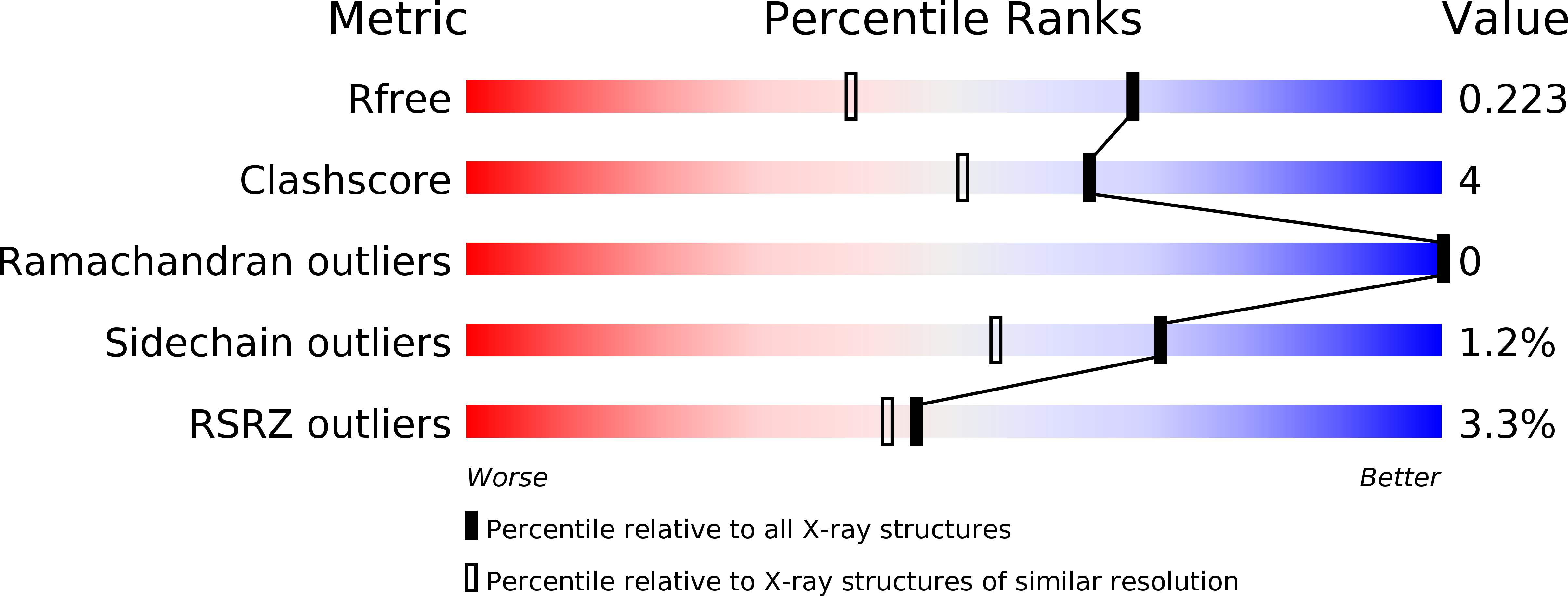
1.60 Å
R-Value Free:
0.22
R-Value Work:
0.18
R-Value Observed:
0.19
Space Group:
P 31 2 1
Macromolecular Entities
Structures with similar UniProt ID
Protein Blast
Polymer Type:polypeptide(L)
Molecule:Alpha-catenin-like protein hmp-1
Gene (Uniprot):hmp-1
Chain IDs:A
Chain Length:279
Number of Molecules:1
Biological Source:Caenorhabditis elegans
Structures with similar UniProt ID
Protein Blast
Polymer Type:polypeptide(L)
Molecule:Beta-catenin-like protein hmp-2
Gene (Uniprot):hmp-2
Chain IDs:B
Chain Length:48
Number of Molecules:1
Biological Source:Caenorhabditis elegans
Primary Citation
Cell-cell adhesion in metazoans relies on evolutionarily conserved features of the alpha-catenin· beta-catenin-binding interface.
J.Biol.Chem. 292 16477 16490 (2017)
PMID: 28842483 DOI: 10.1074/jbc.M117.795567

Abstact

Stable tissue integrity during embryonic development relies on the function of the cadherin·catenin complex (CCC). The Caenorhabditis elegans CCC is a useful paradigm for analyzing in vivo requirements for specific interactions among the core components of the CCC, and it provides a unique opportunity to examine evolutionarily conserved mechanisms that govern the interaction between α- and β-catenin. HMP-1, unlike its mammalian homolog α-catenin, is constitutively monomeric, and its binding affinity for HMP-2/β-catenin is higher than that of α-catenin for β-catenin. A crystal structure shows that the HMP-1·HMP-2 complex forms a five-helical bundle structure distinct from the structure of the mammalian α-catenin·β-catenin complex. Deletion analysis based on the crystal structure shows that the first helix of HMP-1 is necessary for binding HMP-2 avidly in vitro and for efficient recruitment of HMP-1 to adherens junctions in embryos. HMP-2 Ser-47 and Tyr-69 flank its binding interface with HMP-1, and we show that phosphomimetic mutations at these two sites decrease binding affinity of HMP-1 to HMP-2 by 40-100-fold in vitro. In vivo experiments using HMP-2 S47E and Y69E mutants showed that they are unable to rescue hmp-2(zu364) mutants, suggesting that phosphorylation of HMP-2 on Ser-47 and Tyr-69 could be important for regulating CCC formation in C. elegans Our data provide novel insights into how cadherin-dependent cell-cell adhesion is modulated in metazoans by conserved elements as well as features unique to specific organisms.

Legend

Protein

Chemical

Disease

Primary Citation of related structures
Feedback Form
Name
Email
Institute
Feedback