5X4L image
Deposition Date 2017-02-13
Release Date 2017-03-22
Last Version Date 2024-10-30
Entry Detail
PDB ID:
5X4L
Title:
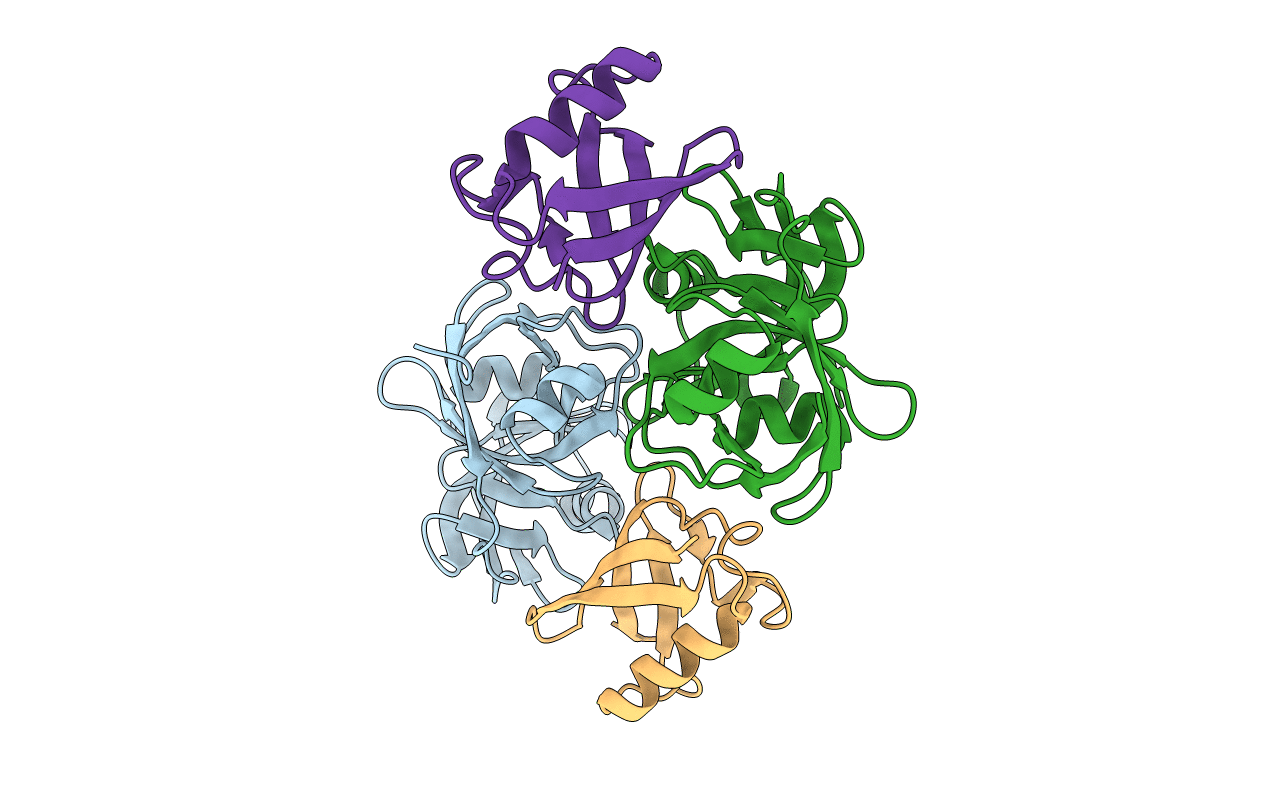
Crystal structure of the UBX domain of human UBXD7 in complex with p97 N domain
Biological Source:
Source Organism:
Homo sapiens (Taxon ID: 9606)
Host Organism:
Method Details:
Experimental Method:
Resolution:
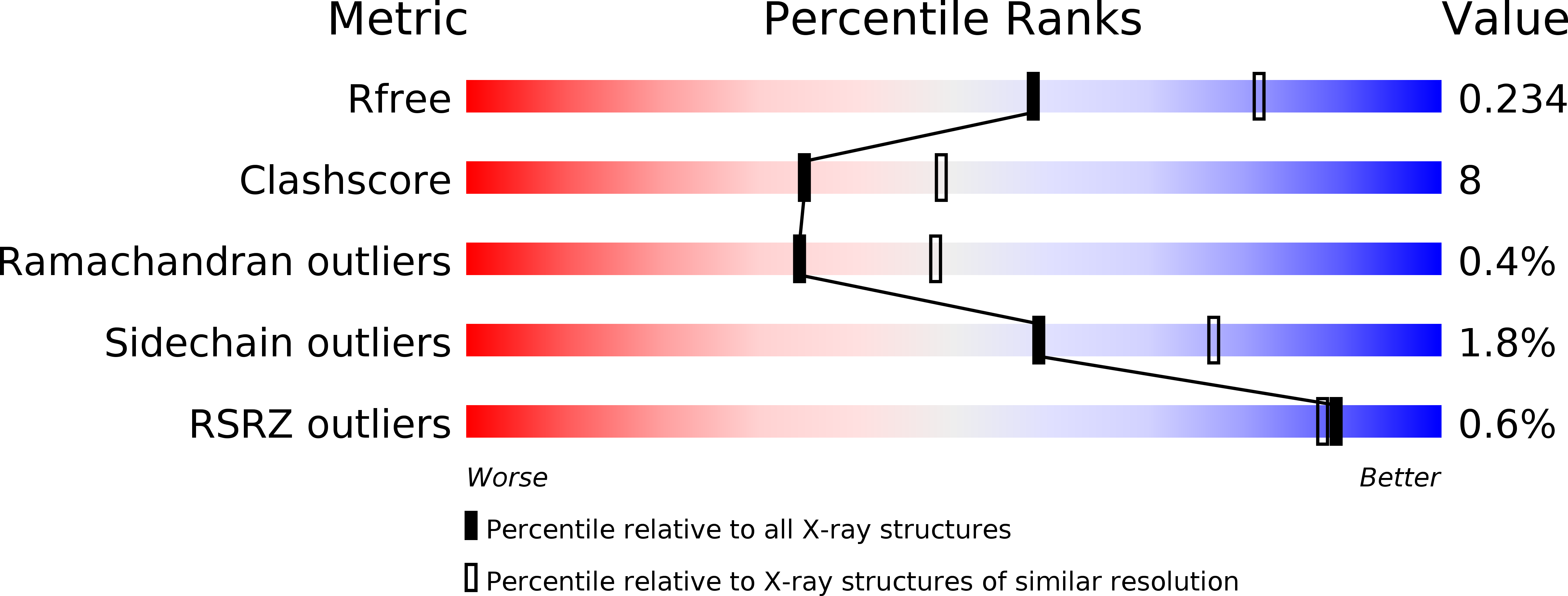
2.40 Å
R-Value Free:
0.23
R-Value Work:
0.18
R-Value Observed:
0.18
Space Group:
P 21 21 21
Macromolecular Entities
Structures with similar UniProt ID
Protein Blast
Polymer Type:polypeptide(L)
Molecule:Transitional endoplasmic reticulum ATPase
Gene (Uniprot):VCP
Chain IDs:A, B
Chain Length:177
Number of Molecules:2
Biological Source:Homo sapiens
Structures with similar UniProt ID
Protein Blast
Polymer Type:polypeptide(L)
Molecule:UBX domain-containing protein 7
Gene (Uniprot):UBXN7
Mutagens:L472M
Chain IDs:C, D
Chain Length:83
Number of Molecules:2
Biological Source:Homo sapiens
Modified Residue
Compound ID Chain ID Parent Comp ID Details 2D Image
MSE A MET modified residue
Primary Citation
Crystal structures of the UBX domain of human UBXD7 and its complex with p97 ATPase
Biochem. Biophys. Res. Commun. 486 94 100 (2017)
PMID: 28274878 DOI: 10.1016/j.bbrc.2017.03.005

Abstact

In humans, UBXD7 (also called UBXN7), an adaptor of p97 ATPase, can participate in the degradation of misfolded or damaged proteins in the p97-mediated ubiquitin proteasome system (UPS). UBXD7 binds to ubiquitinated substrates via its UBA domain and interacts with p97 N-terminal domain through its UBX domain to recruit p97 or the p97 core complex (p97/NPL4/UFD1). Here, we report the crystal structures of the UBX domain of UBXD7 (UBXD7UBX) at 2.0 Å resolution and its complex with p97 N-terminal domain (p97NTD-UBXD7UBX complex) at 2.4 Å resolution. A structural analysis and isothermal titration calorimetry results provide detailed molecular basis of interaction between UBXD7UBX and p97NTD. Moreover, structural superpositions suggest that dimerization of UBXD7UBX via an intermolecular disulfide bond could interfere with the formation of the p97NTD-UBXD7UBX complex. Interestingly, UBXD7 may have a cooperative effect on p97 interaction with UFD1. Together, these results provide structural and biochemical insights into the interaction between p97NTD and UBXD7UBX.

Legend

Protein

Chemical

Disease

Primary Citation of related structures
Feedback Form
Name
Email
Institute
Feedback