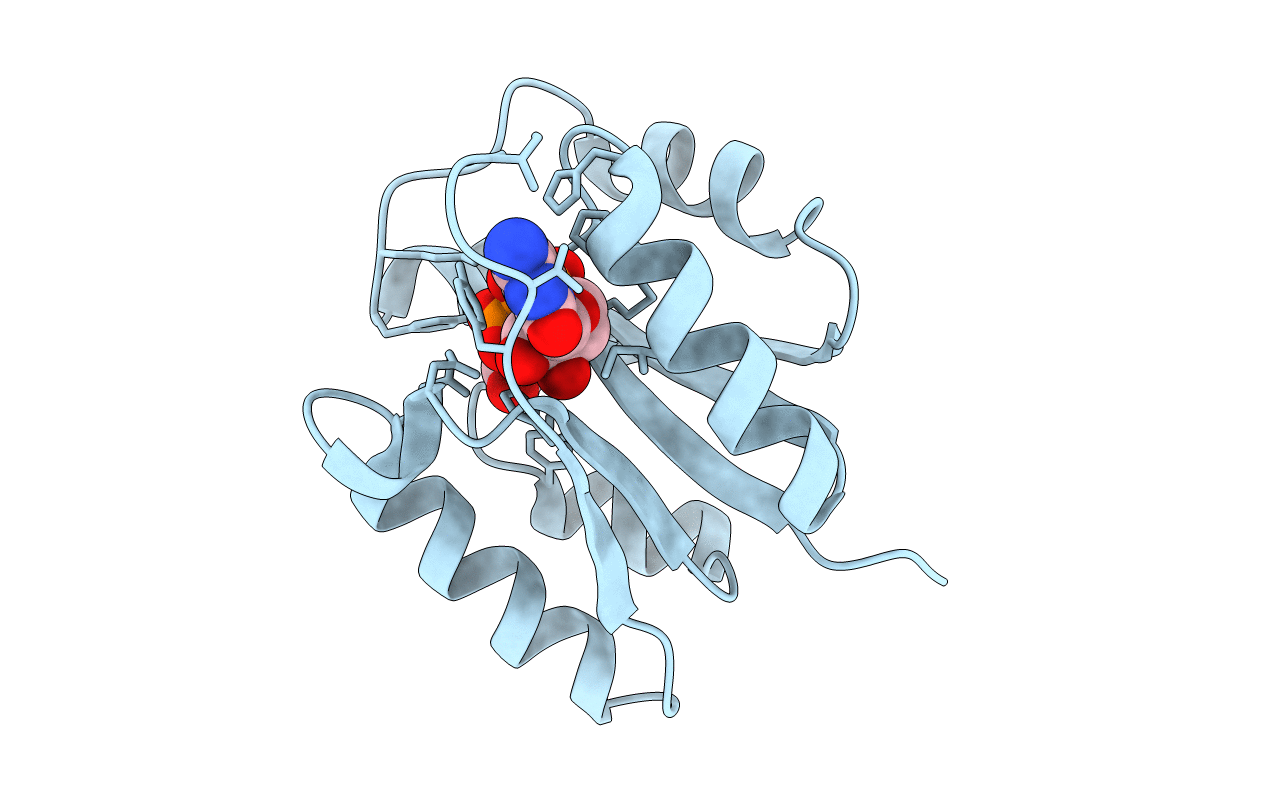
5X3D image
Deposition Date 2017-02-04
Release Date 2017-09-13
Last Version Date 2024-03-27
Entry Detail
PDB ID:
5X3D
Keywords:
Title:
Crystal structure of HEP-CMP-bound form of cytidylyltransferase (CyTase) domain of Fom1 from Streptomyces wedmorensis
Biological Source:
Source Organism:
Host Organism:
Method Details:
Experimental Method:
Resolution:
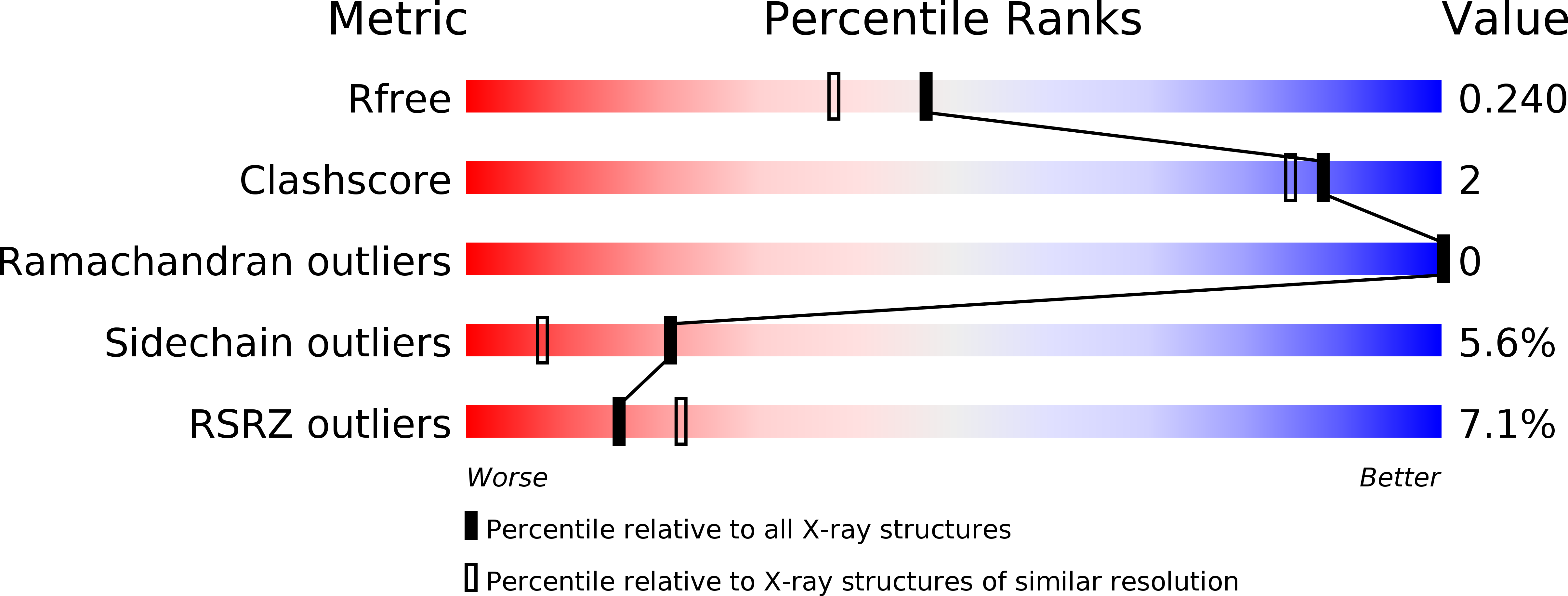
1.93 Å
R-Value Free:
0.23
R-Value Work:
0.19
R-Value Observed:
0.19
Space Group:
P 65 2 2
Macromolecular Entities
Structures with similar UniProt ID
Protein Blast
Polymer Type:polypeptide(L)
Molecule:Phosphoenolpyruvate phosphomutase
Gene (Uniprot):fom1
Chain IDs:A
Chain Length:160
Number of Molecules:1
Biological Source:Streptomyces wedmorensis
Ligand Molecules
Primary Citation
Fosfomycin Biosynthesis via Transient Cytidylylation of 2-Hydroxyethylphosphonate by the Bifunctional Fom1 Enzyme
ACS Chem. Biol. 12 2209 2215 (2017)
PMID: 28727444 DOI: 10.1021/acschembio.7b00419

Abstact

Fosfomycin is a wide-spectrum phosphonate antibiotic that is used clinically to treat cystitis, tympanitis, etc. Its biosynthesis starts with the formation of a carbon-phosphorus bond catalyzed by the phosphoenolpyruvate phosphomutase Fom1. We identified an additional cytidylyltransferase (CyTase) domain at the Fom1 N-terminus in addition to the phosphoenolpyruvate phosphomutase domain at the Fom1 C-terminus. Here, we demonstrate that Fom1 is bifunctional and that the Fom1 CyTase domain catalyzes the cytidylylation of the 2-hydroxyethylphosphonate (HEP) intermediate to produce cytidylyl-HEP. On the basis of this new function of Fom1, we propose a revised fosfomycin biosynthetic pathway that involves the transient CMP-conjugated intermediate. The identification of a biosynthetic mechanism via such transient cytidylylation of a biosynthetic intermediate fundamentally advances the understanding of phosphonate biosynthesis in nature. The crystal structure of the cytidylyl-HEP-bound CyTase domain provides a basis for the substrate specificity and reveals unique catalytic elements not found in other members of the CyTase family.

Legend

Protein

Chemical

Disease

Primary Citation of related structures
Feedback Form
Name
Email
Institute
Feedback