5WY2 image
Deposition Date 2017-01-10
Release Date 2017-11-22
Last Version Date 2023-11-22
Entry Detail
PDB ID:
5WY2
Title:
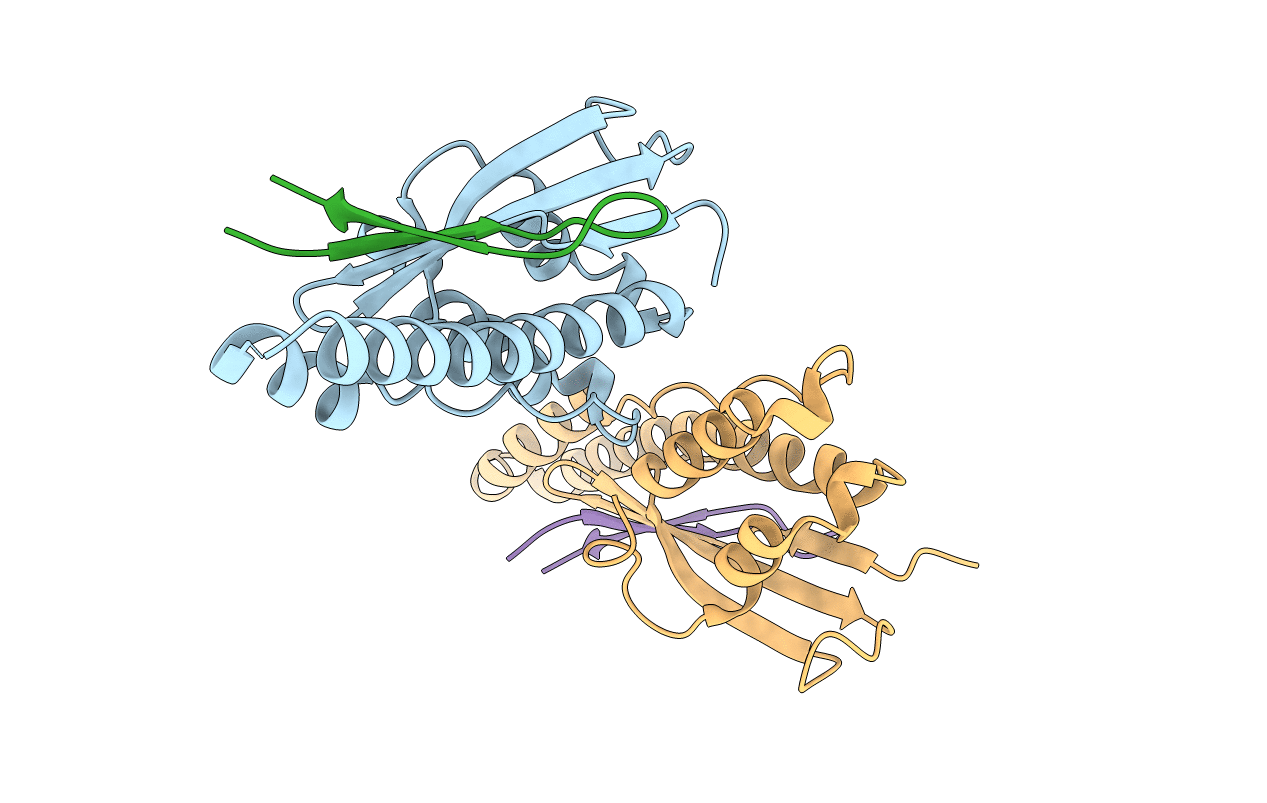
Human Snx5 PX domain in complex with Chlamydia IncE C terminus
Biological Source:
Source Organism:
Host Organism:
Method Details:
Experimental Method:
Resolution:
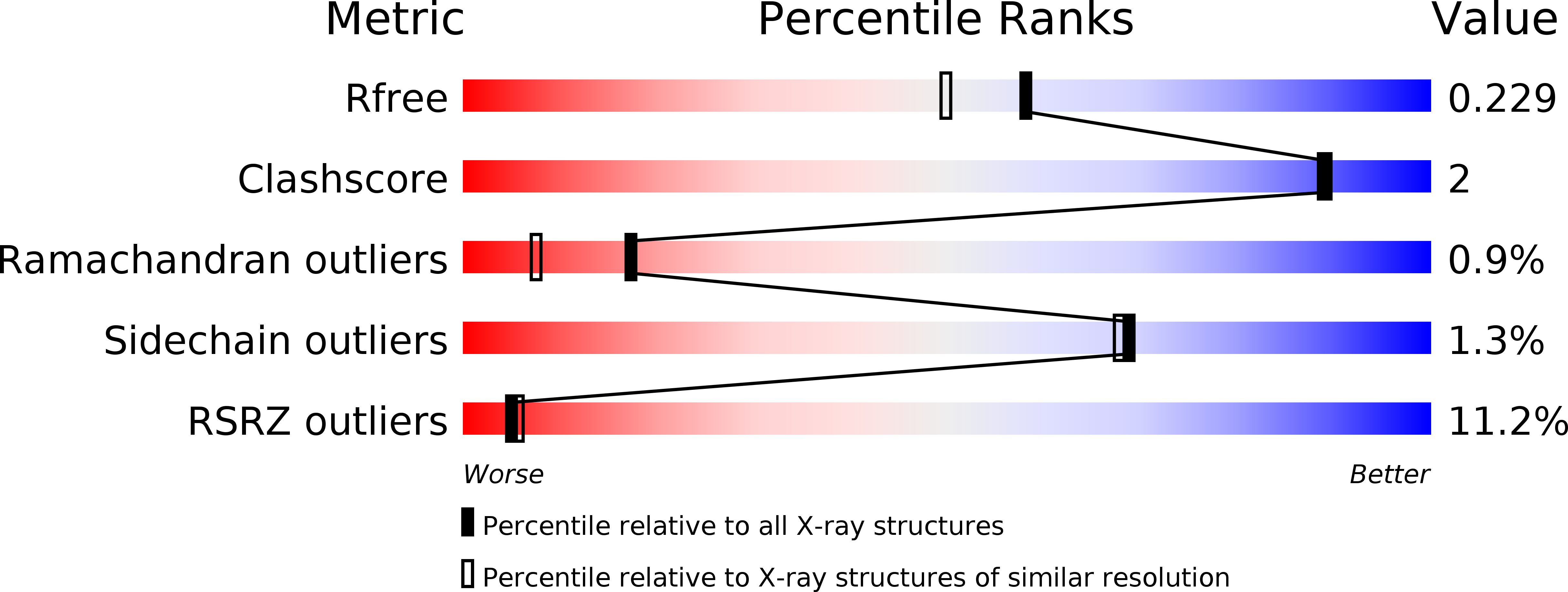
1.90 Å
R-Value Free:
0.22
R-Value Work:
0.18
R-Value Observed:
0.18
Space Group:
P 1
Macromolecular Entities
Structures with similar UniProt ID
Protein Blast
Polymer Type:polypeptide(L)
Molecule:Sorting nexin-5
Gene (Uniprot):SNX5
Chain IDs:A, C
Chain Length:163
Number of Molecules:2
Biological Source:Homo sapiens
Structures with similar UniProt ID
Protein Blast
Polymer Type:polypeptide(L)
Molecule:IncE
Gene (Uniprot):incE
Chain IDs:B, D
Chain Length:21
Number of Molecules:2
Biological Source:Chlamydia trachomatis
Primary Citation
Structural and functional insights into sorting nexin 5/6 interaction with bacterial effector IncE.
Signal Transduct Target Ther 2 17030 17030 (2017)
PMID: 29263922 DOI: 10.1038/sigtrans.2017.30

Abstact

The endosomal trafficking pathways are essential for many cellular activities. They are also important targets by many intracellular pathogens. Key regulators of the endosomal trafficking include the retromer complex and sorting nexins (SNXs). Chlamydia trachomatis effector protein IncE directly targets the retromer components SNX5 and SNX6 and suppresses retromer-mediated transport, but the exact mechanism has remained unclear. We present the crystal structure of the PX domain of SNX5 in complex with IncE, showing that IncE binds to a highly conserved hydrophobic groove of SNX5. The unique helical hairpin of SNX5/6 is essential for binding, explaining the specificity of SNX5/6 for IncE. The SNX5/6-IncE interaction is required for cellular localization of IncE and its inhibitory function. Mechanistically, IncE inhibits the association of CI-MPR cargo with retromer-containing endosomal subdomains. Our study provides new insights into the regulation of retromer-mediated transport and illustrates the intricate competition between host and pathogens in controlling cellular trafficking.

Legend

Protein

Chemical

Disease

Primary Citation of related structures
Feedback Form
Name
Email
Institute
Feedback