Planned Maintenance: Some services may turn out to be unavailable from 15th January, 2026 to 16th January, 2026. We apologize for the inconvenience!

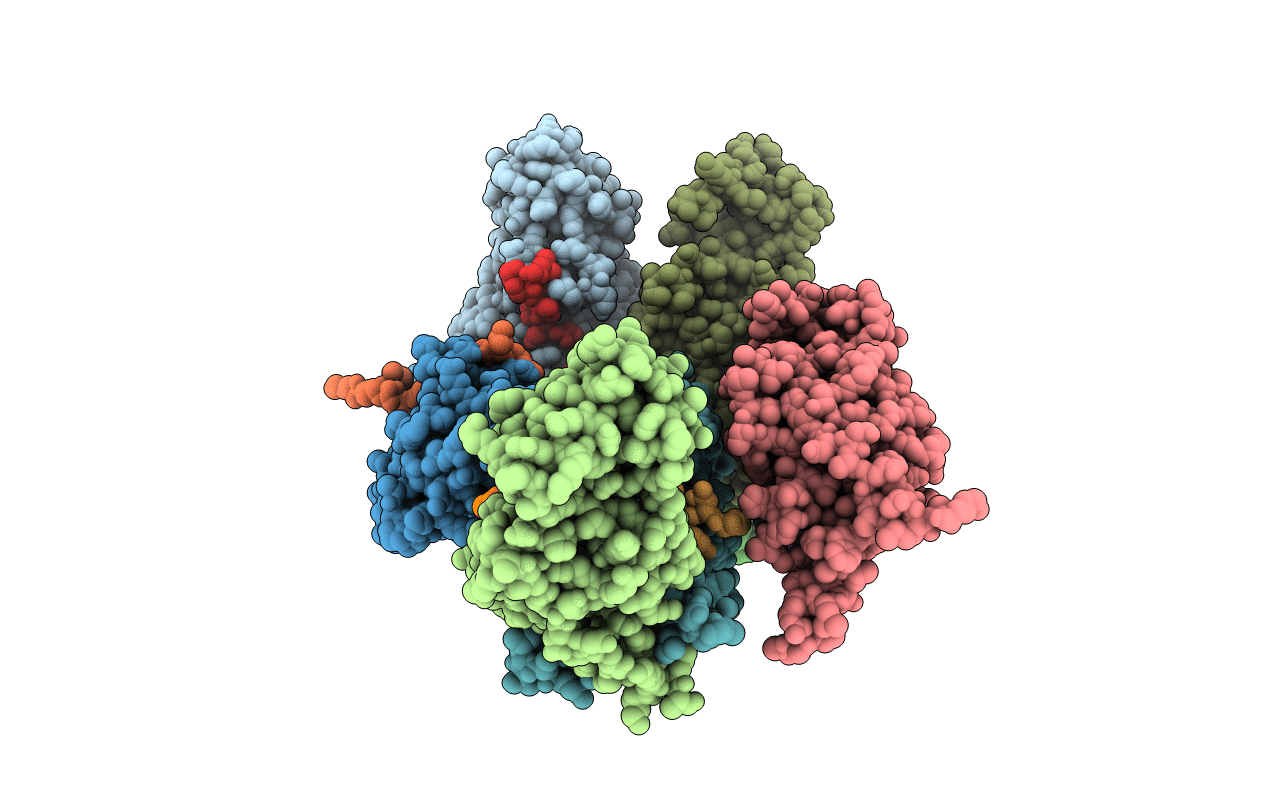
5WQD image
Deposition Date 2016-11-26
Release Date 2017-03-08
Last Version Date 2023-11-08
Entry Detail
PDB ID:
5WQD
Keywords:
Title:
Crystal structure of TRF2 TRFH in complex with an NBS1 peptide
Method Details:
Experimental Method:
Resolution:
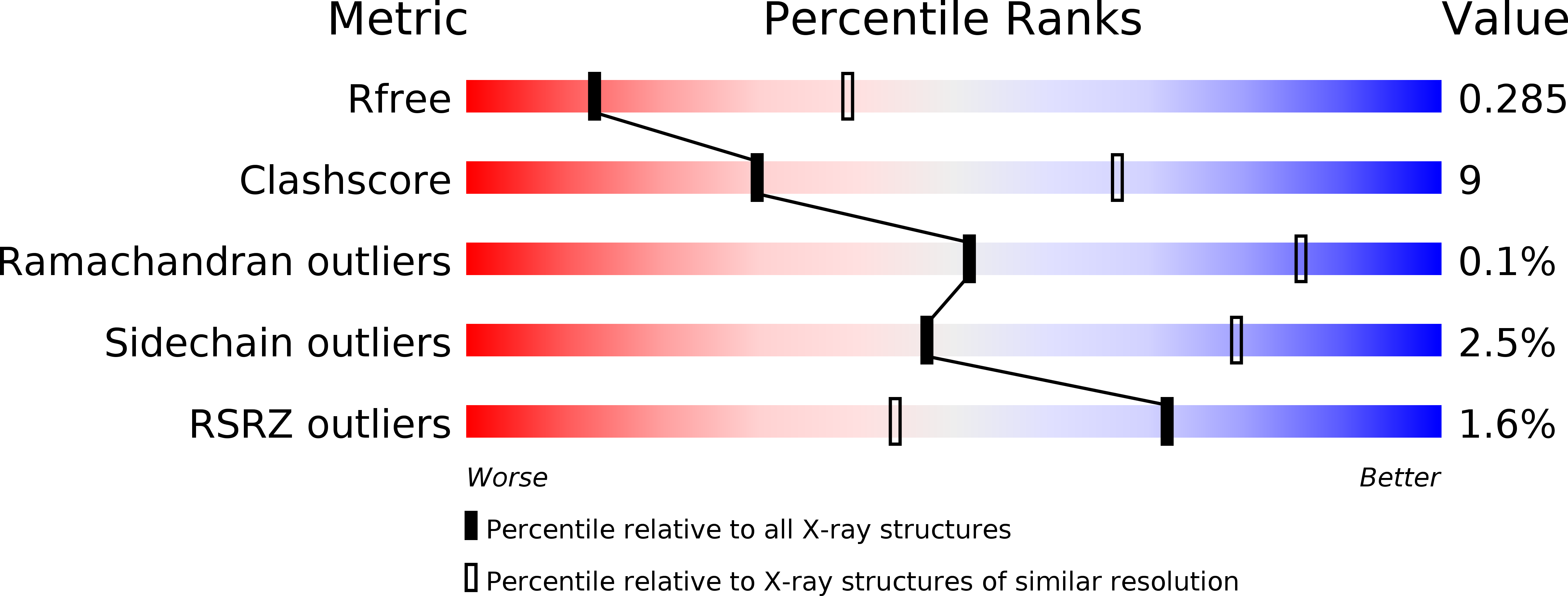
3.00 Å
R-Value Free:
0.28
R-Value Work:
0.23
R-Value Observed:
0.23
Space Group:
P 21 21 2
Macromolecular Entities
Structures with similar UniProt ID
Protein Blast
Polymer Type:polypeptide(L)
Molecule:Telomeric repeat-binding factor 2
Gene (Uniprot):TERF2
Chain IDs:A, B, C, D, E, F, G
Chain Length:204
Number of Molecules:7
Biological Source:Homo sapiens
Structures with similar UniProt ID
Protein Blast
Polymer Type:polypeptide(L)
Molecule:Nibrin
Gene (Uniprot):NBN
Chain IDs:H, I, J, K, L, M, N
Chain Length:16
Number of Molecules:7
Biological Source:Homo sapiens
Ligand Molecules
Primary Citation
NBS1 Phosphorylation Status Dictates Repair Choice of Dysfunctional Telomeres
Mol. Cell 65 801 817.e4 (2017)
PMID: 28216226 DOI: 10.1016/j.molcel.2017.01.016

Abstact

Telomeres employ TRF2 to protect chromosome ends from activating the DNA damage sensor MRE11-RAD50-NBS1 (MRN), thereby repressing ATM-dependent DNA damage checkpoint responses. How TRF2 prevents MRN activation at dysfunctional telomeres is unclear. Here, we show that the phosphorylation status of NBS1 determines the repair pathway choice of dysfunctional telomeres. The crystal structure of the TRF2-NBS1 complex at 3.0 Å resolution shows that the NBS1 429YQLSP433 motif interacts specifically with the TRF2TRFH domain. Phosphorylation of NBS1 serine 432 by CDK2 in S/G2 dissociates NBS1 from TRF2, promoting TRF2-Apollo/SNM1B complex formation and the protection of leading-strand telomeres. Classical-NHEJ-mediated repair of telomeres lacking TRF2 requires phosphorylated NBS1S432 to activate ATM, while interaction of de-phosphorylated NBS1S432 with TRF2 promotes alternative-NHEJ repair of telomeres lacking POT1-TPP1. Our work advances understanding of how the TRF2TRFH domain orchestrates telomere end protection and reveals how the phosphorylation status of the NBS1S432 dictates repair pathway choice of dysfunctional telomeres.

Legend

Protein

Chemical

Disease

Primary Citation of related structures
Feedback Form
Name
Email
Institute
Feedback