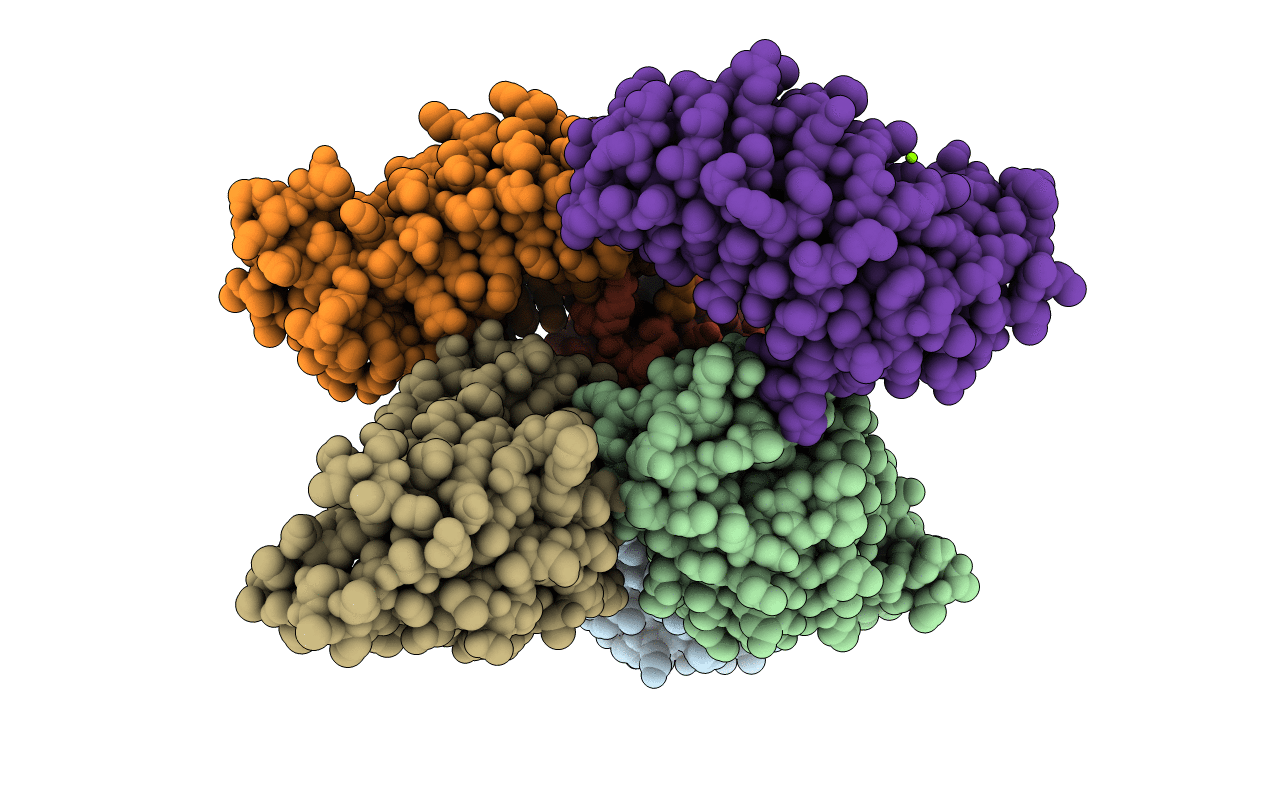
5WK4 image
Deposition Date 2017-07-24
Release Date 2017-12-13
Last Version Date 2024-10-30
Entry Detail
PDB ID:
5WK4
Keywords:
Title:
Crystal structure of an anti-idiotype VLR
Biological Source:
Source Organism(s):
Expression System(s):
Method Details:
Experimental Method:
Resolution:
1.50 Å
R-Value Free:
0.22
R-Value Work:
0.19
R-Value Observed:
0.19
Space Group:
P 1
Macromolecular Entities
Polymer Type:polypeptide(L)
Molecule:Variable lymphocyte receptor 39
Chain IDs:A (auth: D), B (auth: A), C (auth: B), D (auth: C), E, F
Chain Length:201
Number of Molecules:6
Biological Source:Petromyzon marinus
Ligand Molecules
Primary Citation
Crystal structure of an anti-idiotype variable lymphocyte receptor.
Acta Crystallogr F Struct Biol Commun 73 682 687 (2017)
PMID: 29199989 DOI: 10.1107/S2053230X1701620X

Abstact

Variable lymphocyte receptors (VLRs), the leucine-rich repeat (LRR)-based antigen receptors of jawless fish, have great utility in a wide variety of biochemical and biological applications, similar to classical Ig-based antibodies. VLR-based reagents may be particularly useful when traditional antibodies are not available. An anti-idiotype lamprey VLR, VLR39, has previously been identified that recognizes the heavy-chain CDR3 of the B-cell receptor (BCR) of a leukemic clone from a patient with chronic lymphocytic leukemia (CLL). VLR39 was used successfully to track the re-emergence of this clone in the patient following chemotherapy. Here, the crystal structure of VLR39 is presented at 1.5 Å resolution and compared with those of other protein-specific VLRs. VLR39 adopts a curved solenoid fold and exhibits substantial structural similarity to other protein-binding VLRs. VLR39 has a short LRRCT loop that protrudes outwards away from the concave face and is similar to those of its protein-specific VLR counterparts. Analysis of the VLR39-BCR interaction by size-exclusion chromatography and biolayer interferometry using the scFv version of the BCR confirms that VLR39 recognizes the BCR Fv region. Such VLR-based reagents may be useful for identifying and monitoring leukemia in CLL patients and in other clinical diagnostic assays.

Legend

Protein

Chemical

Disease

Primary Citation of related structures
Feedback Form
Name
Email
Institute
Feedback