5WCH image
Deposition Date 2017-06-30
Release Date 2018-07-04
Last Version Date 2024-03-13
Entry Detail
PDB ID:
5WCH
Keywords:
Title:
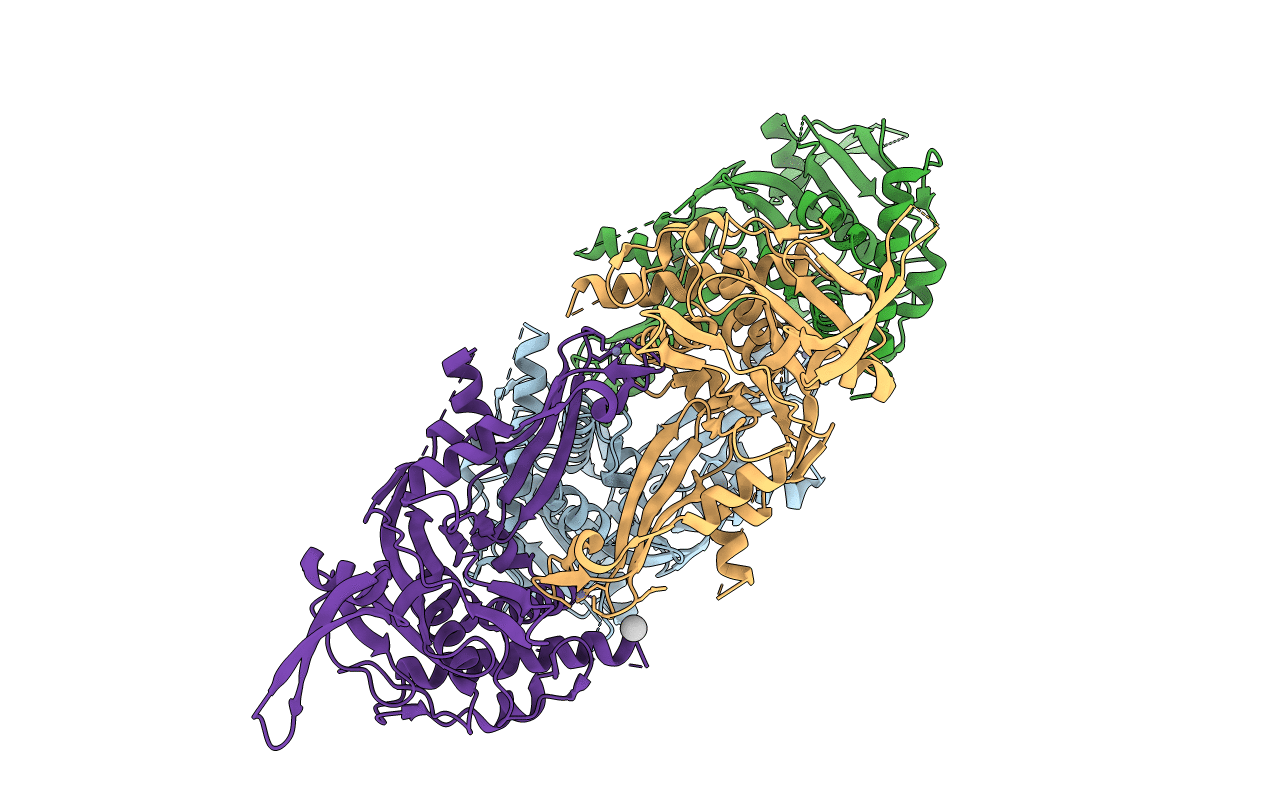
Crystal structure of the catalytic domain of human USP9X
Biological Source:
Source Organism(s):
Homo sapiens (Taxon ID: 9606)
Expression System(s):
Method Details:
Experimental Method:
Resolution:
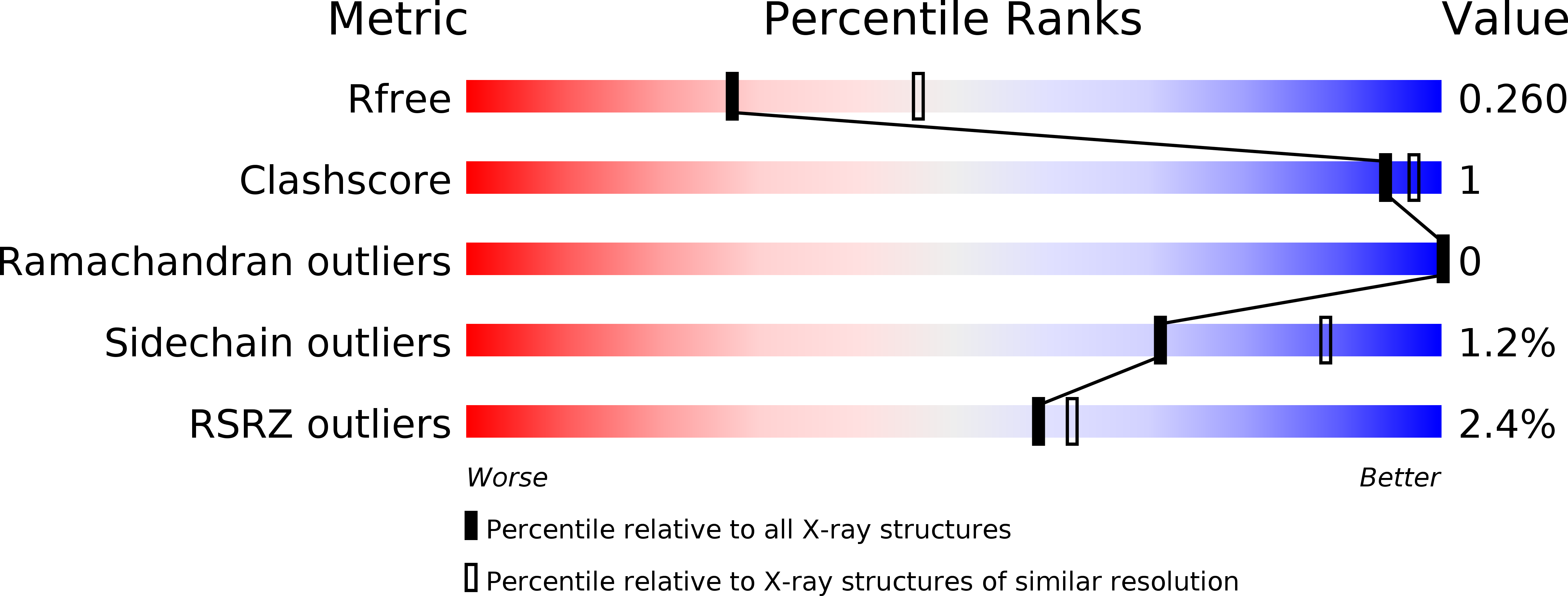
2.50 Å
R-Value Free:
0.26
R-Value Work:
0.20
R-Value Observed:
0.20
Space Group:
P 1 21 1
Macromolecular Entities
Structures with similar UniProt ID
Protein Blast
Polymer Type:polypeptide(L)
Molecule:Probable ubiquitin carboxyl-terminal hydrolase FAF-X
Gene (Uniprot):USP9X
Chain IDs:A, B, C, D
Chain Length:421
Number of Molecules:4
Biological Source:Homo sapiens
Primary Citation
Crystal structure and activity-based labeling reveal the mechanisms for linkage-specific substrate recognition by deubiquitinase USP9X.
Proc. Natl. Acad. Sci. U.S.A. 116 7288 7297 (2019)
PMID: 30914461 DOI: 10.1073/pnas.1815027116

Abstact

USP9X is a conserved deubiquitinase (DUB) that regulates multiple cellular processes. Dysregulation of USP9X has been linked to cancers and X-linked intellectual disability. Here, we report the crystal structure of the USP9X catalytic domain at 2.5-Å resolution. The structure reveals a canonical USP-fold comprised of fingers, palm, and thumb subdomains, as well as an unusual β-hairpin insertion. The catalytic triad of USP9X is aligned in an active configuration. USP9X is exclusively active against ubiquitin (Ub) but not Ub-like modifiers. Cleavage assays with di-, tri-, and tetraUb chains show that the USP9X catalytic domain has a clear preference for K11-, followed by K63-, K48-, and K6-linked polyUb chains. Using a set of activity-based diUb and triUb probes (ABPs), we demonstrate that the USP9X catalytic domain has an exo-cleavage preference for K48- and endo-cleavage preference for K11-linked polyUb chains. The structure model and biochemical data suggest that the USP9X catalytic domain harbors three Ub binding sites, and a zinc finger in the fingers subdomain and the β-hairpin insertion both play important roles in polyUb chain processing and linkage specificity. Furthermore, unexpected labeling of a secondary, noncatalytic cysteine located on a blocking loop adjacent to the catalytic site by K11-diUb ABP implicates a previously unreported mechanism of polyUb chain recognition. The structural features of USP9X revealed in our study are critical for understanding its DUB activity. The new Ub-based ABPs form a set of valuable tools to understand polyUb chain processing by the cysteine protease class of DUBs.

Legend

Protein

Chemical

Disease

Primary Citation of related structures
Feedback Form
Name
Email
Institute
Feedback