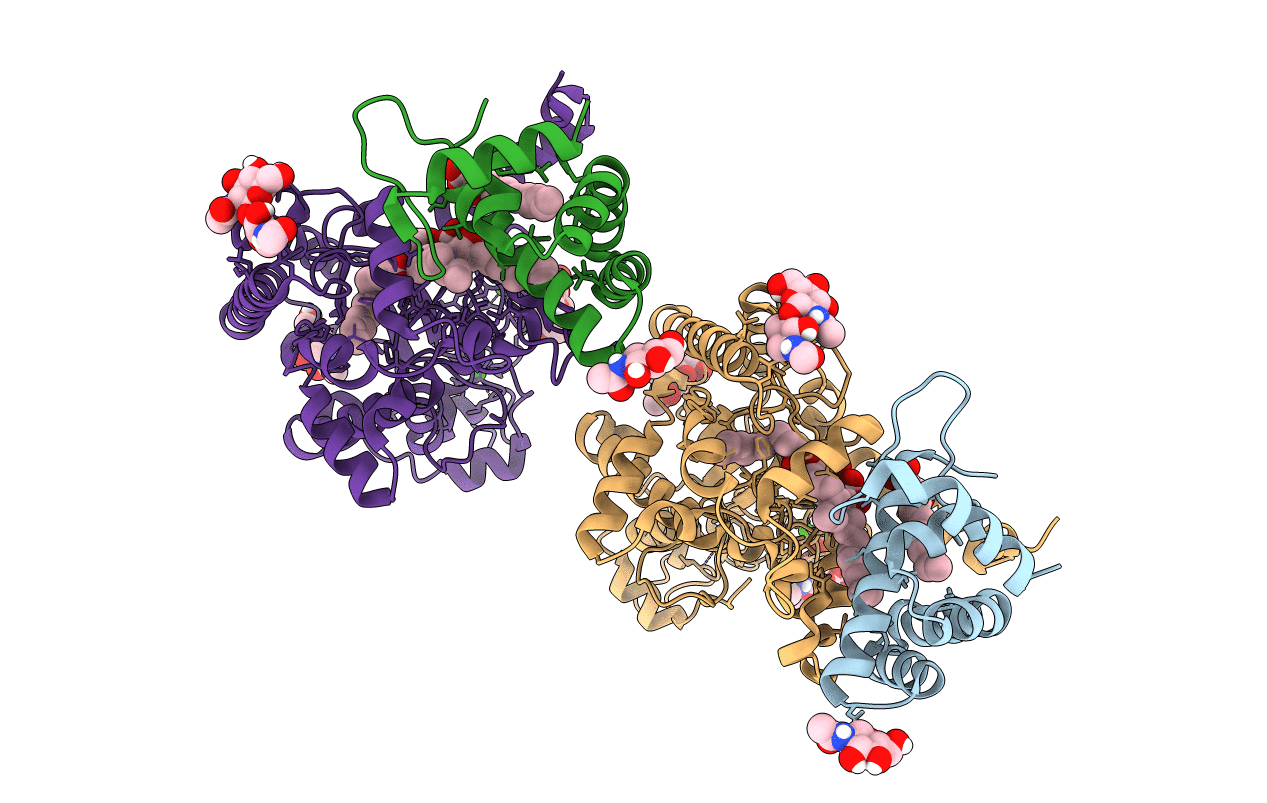
5W7C image
Deposition Date 2017-06-19
Release Date 2018-01-03
Last Version Date 2024-10-30
Entry Detail
PDB ID:
5W7C
Keywords:
Title:
Human acyloxyacyl hydrolase (AOAH), proteolytically processed, S263A mutant, with LPS
Biological Source:
Source Organism:
Homo sapiens (Taxon ID: 9606)
Host Organism:
Method Details:
Experimental Method:
Resolution:
2.23 Å
R-Value Free:
0.24
R-Value Work:
0.21
R-Value Observed:
0.21
Space Group:
P 21 21 21

Macromolecular Entities
Structures with similar UniProt ID
Protein Blast
Polymer Type:polypeptide(L)
Molecule:Acyloxyacyl hydrolase
Gene (Uniprot):AOAH
Chain IDs:A, C (auth: B)
Chain Length:139
Number of Molecules:2
Biological Source:Homo sapiens
Structures with similar UniProt ID
Protein Blast
Polymer Type:polypeptide(L)
Molecule:Acyloxyacyl hydrolase
Gene (Uniprot):AOAH
Mutagens:S263A
Chain IDs:B (auth: C), D
Chain Length:423
Number of Molecules:2
Biological Source:Homo sapiens
Primary Citation
Crystal structure of the mammalian lipopolysaccharide detoxifier.
Proc. Natl. Acad. Sci. U.S.A. 115 E896 E905 (2018)
PMID: 29343645 DOI: 10.1073/pnas.1719834115

Abstact

LPS is a potent bacterial endotoxin that triggers the innate immune system. Proper recognition of LPS by pattern-recognition receptors requires a full complement of typically six acyl chains in the lipid portion. Acyloxyacyl hydrolase (AOAH) is a host enzyme that removes secondary (acyloxyacyl-linked) fatty acids from LPS, rendering it immunologically inert. This activity is critical for recovery from immune tolerance that follows Gram-negative infection. To understand the molecular mechanism of AOAH function, we determined its crystal structure and its complex with LPS. The substrate's lipid moiety is accommodated in a large hydrophobic pocket formed by the saposin and catalytic domains with a secondary acyl chain inserted into a narrow lateral hydrophobic tunnel at the active site. The enzyme establishes dispensable contacts with the phosphate groups of LPS but does not interact with its oligosaccharide portion. Proteolytic processing allows movement of an amphipathic helix possibly involved in substrate access at membranes.

Legend

Protein

Chemical

Disease

Primary Citation of related structures
Feedback Form
Name
Email
Institute
Feedback