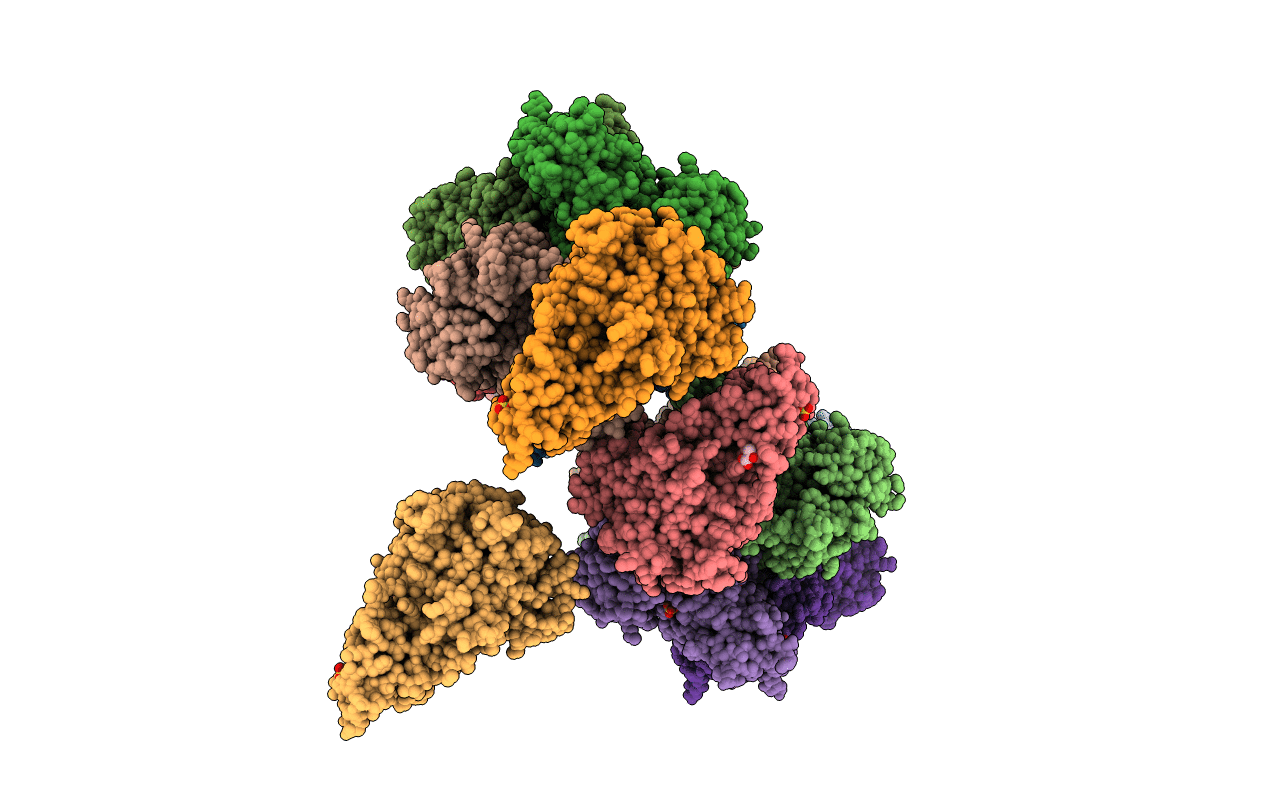
5W5R image
Deposition Date 2017-06-15
Release Date 2018-11-14
Last Version Date 2023-11-15
Entry Detail
PDB ID:
5W5R
Keywords:
Title:
Agrobacterium tumefaciens ADP-glucose pyrophosphorylase P96A mutant bound to activator pyruvate
Biological Source:
Source Organism:
Host Organism:
Method Details:
Experimental Method:
Resolution:
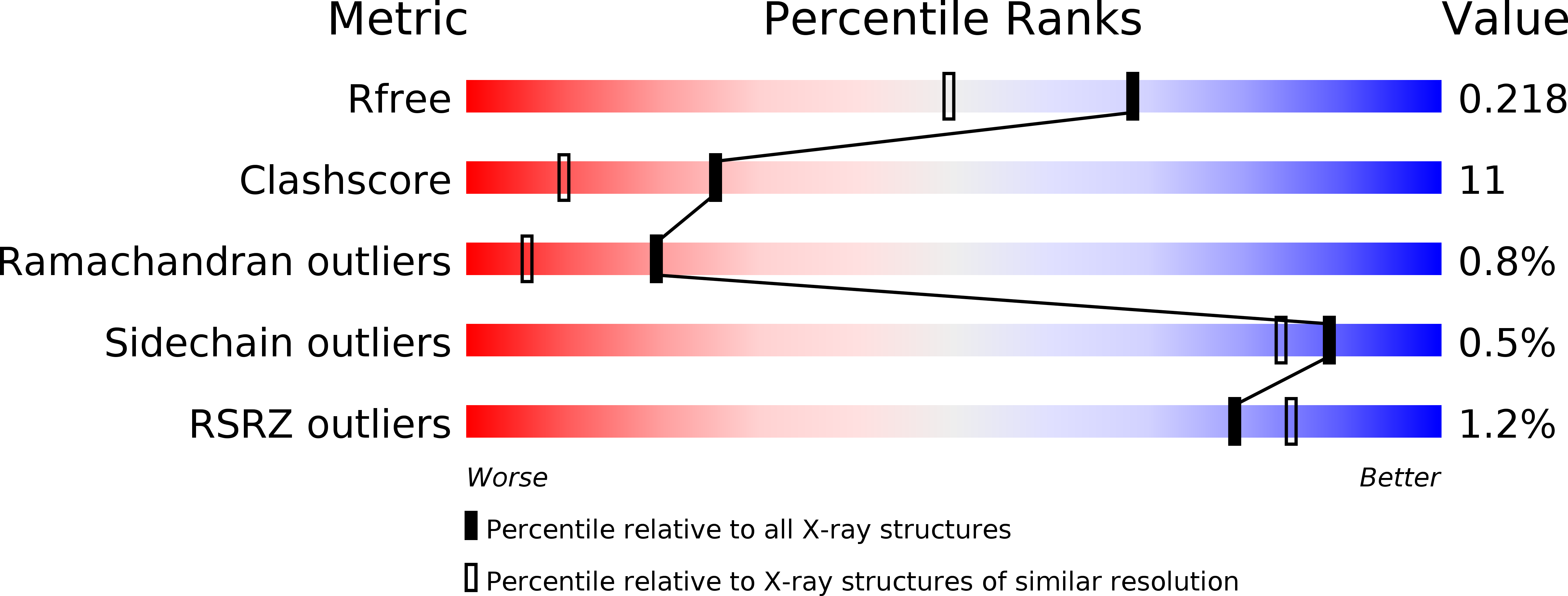
1.75 Å
R-Value Free:
0.22
R-Value Work:
0.20
R-Value Observed:
0.20
Space Group:
P 1
Macromolecular Entities
Structures with similar UniProt ID
Protein Blast
Polymer Type:polypeptide(L)
Molecule:Glucose-1-phosphate adenylyltransferase
Gene (Uniprot):glgC
Chain IDs:A, B, C, D, E, F (auth: H), G (auth: I), H (auth: J), I (auth: K), J (auth: L), K (auth: N), L (auth: O), M (auth: P), N (auth: Q), O (auth: R), P (auth: F), Q (auth: G), R (auth: M), S (auth: T), T (auth: U)
Chain Length:418
Number of Molecules:20
Biological Source:Rhizobium radiobacter
Primary Citation
Structural analysis reveals a pyruvate-binding activator site in theAgrobacterium tumefaciensADP-glucose pyrophosphorylase.
J. Biol. Chem. 294 1338 1348 (2019)
PMID: 30401744 DOI: 10.1074/jbc.RA118.004246

Abstact

The pathways for biosynthesis of glycogen in bacteria and starch in plants are evolutionarily and biochemically related. They are regulated primarily by ADP-glucose pyrophosphorylase, which evolved to satisfy metabolic requirements of a particular organism. Despite the importance of these two pathways, little is known about the mechanism that controls pyrophosphorylase activity or the location of its allosteric sites. Here, we report pyruvate-bound crystal structures of ADP-glucose pyrophosphorylase from the bacterium Agrobacterium tumefaciens, identifying a previously elusive activator site for the enzyme. We found that the tetrameric enzyme binds two molecules of pyruvate in a planar conformation. Each binding site is located in a crevice between the C-terminal domains of two subunits where they stack via a distinct β-helix region. Pyruvate interacts with the side chain of Lys-43 and with the peptide backbone of Ser-328 and Gly-329 from both subunits. These structural insights led to the design of two variants with altered regulatory properties. In one variant (K43A), the allosteric effect was absent, whereas in the other (G329D), the introduced Asp mimicked the presence of pyruvate. The latter generated an enzyme that was preactivated and insensitive to further activation by pyruvate. Our study furnishes a deeper understanding of how glycogen biosynthesis is regulated in bacteria and the mechanism by which transgenic plants increased their starch production. These insights will facilitate rational approaches to enzyme engineering for starch production in crops of agricultural interest and will promote further study of allosteric signal transmission and molecular evolution in this important enzyme family.

Legend

Protein

Chemical

Disease

Primary Citation of related structures
Feedback Form
Name
Email
Institute
Feedback