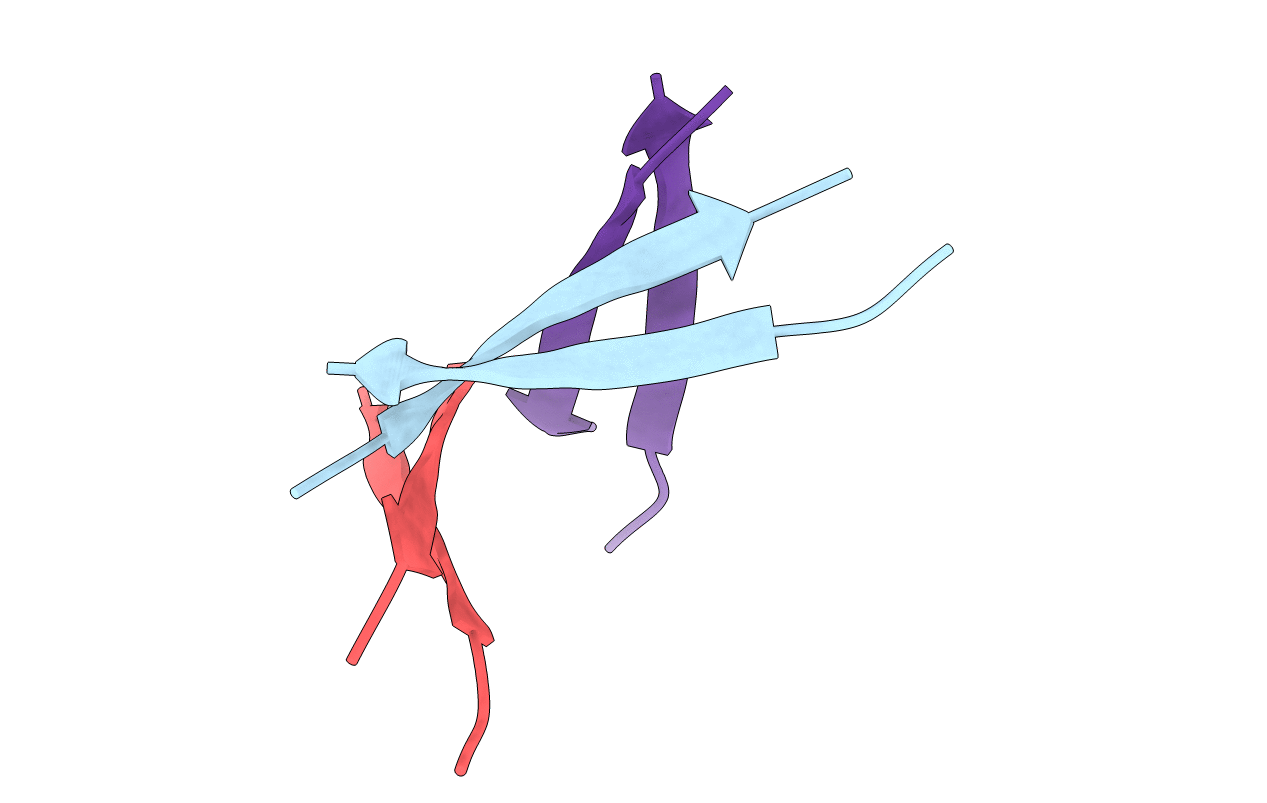
5W4H image
Deposition Date 2017-06-11
Release Date 2017-11-22
Last Version Date 2023-10-04
Entry Detail
PDB ID:
5W4H
Keywords:
Title:
X-ray crystallographic structure of a beta-hairpin peptide mimic derived from Abeta 16-36. Synchrotron data set. (ORN)KLV(MEA)FAE(ORN)AIIGLMV.
Biological Source:
Source Organism:
Homo sapiens (Taxon ID: 9606)
Method Details:
Experimental Method:
Resolution:
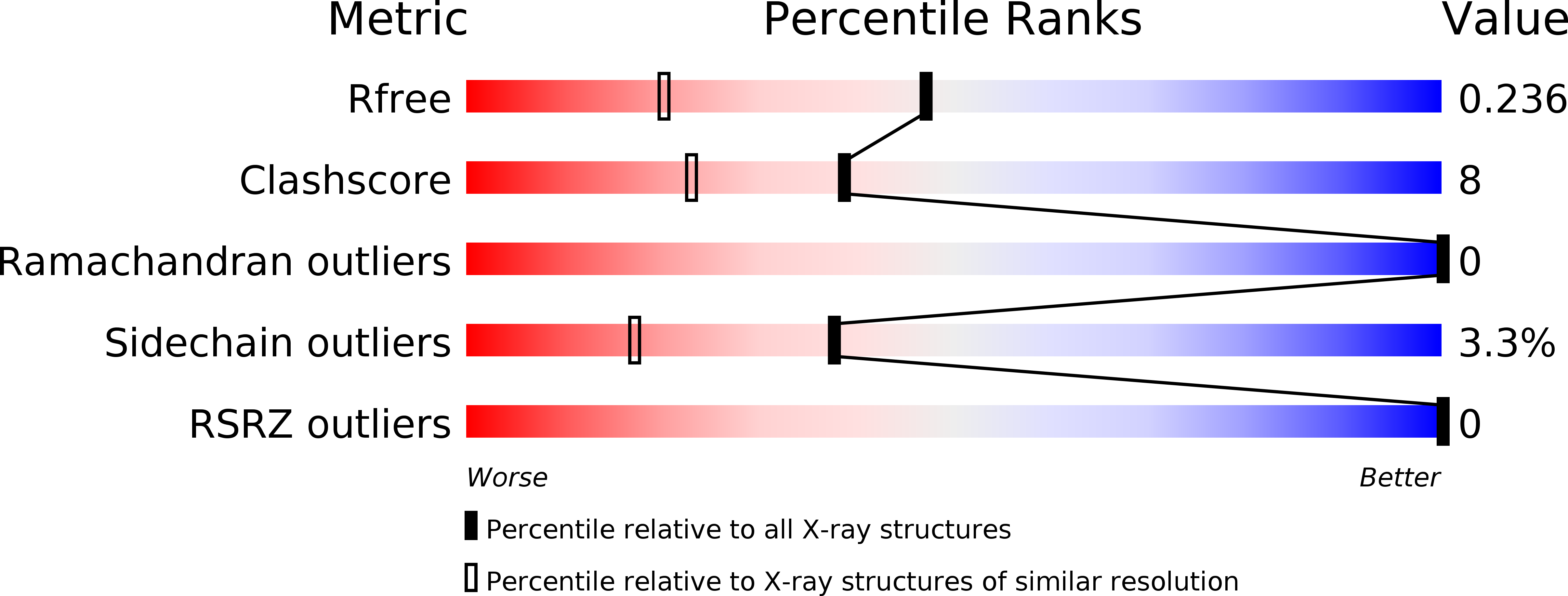
1.72 Å
R-Value Free:
0.23
R-Value Work:
0.20
R-Value Observed:
0.20
Space Group:
P 4 3 2
Macromolecular Entities
Polymer Type:polypeptide(L)
Molecule:A-beta 17_36 peptide: ORN-LYS-LEU-VAL-MEA-PHE-ALA-GLU-ORN-ALA-ILE-ILE-GLY-LEU-MET-VAL
Chain IDs:A, B, C
Chain Length:16
Number of Molecules:3
Biological Source:Homo sapiens
Primary Citation
A Hexamer of a Peptide Derived from A beta 16-36.
Biochemistry 56 6061 6071 (2017)
PMID: 29028351 DOI: 10.1021/acs.biochem.7b00831

Abstact

The absence of high-resolution structures of amyloid oligomers constitutes a major gap in our understanding of amyloid diseases. A growing body of evidence indicates that oligomers of the β-amyloid peptide Aβ are especially important in the progression of Alzheimer's disease. In many Aβ oligomers, the Aβ monomer components are thought to adopt a β-hairpin conformation. This paper describes the design and study of a macrocyclic β-hairpin peptide derived from Aβ16-36. Sodium dodecyl sulfate-polyacrylamide gel electrophoresis and size exclusion chromatography studies show that the Aβ16-36 β-hairpin peptide assembles in solution to form hexamers, trimers, and dimers. X-ray crystallography reveals that the peptide assembles to form a hexamer in the crystal state and that the hexamer is composed of dimers and trimers. Lactate dehydrogenase release assays show that the oligomers formed by the Aβ16-36 β-hairpin peptide are toxic toward neuronally derived SH-SY5Y cells. Replica-exchange molecular dynamics demonstrates that the hexamer can accommodate full-length Aβ. These findings expand our understanding of the structure, solution-phase behavior, and biological activity of Aβ oligomers and may offer insights into the molecular basis of Alzheimer's disease.

Legend

Protein

Chemical

Disease

Primary Citation of related structures
Feedback Form
Name
Email
Institute
Feedback