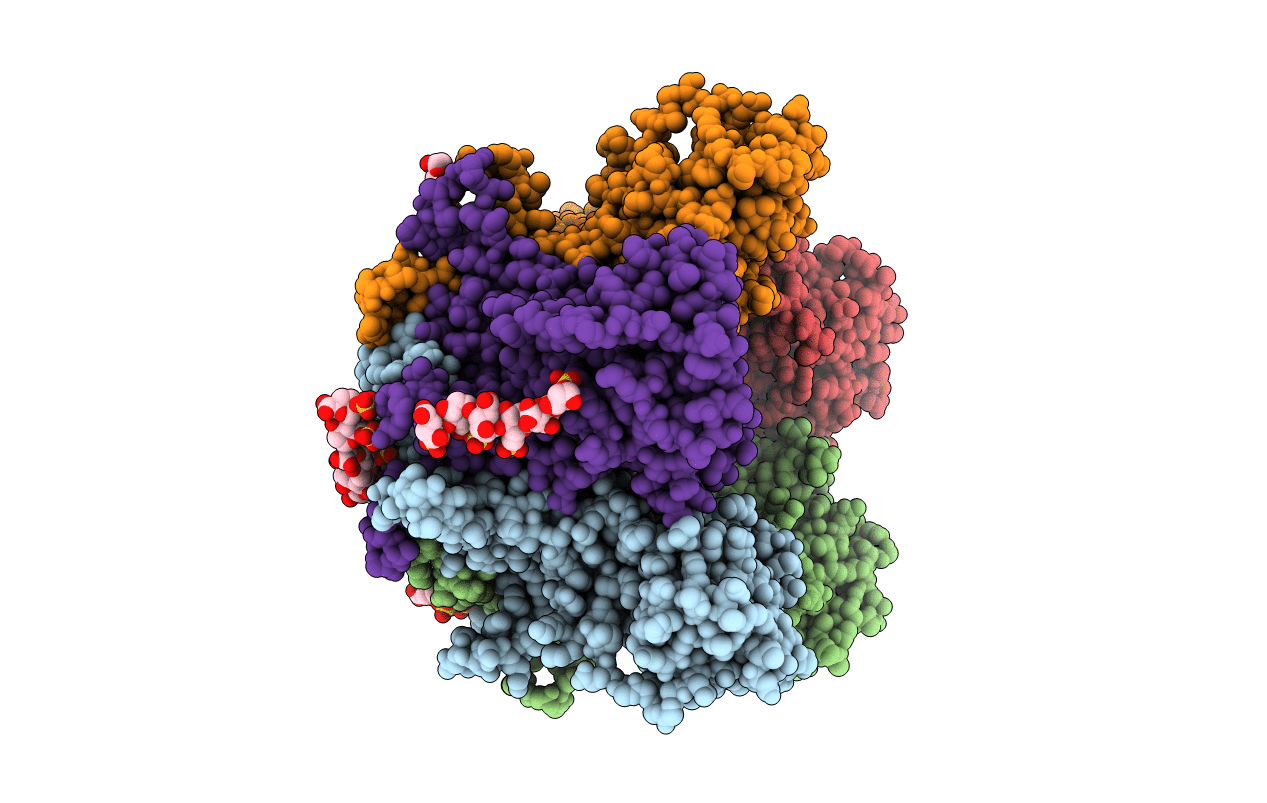
5W1O image
Deposition Date 2017-06-04
Release Date 2017-10-18
Last Version Date 2024-12-25
Entry Detail
PDB ID:
5W1O
Keywords:
Title:
Crystal Structure of HPV16 L1 Pentamer Bound to Heparin Oligosaccharides
Biological Source:
Source Organism:
Host Organism:
Method Details:
Experimental Method:
Resolution:
2.80 Å
R-Value Free:
0.27
R-Value Work:
0.22
R-Value Observed:
0.22
Space Group:
P 1 21 1

Macromolecular Entities
Structures with similar UniProt ID
Protein Blast
Polymer Type:polypeptide(L)
Molecule:Major capsid protein L1
Gene (Uniprot):L1
Chain IDs:A, B, C, D, E
Chain Length:427
Number of Molecules:5
Biological Source:Human papillomavirus
Primary Citation
Structural basis of oligosaccharide receptor recognition by human papillomavirus.
J. Biol. Chem. 286 2617 2624 (2011)
PMID: 21115492 DOI: 10.1074/jbc.M110.160184

Abstact

High risk human papillomavirus types 16 (HPV16) and 18 (HPV18) can cause cervical cancer. Efficient infection by HPV16 and HPV18 pseudovirions requires interactions of particles with cell-surface receptor heparan sulfate oligosaccharide. To understand the virus-receptor interactions for HPV infection, we determined the crystal structures of HPV16 and HPV18 capsids bound to the oligosaccharide receptor fragment using oligomeric heparin. The HPV-heparin structures revealed multiple binding sites for the highly negatively charged oligosaccharide fragment on the capsid surface, which is different from previously reported virus-receptor interactions in which a single type of binding pocket is present for a particular receptor. We performed structure-guided mutagenesis to generate mutant viruses, and cell binding and infectivity assays demonstrated the functional role of viral residues involved in heparin binding. These results provide a basis for understanding virus-heparan sulfate receptor interactions critical for HPV infection and for the potential development of inhibitors against HPV infection.

Legend

Protein

Chemical

Disease

Primary Citation of related structures
Feedback Form
Name
Email
Institute
Feedback