5VND image
Deposition Date 2017-04-30
Release Date 2017-05-24
Last Version Date 2024-10-30
Entry Detail
PDB ID:
5VND
Title:
Crystal structure of FGFR1-Y563C (FGFR4 surrogate) covalently bound to H3B-6527
Biological Source:
Source Organism:
Homo sapiens (Taxon ID: 9606)
Host Organism:
Method Details:
Experimental Method:
Resolution:
2.20 Å
R-Value Free:
0.22
R-Value Work:
0.17
R-Value Observed:
0.18
Space Group:
C 1 2 1
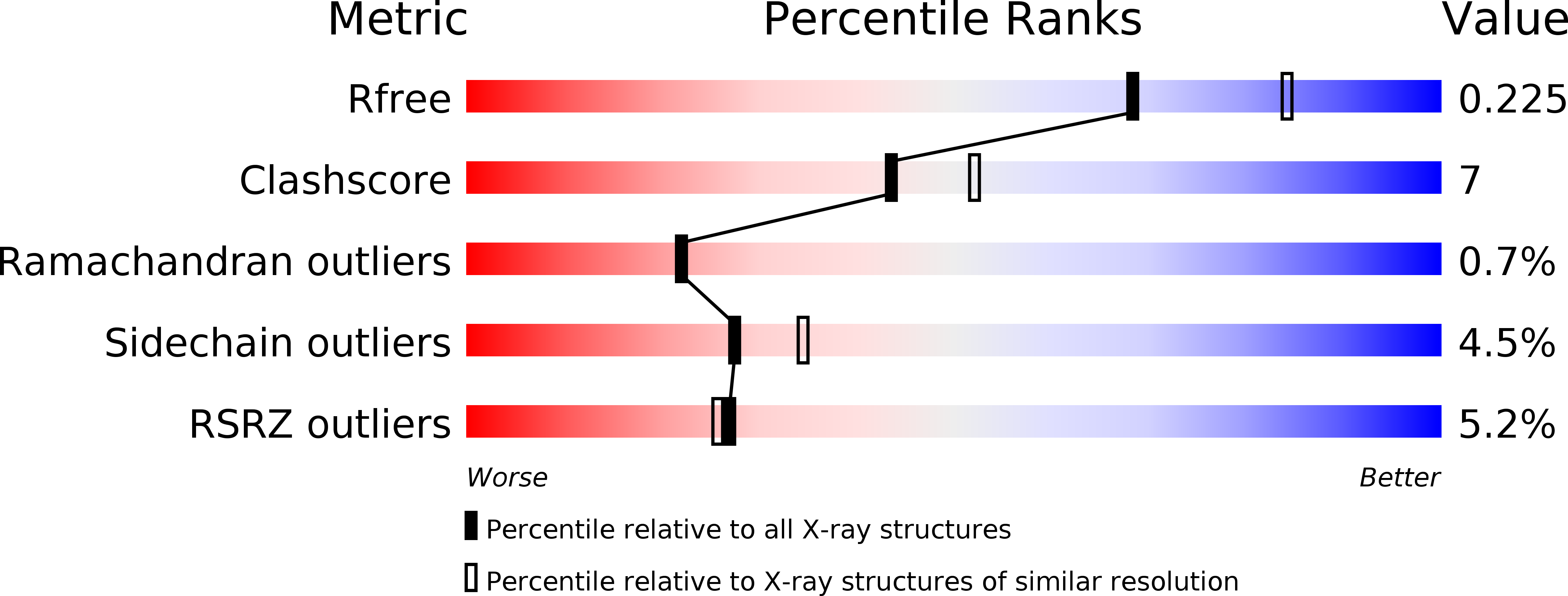
Macromolecular Entities
Structures with similar UniProt ID
Protein Blast
Polymer Type:polypeptide(L)
Molecule:Fibroblast growth factor receptor 1
Gene (Uniprot):FGFR1
Mutagens:C486A, Y561C, C582S
Chain IDs:A, B
Chain Length:309
Number of Molecules:2
Biological Source:Homo sapiens
Primary Citation

Abstact

Activation of the fibroblast growth factor receptor FGFR4 by FGF19 drives hepatocellular carcinoma (HCC), a disease with few, if any, effective treatment options. While a number of pan-FGFR inhibitors are being clinically evaluated, their application to FGF19-driven HCC may be limited by dose-limiting toxicities mediated by FGFR1-3 receptors. To evade the potential limitations of pan-FGFR inhibitors, we generated H3B-6527, a highly selective covalent FGFR4 inhibitor, through structure-guided drug design. Studies in a panel of 40 HCC cell lines and 30 HCC PDX models showed that FGF19 expression is a predictive biomarker for H3B-6527 response. Moreover, coadministration of the CDK4/6 inhibitor palbociclib in combination with H3B-6527 could effectively trigger tumor regression in a xenograft model of HCC. Overall, our results offer preclinical proof of concept for H3B-6527 as a candidate therapeutic agent for HCC cases that exhibit increased expression of FGF19. Cancer Res; 77(24); 6999-7013. ©2017 AACR.

Legend

Protein

Chemical

Disease

Primary Citation of related structures
Feedback Form
Name
Email
Institute
Feedback