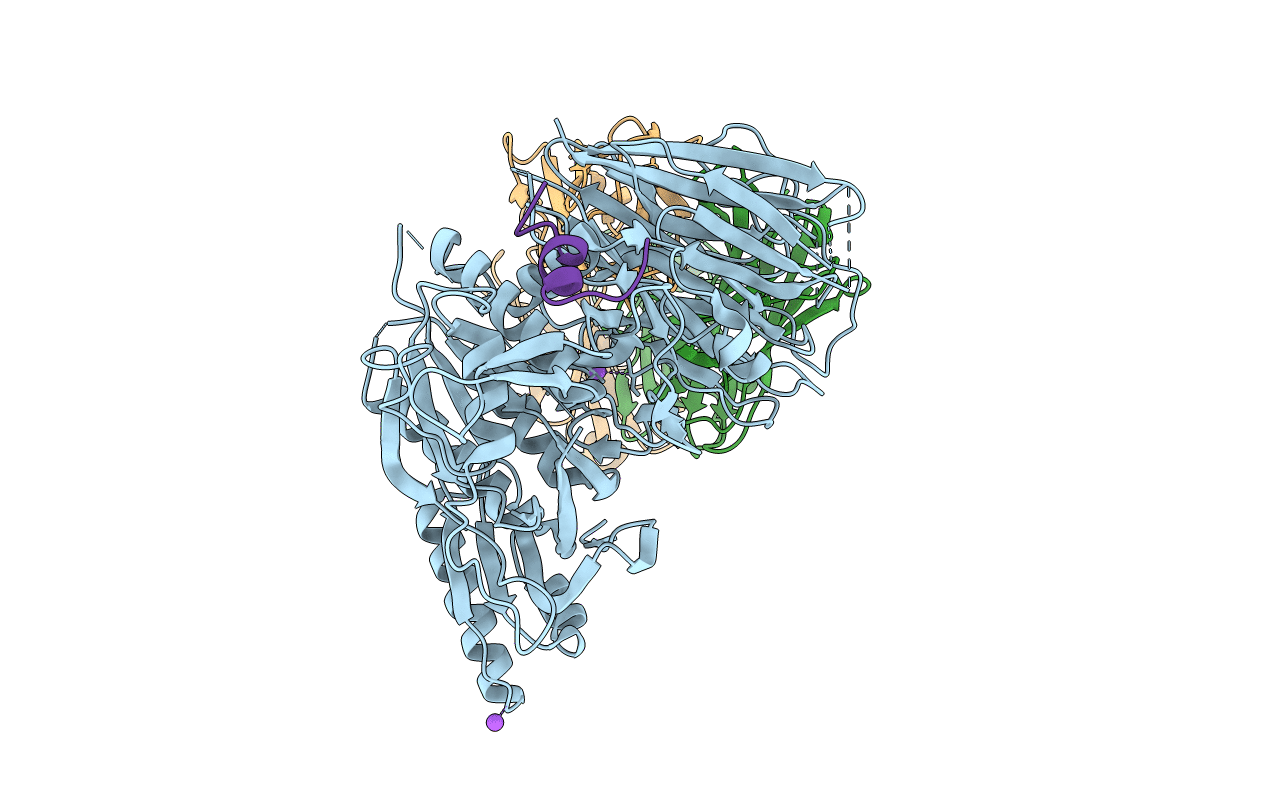
5VLP image
Deposition Date 2017-04-25
Release Date 2017-08-16
Last Version Date 2023-11-15
Entry Detail
PDB ID:
5VLP
Keywords:
Title:
PCSK9 complex with LDLR antagonist peptide and Fab7G7
Biological Source:
Source Organism:
Homo sapiens (Taxon ID: 9606)
Mus musculus (Taxon ID: 10090)
synthetic construct (Taxon ID: 32630)
Host Organism:
Method Details:
Experimental Method:
Resolution:
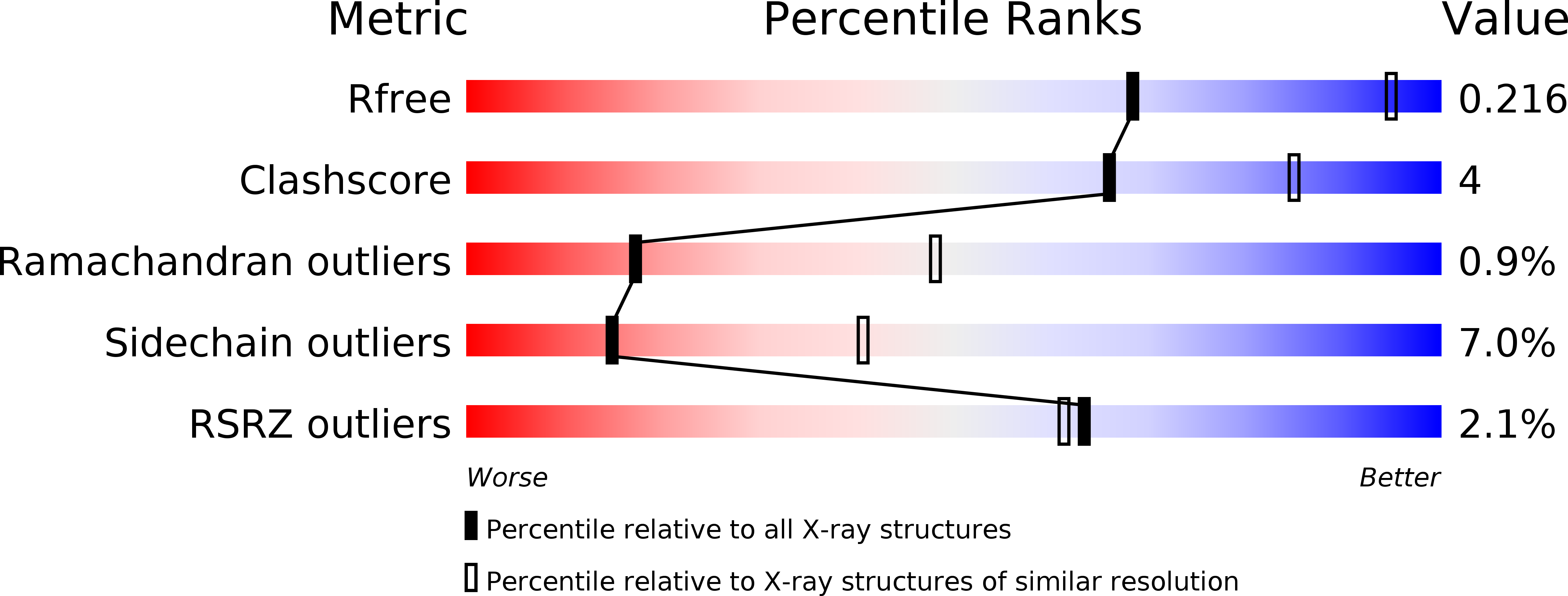
2.90 Å
R-Value Free:
0.20
R-Value Work:
0.17
R-Value Observed:
0.17
Space Group:
I 2 2 2
Macromolecular Entities
Structures with similar UniProt ID
Protein Blast
Polymer Type:polypeptide(L)
Molecule:Proprotein convertase subtilisin/kexin type 9
Gene (Uniprot):PCSK9
Chain IDs:A
Chain Length:700
Number of Molecules:1
Biological Source:Homo sapiens
Polymer Type:polypeptide(L)
Molecule:Fab7G7 heavy chain
Chain IDs:B (auth: H)
Chain Length:223
Number of Molecules:1
Biological Source:Mus musculus
Structures with similar UniProt ID
Protein Blast
Polymer Type:polypeptide(L)
Molecule:Fab7G7 light chain
Gene (Uniprot):LC
Chain IDs:C (auth: L)
Chain Length:214
Number of Molecules:1
Biological Source:Mus musculus
Polymer Type:polypeptide(L)
Molecule:LDLR antagonist peptide
Chain IDs:D (auth: Z)
Chain Length:17
Number of Molecules:1
Biological Source:synthetic construct
Ligand Molecules
Primary Citation
Discovery of a cryptic peptide-binding site on PCSK9 and design of antagonists.
Nat. Struct. Mol. Biol. 24 848 856 (2017)
PMID: 28825733 DOI: 10.1038/nsmb.3453

Abstact

Proprotein convertase subtilisin/kexin type 9 (PCSK9) regulates plasma LDL cholesterol (LDL-c) levels by promoting the degradation of liver LDL receptors (LDLRs). Antibodies that inhibit PCSK9 binding to the EGF(A) domain of the LDLR are effective in lowering LDL-c. However, the discovery of small-molecule therapeutics is hampered by difficulty in targeting the relatively flat EGF(A)-binding site on PCSK9. Here we demonstrate that it is possible to target this site, based on the finding that the PCSK9 P' helix displays conformational flexibility. As a consequence, the vacated N-terminal groove of PCSK9, which is adjacent to the EGF(A)-binding site, is in fact accessible to small peptides. In phage-display experiments, the EGF(A)-mimicking peptide Pep2-8 was used as an anchor peptide for the attachment of an extension peptide library directed toward the groove site. Guided by structural information, we further engineered the identified groove-binding peptides into antagonists, which encroach on the EGF(A)-binding site and inhibit LDLR binding.

Legend

Protein

Chemical

Disease

Primary Citation of related structures
Feedback Form
Name
Email
Institute
Feedback