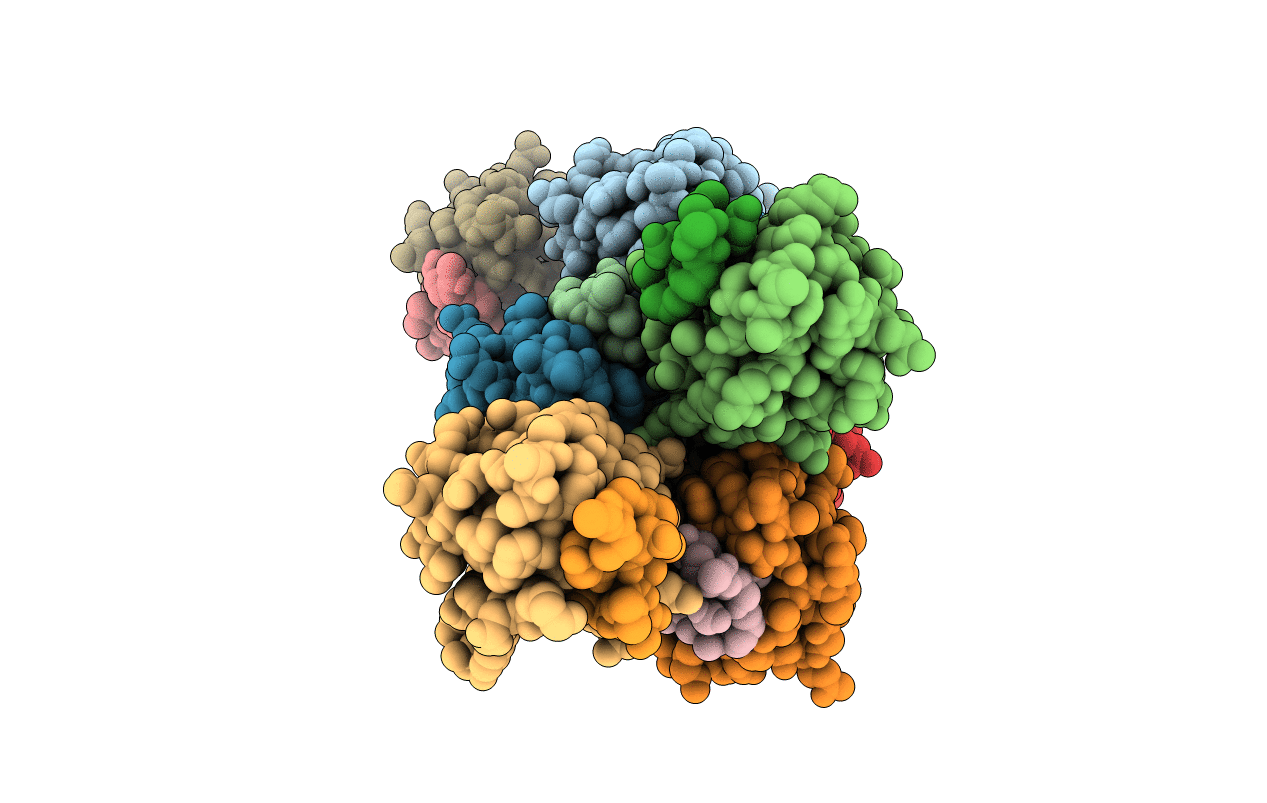
5VK1 image
Deposition Date 2017-04-20
Release Date 2018-04-25
Last Version Date 2024-07-10
Entry Detail
PDB ID:
5VK1
Title:
Crystal structure of human MDM4 in complex with a 12-mer lysine-cysteine side chain dithiocarbamate stapled peptide inhibitor PMI
Biological Source:
Source Organism:
Method Details:
Experimental Method:
Resolution:
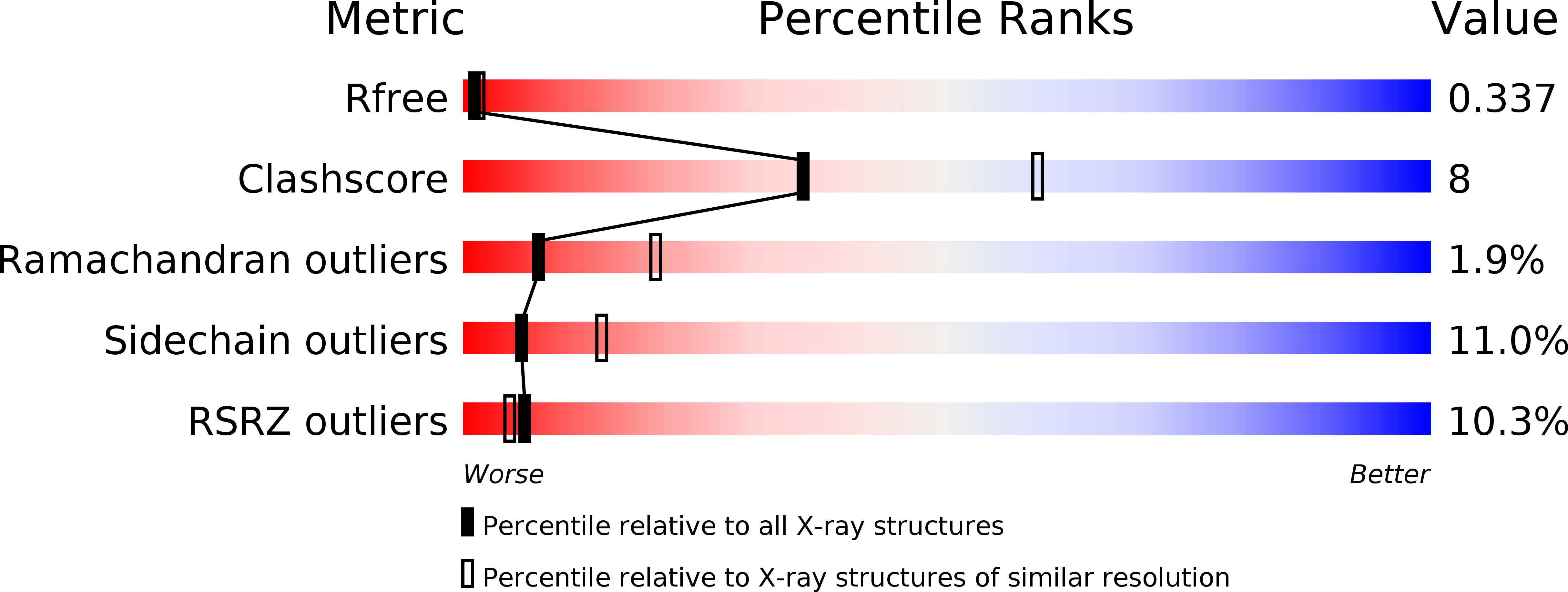
2.69 Å
R-Value Free:
0.33
R-Value Work:
0.27
R-Value Observed:
0.28
Space Group:
P 1
Macromolecular Entities
Structures with similar UniProt ID
Protein Blast
Polymer Type:polypeptide(L)
Molecule:Protein Mdm4
Gene (Uniprot):MDM4
Mutagens:Q68A, Q69A, E70A
Chain IDs:A, C, E, G, I, K, M, O
Chain Length:85
Number of Molecules:8
Biological Source:Homo sapiens
Polymer Type:polypeptide(L)
Molecule:Lysine-cysteine side chain dithiocarbamate stapled peptide inhibitor PMI
Chain IDs:B, D, F, H, J, L, N, P
Chain Length:14
Number of Molecules:8
Biological Source:synthetic construct
Primary Citation
Dithiocarbamate-inspired side chain stapling chemistry for peptide drug design.
Chem Sci 10 1522 1530 (2019)
PMID: 30809370 DOI: 10.1039/c8sc03275k

Abstact

Two major pharmacological hurdles severely limit the widespread use of small peptides as therapeutics: poor proteolytic stability and membrane permeability. Importantly, low aqueous solubility also impedes the development of peptides for clinical use. Various elaborate side chain stapling chemistries have been developed for α-helical peptides to circumvent this problem, with considerable success in spite of inevitable limitations. Here we report a novel peptide stapling strategy based on the dithiocarbamate chemistry linking the side chains of residues Lys(i) and Cys(i + 4) of unprotected peptides and apply it to a series of dodecameric peptide antagonists of the p53-inhibitory oncogenic proteins MDM2 and MDMX. Crystallographic studies of peptide-MDM2/MDMX complexes structurally validated the chemoselectivity of the dithiocarbamate staple bridging Lys and Cys at (i, i + 4) positions. One dithiocarbamate-stapled PMI derivative, DTCPMI, showed a 50-fold stronger binding to MDM2 and MDMX than its linear counterpart. Importantly, in contrast to PMI and its linear derivatives, the DTCPMI peptide actively traversed the cell membrane and killed HCT116 tumor cells in vitro by activating the tumor suppressor protein p53. Compared with other known stapling techniques, our solution-based DTC stapling chemistry is simple, cost-effective, regio-specific and environmentally friendly, promising an important new tool for the development of peptide therapeutics with improved pharmacological properties including aqueous solubility, proteolytic stability and membrane permeability.

Legend

Protein

Chemical

Disease

Primary Citation of related structures
Feedback Form
Name
Email
Institute
Feedback