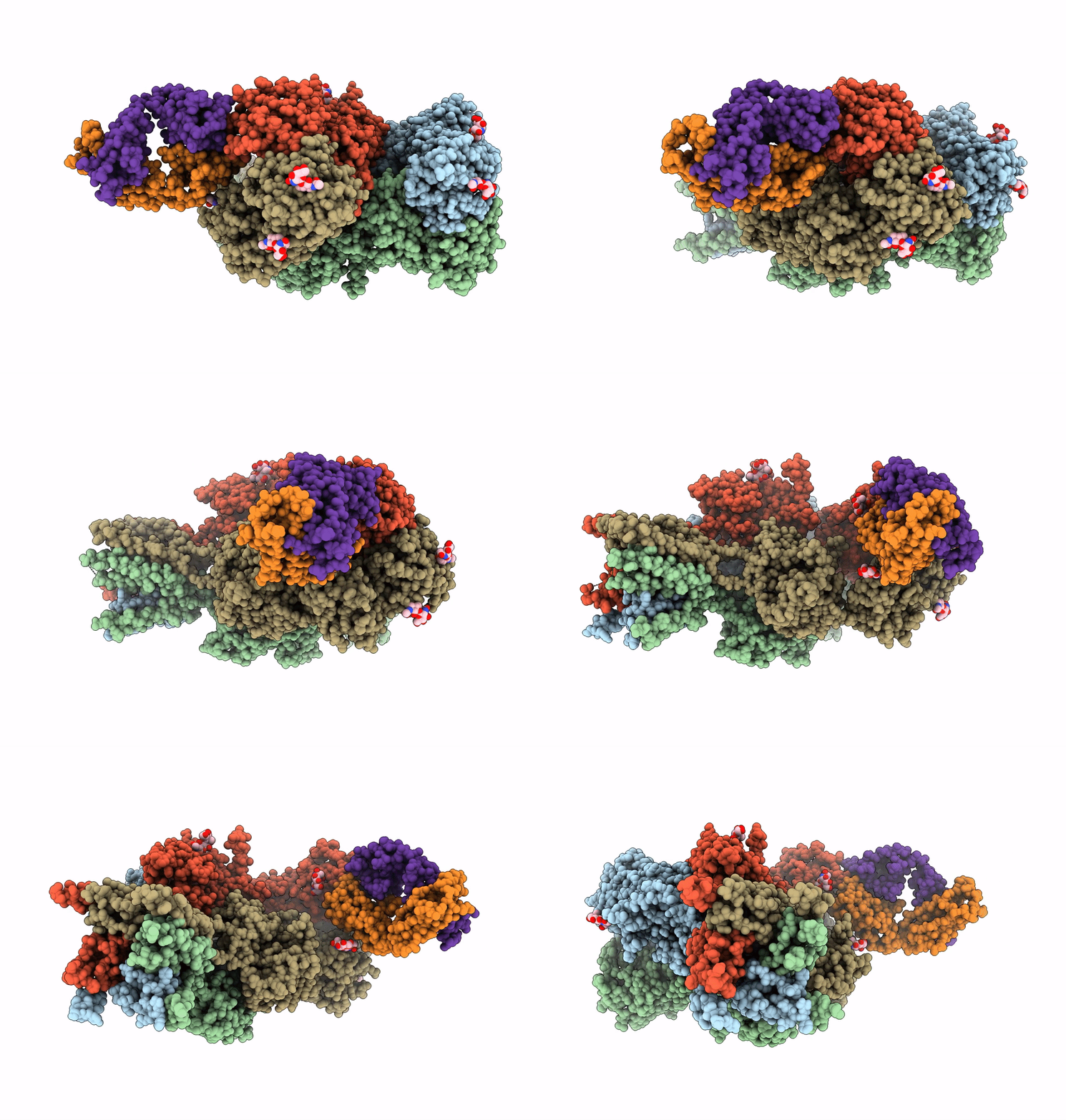
5UOW image
Deposition Date 2017-02-01
Release Date 2017-03-22
Last Version Date 2024-10-23
Entry Detail
PDB ID:
5UOW
Title:
Triheteromeric NMDA receptor GluN1/GluN2A/GluN2B in complex with glycine, glutamate, MK-801 and a GluN2B-specific Fab, at pH 6.5
Biological Source:
Source Organism:
Xenopus laevis (Taxon ID: 8355)
Mus musculus (Taxon ID: 10090)
Host Organism:
Method Details:
Experimental Method:
Resolution:
4.50 Å
Aggregation State:
PARTICLE
Reconstruction Method:
SINGLE PARTICLE
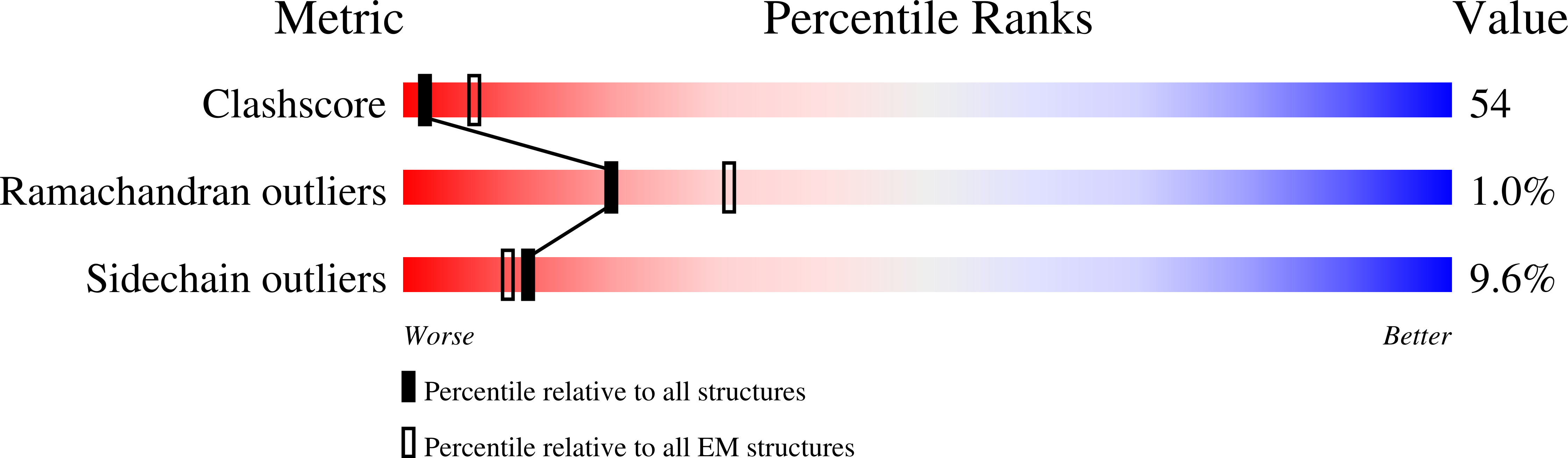
Macromolecular Entities
Structures with similar UniProt ID
Protein Blast
Polymer Type:polypeptide(L)
Molecule:N-methyl-D-aspartate receptor subunit NR1-8a
Chain IDs:A, C
Chain Length:814
Number of Molecules:2
Biological Source:Xenopus laevis
Structures with similar UniProt ID
Protein Blast
Polymer Type:polypeptide(L)
Molecule:N-methyl-D-aspartate receptor subunit NR2A
Gene (Uniprot):grin2a
Chain IDs:B
Chain Length:832
Number of Molecules:1
Biological Source:Xenopus laevis
Structures with similar UniProt ID
Protein Blast
Polymer Type:polypeptide(L)
Molecule:Ionotropic glutamate receptor subunit NR2B
Gene (Uniprot):grin2b
Chain IDs:D
Chain Length:837
Number of Molecules:1
Biological Source:Xenopus laevis
Polymer Type:polypeptide(L)
Molecule:GluN2B-specific Fab, termed 11D1
Chain IDs:E (auth: F), F (auth: G)
Chain Length:216
Number of Molecules:2
Biological Source:Mus musculus
Primary Citation
Cryo-EM structures of the triheteromeric NMDA receptor and its allosteric modulation.
Science 355 ? ? (2017)
PMID: 28232581 DOI: 10.1126/science.aal3729

Abstact

N-methyl-d-aspartate receptors (NMDARs) are heterotetrameric ion channels assembled as diheteromeric or triheteromeric complexes. Here, we report structures of the triheteromeric GluN1/GluN2A/GluN2B receptor in the absence or presence of the GluN2B-specific allosteric modulator Ro 25-6981 (Ro), determined by cryogenic electron microscopy (cryo-EM). In the absence of Ro, the GluN2A and GluN2B amino-terminal domains (ATDs) adopt "closed" and "open" clefts, respectively. Upon binding Ro, the GluN2B ATD clamshell transitions from an open to a closed conformation. Consistent with a predominance of the GluN2A subunit in ion channel gating, the GluN2A subunit interacts more extensively with GluN1 subunits throughout the receptor, in comparison with the GluN2B subunit. Differences in the conformation of the pseudo-2-fold-related GluN1 subunits further reflect receptor asymmetry. The triheteromeric NMDAR structures provide the first view of the most common NMDA receptor assembly and show how incorporation of two different GluN2 subunits modifies receptor symmetry and subunit interactions, allowing each subunit to uniquely influence receptor structure and function, thus increasing receptor complexity.

Legend

Protein

Chemical

Disease

Primary Citation of related structures
Feedback Form
Name
Email
Institute
Feedback