5UJV image
Deposition Date 2017-01-19
Release Date 2017-11-08
Last Version Date 2024-03-06
Entry Detail
PDB ID:
5UJV
Title:
Crystal structure of FePYR1 in complex with abscisic acid
Biological Source:
Source Organism:
Festuca elata (Taxon ID: 464049)
Host Organism:
Method Details:
Experimental Method:
Resolution:
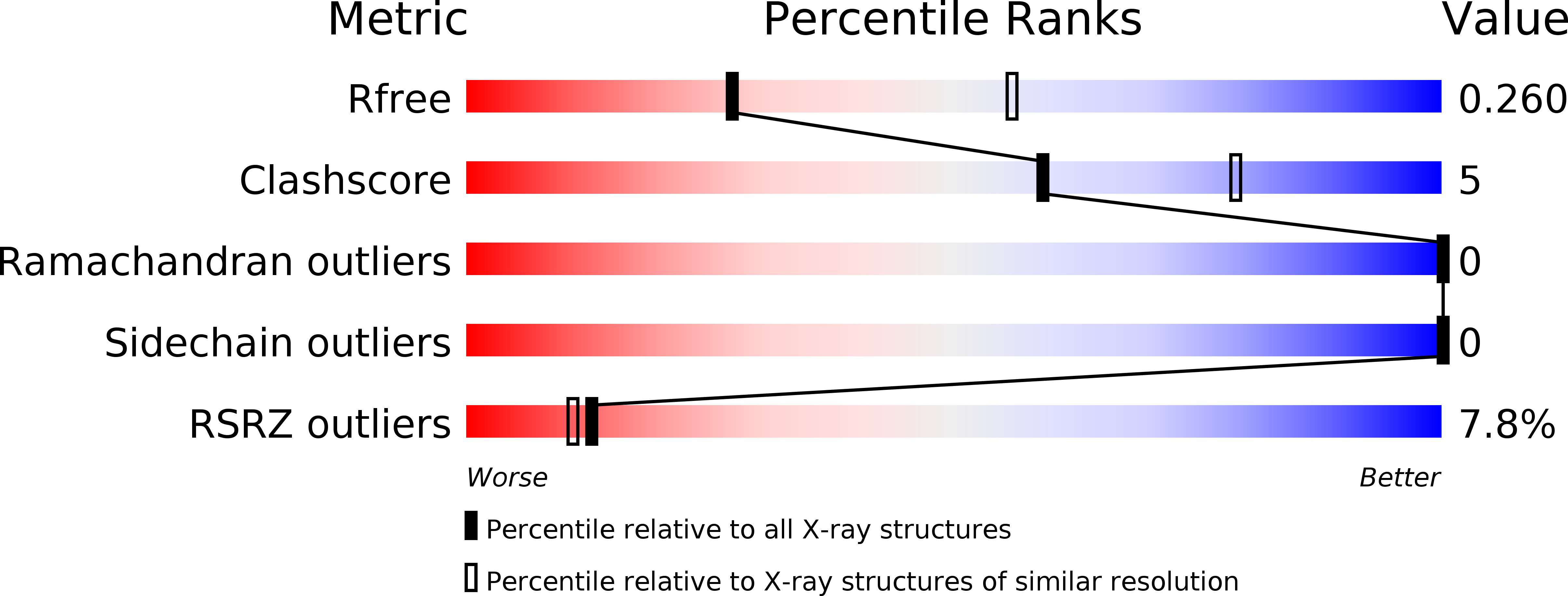
2.70 Å
R-Value Free:
0.25
R-Value Work:
0.22
R-Value Observed:
0.22
Space Group:
P 42 21 2
Macromolecular Entities
Structures with similar UniProt ID
Protein Blast
Polymer Type:polypeptide(L)
Molecule:PYR1
Chain IDs:A, B, C
Chain Length:212
Number of Molecules:3
Biological Source:Festuca elata
Ligand Molecules
Primary Citation
Structure determination and activity manipulation of the turfgrass ABA receptor FePYR1.
Sci Rep 7 14022 14022 (2017)
PMID: 29070857 DOI: 10.1038/s41598-017-14101-9

Abstact

Turfgrass are widely cultivated ornamental plants that have important ecological, societal and economical values. However, many turfgrass species are susceptible to drought and demand frequent irrigation thus consuming large amounts of water. With the ultimate goal of improving drought resistance in turfgrass, we identified several ABA receptors in turfgrass that are important to mediate ABA signaling and drought stress response. The ABA receptor FePYR1 from turfgrass Festuca elata was demonstrated to bind ABA as a monomer. Crystal structure analysis revealed that FePYR1 recognizes and binds ABA by the common gate-latch-lock mechanism resembling the Arabidopsis ABA receptors, but the ABA binding pocket in FePYR1 shows discrepant residues resulting in different binding affinity to ABA. Structure-guided alterations of amino acid residues in FePYR1 generated ABA receptor variants with significantly increased ABA binding affinity. Expression of FePYR1 in Arabidopsis conferred enhanced drought resistance in the transgenic plants. These findings provided detailed information about FePYR1 and demonstrated that structure-assisted engineering could create superior ABA receptors for improving plant drought resistance. The detailed structural information of FePYR1 would also assist future rational design of small molecules targeting specific ABA receptors in economically important plant species.

Legend

Protein

Chemical

Disease

Primary Citation of related structures
Feedback Form
Name
Email
Institute
Feedback