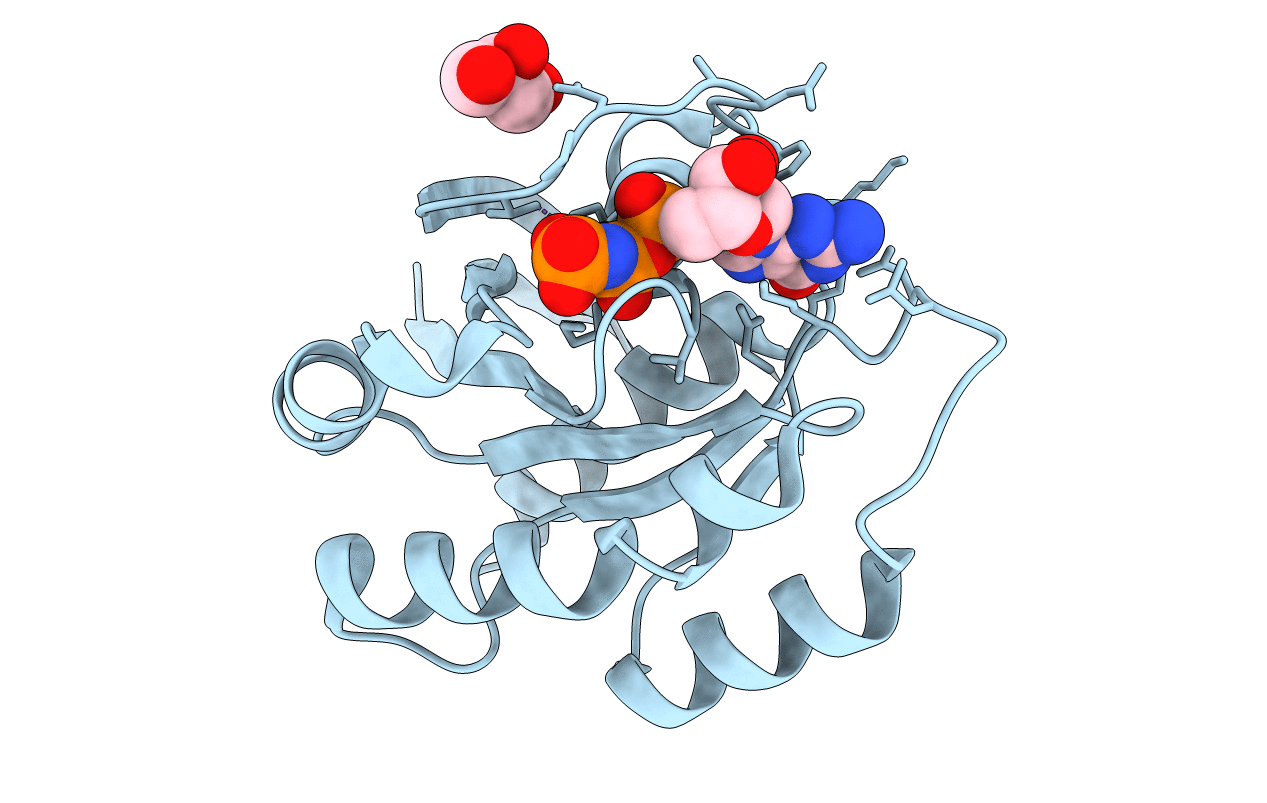
5UHV image
Deposition Date 2017-01-12
Release Date 2017-06-28
Last Version Date 2023-10-04
Entry Detail
PDB ID:
5UHV
Keywords:
Title:
wild-type NRas bound to GppNHp
Biological Source:
Source Organism:
Homo sapiens (Taxon ID: 9606)
Host Organism:
Method Details:
Experimental Method:
Resolution:
1.67 Å
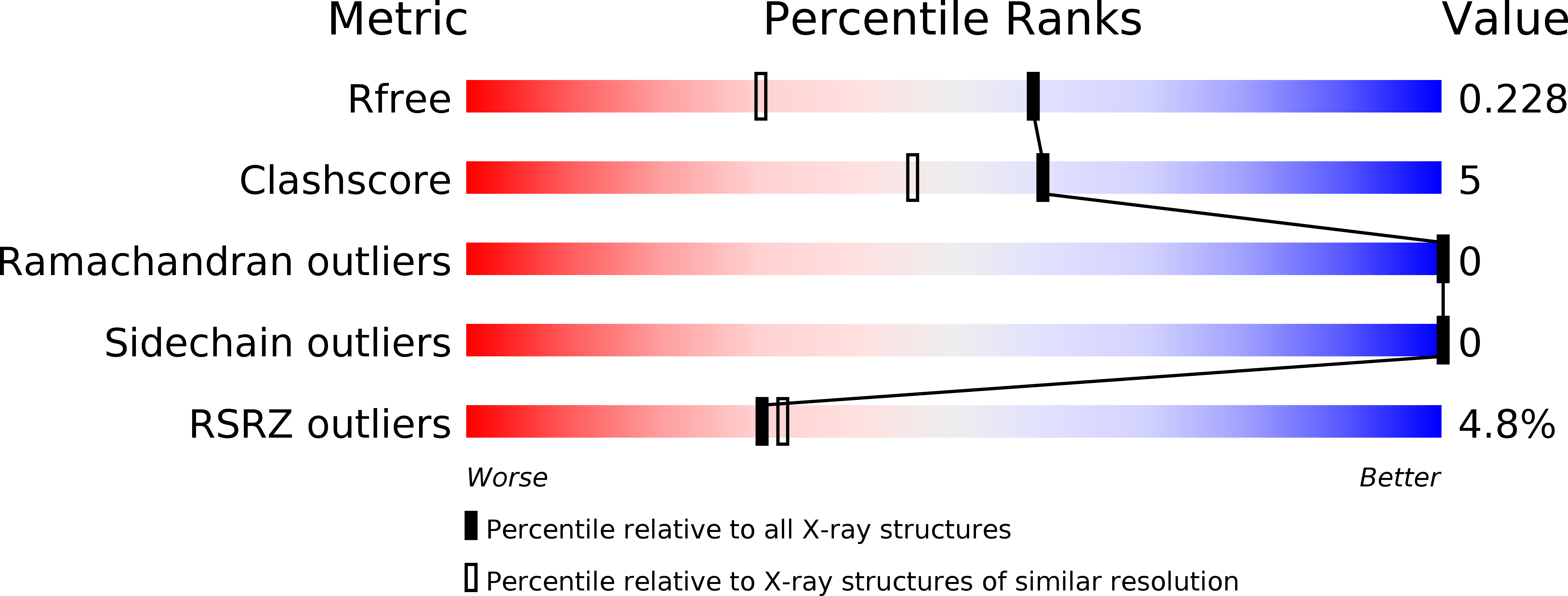
R-Value Free:
0.22
R-Value Work:
0.18
R-Value Observed:
0.19
Space Group:
P 32 2 1
Macromolecular Entities
Structures with similar UniProt ID
Protein Blast
Polymer Type:polypeptide(L)
Molecule:GTPase NRas
Gene (Uniprot):NRAS
Chain IDs:A
Chain Length:166
Number of Molecules:1
Biological Source:Homo sapiens
Primary Citation
The small GTPases K-Ras, N-Ras, and H-Ras have distinct biochemical properties determined by allosteric effects.
J. Biol. Chem. 292 12981 12993 (2017)
PMID: 28630043 DOI: 10.1074/jbc.M117.778886

Abstact

H-Ras, K-Ras, and N-Ras are small GTPases that are important in the control of cell proliferation, differentiation, and survival, and their mutants occur frequently in human cancers. The G-domain, which catalyzes GTP hydrolysis and mediates downstream signaling, is 95% conserved between the Ras isoforms. Because of their very high sequence identity, biochemical studies done on H-Ras have been considered representative of all three Ras proteins. We show here that this is not a valid assumption. Using enzyme kinetic assays under identical conditions, we observed clear differences between the three isoforms in intrinsic catalysis of GTP by Ras in the absence and presence of the Ras-binding domain (RBD) of the c-Raf kinase protein (Raf-RBD). Given their identical active sites, isoform G-domain differences must be allosteric in origin, due to remote isoform-specific residues that affect conformational states. We present the crystal structure of N-Ras bound to a GTP analogue and interpret the kinetic data in terms of structural features specific for H-, K-, and N-Ras.

Legend

Protein

Chemical

Disease

Primary Citation of related structures
Feedback Form
Name
Email
Institute
Feedback