5UEN image
Deposition Date 2017-01-03
Release Date 2017-03-01
Last Version Date 2024-11-20
Entry Detail
PDB ID:
5UEN
Title:
Crystal structure of the human adenosine A1 receptor A1AR-bRIL in complex with the covalent antagonist DU172 at 3.2A resolution
Biological Source:
Source Organism:
Homo sapiens (Taxon ID: 9606)
Escherichia coli (Taxon ID: 562)
Host Organism:
Method Details:
Experimental Method:
Resolution:
3.20 Å
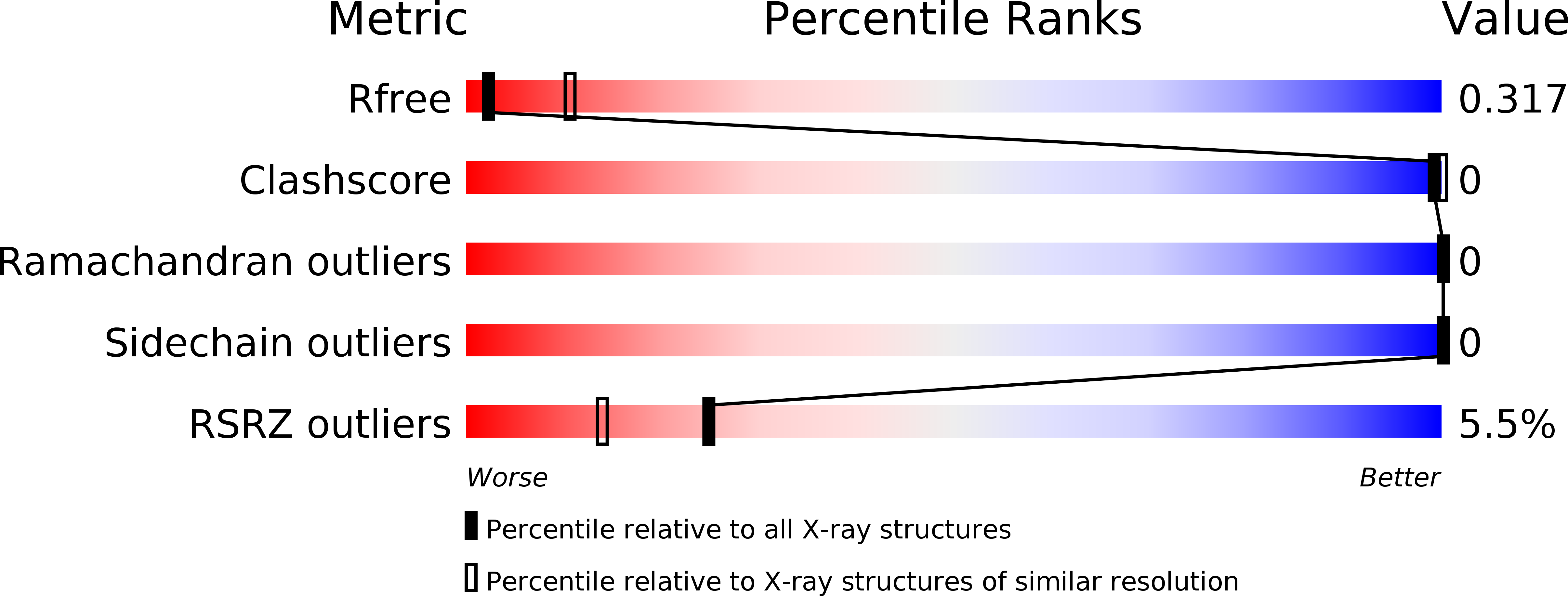
R-Value Free:
0.31
R-Value Work:
0.28
R-Value Observed:
0.28
Space Group:
P 2 21 21
Macromolecular Entities
Protein Blast
Polymer Type:polypeptide(L)
Molecule:Adenosine receptor A1,Soluble cytochrome b562,Adenosine receptor A1
Gene (Uniprot):cybC, ADORA1
Chain IDs:A, B
Chain Length:416
Number of Molecules:2
Biological Source:Homo sapiens, Escherichia coli
Primary Citation
Structure of the Adenosine A1 Receptor Reveals the Basis for Subtype Selectivity.
Cell 168 867 877.e13 (2017)
PMID: 28235198 DOI: 10.1016/j.cell.2017.01.042

Abstact

The adenosine A1 receptor (A1-AR) is a G-protein-coupled receptor that plays a vital role in cardiac, renal, and neuronal processes but remains poorly targeted by current drugs. We determined a 3.2 Å crystal structure of the A1-AR bound to the selective covalent antagonist, DU172, and identified striking differences to the previously solved adenosine A2A receptor (A2A-AR) structure. Mutational and computational analysis of A1-AR revealed a distinct conformation of the second extracellular loop and a wider extracellular cavity with a secondary binding pocket that can accommodate orthosteric and allosteric ligands. We propose that conformational differences in these regions, rather than amino-acid divergence, underlie drug selectivity between these adenosine receptor subtypes. Our findings provide a molecular basis for AR subtype selectivity with implications for understanding the mechanisms governing allosteric modulation of these receptors, allowing the design of more selective agents for the treatment of ischemia-reperfusion injury, renal pathologies, and neuropathic pain.

Legend

Protein

Chemical

Disease

Primary Citation of related structures
Feedback Form
Name
Email
Institute
Feedback