5UBF image
Deposition Date 2016-12-20
Release Date 2017-01-11
Last Version Date 2024-11-13
Entry Detail
PDB ID:
5UBF
Title:
Crystal structure of the RctB domains 2-3, RctB-155-483
Biological Source:
Source Organism:
Vibrio cholerae (Taxon ID: 666)
Host Organism:
Method Details:
Experimental Method:
Resolution:
2.60 Å
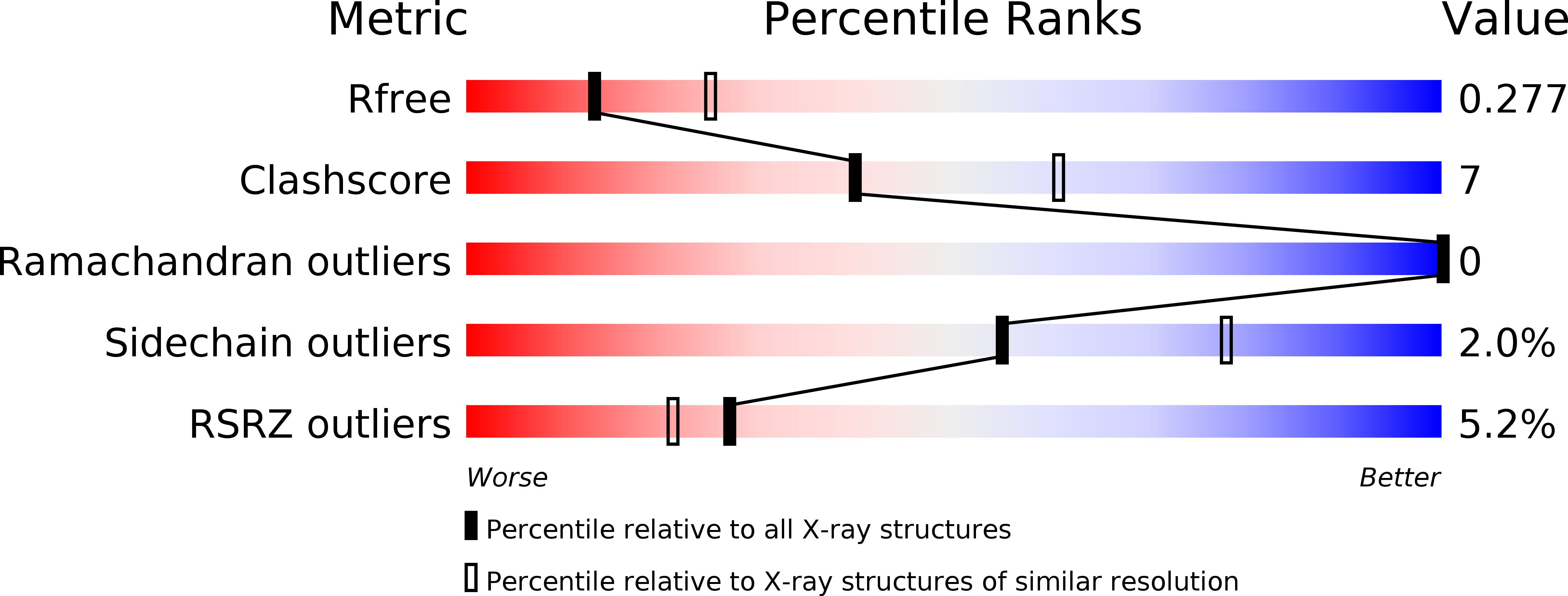
R-Value Free:
0.27
R-Value Work:
0.23
R-Value Observed:
0.23
Space Group:
H 3
Macromolecular Entities
Structures with similar UniProt ID
Protein Blast
Polymer Type:polypeptide(L)
Molecule:RctB replication initiator protein
Chain IDs:A, B
Chain Length:336
Number of Molecules:2
Biological Source:Vibrio cholerae
Modified Residue
Compound ID Chain ID Parent Comp ID Details 2D Image
MSE A MET modified residue
Primary Citation
The replication initiator of the cholera pathogen's second chromosome shows structural similarity to plasmid initiators.
Nucleic Acids Res. 45 3724 3737 (2017)
PMID: 28031373 DOI: 10.1093/nar/gkw1288

Abstact

The conserved DnaA-oriC system is used to initiate replication of primary chromosomes throughout the bacterial kingdom; however, bacteria with multipartite genomes evolved distinct systems to initiate replication of secondary chromosomes. In the cholera pathogen, Vibrio cholerae, and in related species, secondary chromosome replication requires the RctB initiator protein. Here, we show that RctB consists of four domains. The structure of its central two domains resembles that of several plasmid replication initiators. RctB contains at least three DNA binding winged-helix-turn-helix motifs, and mutations within any of these severely compromise biological activity. In the structure, RctB adopts a head-to-head dimeric configuration that likely reflects the arrangement in solution. Therefore, major structural reorganization likely accompanies complex formation on the head-to-tail array of binding sites in oriCII. Our findings support the hypothesis that the second Vibrionaceae chromosome arose from an ancestral plasmid, and that RctB may have evolved additional regulatory features.

Legend

Protein

Chemical

Disease

Primary Citation of related structures
Feedback Form
Name
Email
Institute
Feedback