5U9D image
Deposition Date 2016-12-16
Release Date 2017-01-18
Last Version Date 2024-03-06
Entry Detail
PDB ID:
5U9D
Title:
Discovery of a potent BTK inhibitor with a novel binding mode using parallel selections with a DNA-encoded chemical library
Biological Source:
Source Organism:
Homo sapiens (Taxon ID: 9606)
Method Details:
Experimental Method:
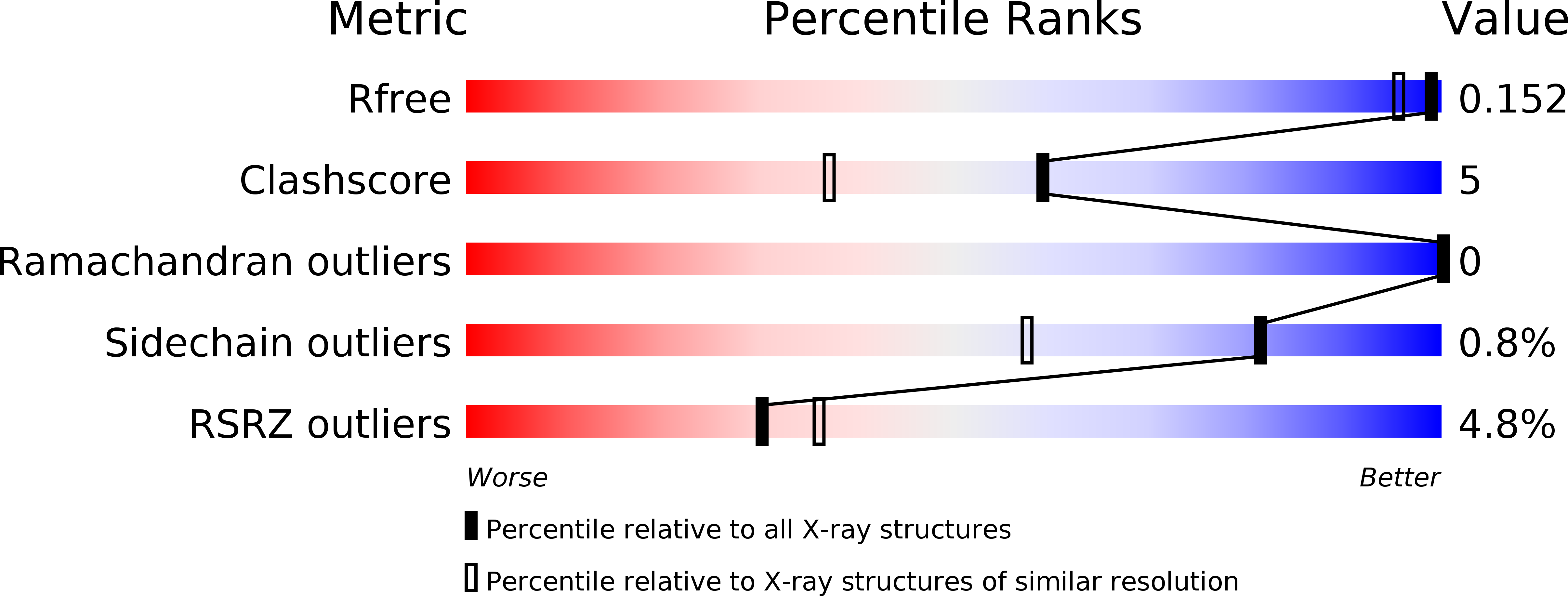
Resolution:
1.33 Å
R-Value Free:
0.17
R-Value Work:
0.14
R-Value Observed:
0.15
Space Group:
P 21 21 2
Macromolecular Entities
Structures with similar UniProt ID
Protein Blast
Polymer Type:polypeptide(L)
Molecule:Tyrosine-protein kinase BTK
Gene (Uniprot):BTK
Chain IDs:A
Chain Length:271
Number of Molecules:1
Biological Source:Homo sapiens
Primary Citation
Discovery of a Potent BTK Inhibitor with a Novel Binding Mode by Using Parallel Selections with a DNA-Encoded Chemical Library.
Chembiochem 18 864 871 (2017)
PMID: 28056160 DOI: 10.1002/cbic.201600573

Abstact

We have identified and characterized novel potent inhibitors of Bruton's tyrosine kinase (BTK) from a single DNA-encoded library of over 110 million compounds by using multiple parallel selection conditions, including variation in target concentration and addition of known binders to provide competition information. Distinct binding profiles were observed by comparing enrichments of library building block combinations under these conditions; one enriched only at high concentrations of BTK and was competitive with ATP, and another enriched at both high and low concentrations of BTK and was not competitive with ATP. A compound representing the latter profile showed low nanomolar potency in biochemical and cellular BTK assays. Results from kinetic mechanism of action studies were consistent with the selection profiles. Analysis of the co-crystal structure of the most potent compound demonstrated a novel binding mode that revealed a new pocket in BTK. Our results demonstrate that profile-based selection strategies using DNA-encoded libraries form the basis of a new methodology to rapidly identify small molecule inhibitors with novel binding modes to clinically relevant targets.

Legend

Protein

Chemical

Disease

Primary Citation of related structures
Feedback Form
Name
Email
Institute
Feedback