5U94 image
Deposition Date 2016-12-15
Release Date 2017-12-20
Last Version Date 2023-10-04
Entry Detail
PDB ID:
5U94
Title:
Crystal structure of the Mycobacterium tuberculosis PASTA kinase PknB in complex with the potential theraputic kinase inhibitor GSK690693.
Biological Source:
Method Details:
Experimental Method:
Resolution:
2.20 Å
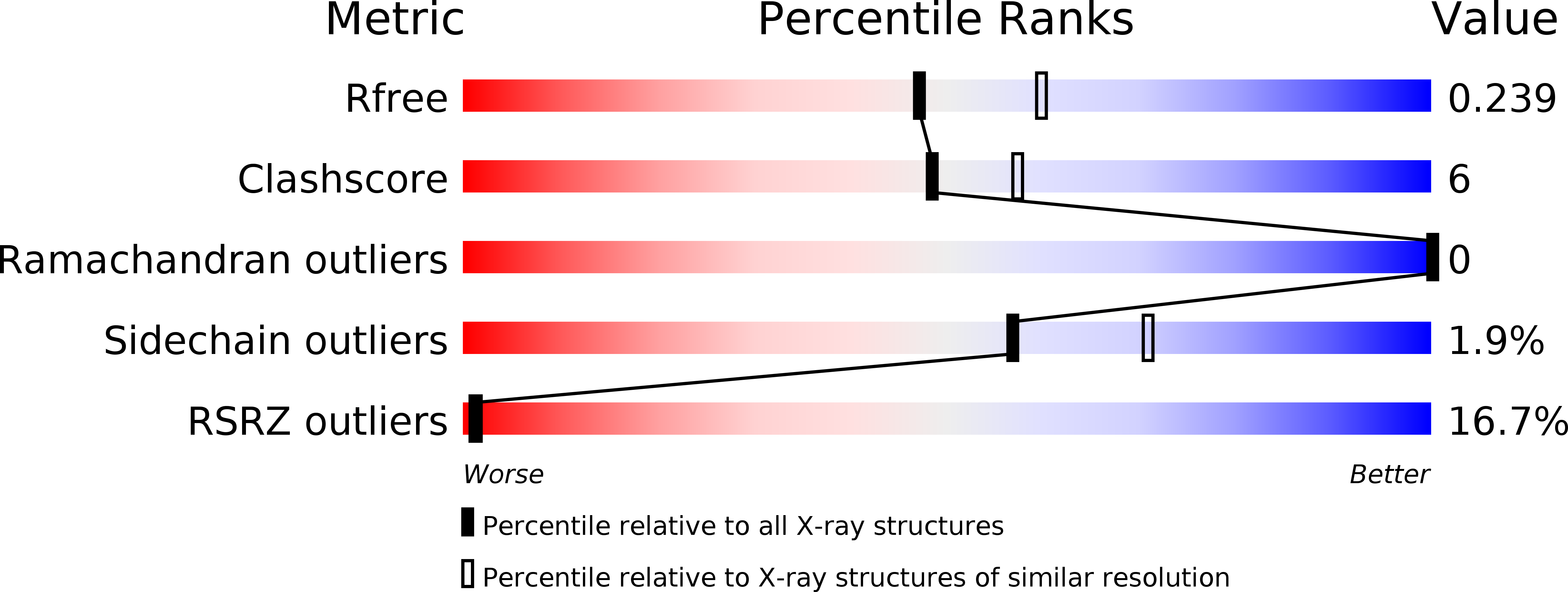
R-Value Free:
0.23
R-Value Work:
0.20
R-Value Observed:
0.20
Space Group:
C 2 2 21
Macromolecular Entities
Structures with similar UniProt ID
Protein Blast
Polymer Type:polypeptide(L)
Molecule:Serine/threonine-protein kinase PknB
Gene (Uniprot):pknB
Chain IDs:A
Chain Length:285
Number of Molecules:1
Biological Source:Mycobacterium tuberculosis (strain ATCC 25618 / H37Rv)
Primary Citation
In Silico Screen and Structural Analysis Identifies Bacterial Kinase Inhibitors which Act with beta-Lactams To Inhibit Mycobacterial Growth.
Mol. Pharm. 15 5410 5426 (2018)
PMID: 30285456 DOI: 10.1021/acs.molpharmaceut.8b00905

Abstact

New tools and concepts are needed to combat antimicrobial resistance. Actinomycetes and firmicutes share several eukaryotic-like Ser/Thr kinases (eSTK) that offer antibiotic development opportunities, including PknB, an essential mycobacterial eSTK. Despite successful development of potent biochemical PknB inhibitors by many groups, clinically useful microbiologic activity has been elusive. Additionally, PknB kinetics are not fully described, nor are structures with specific inhibitors available to inform inhibitor design. We used computational modeling with available structural information to identify human kinase inhibitors predicted to bind PknB, and we selected hits based on drug-like characteristics intended to increase the likelihood of cell entry. The computational model suggested a family of inhibitors, the imidazopyridine aminofurazans (IPAs), bind PknB with high affinity. We performed an in-depth characterization of PknB and found that these inhibitors biochemically inhibit PknB, with potency roughly following the predicted models. A novel X-ray structure confirmed that the inhibitors bound as predicted and made favorable protein contacts with the target. These inhibitors also have antimicrobial activity toward mycobacteria and nocardia. We demonstrated that the inhibitors are uniquely potentiated by β-lactams but not antibiotics traditionally used to treat mycobacteria, consistent with PknB's role in sensing cell wall stress. This is the first demonstration in the phylum actinobacteria that some β-lactam antibiotics could be more effective if paired with a PknB inhibitor. Collectively, our data show that in silico modeling can be used as a tool to discover promising drug leads, and the inhibitors we discovered can act with clinically relevant antibiotics to restore their efficacy against bacteria with limited treatment options.

Legend

Protein

Chemical

Disease

Primary Citation of related structures
Feedback Form
Name
Email
Institute
Feedback