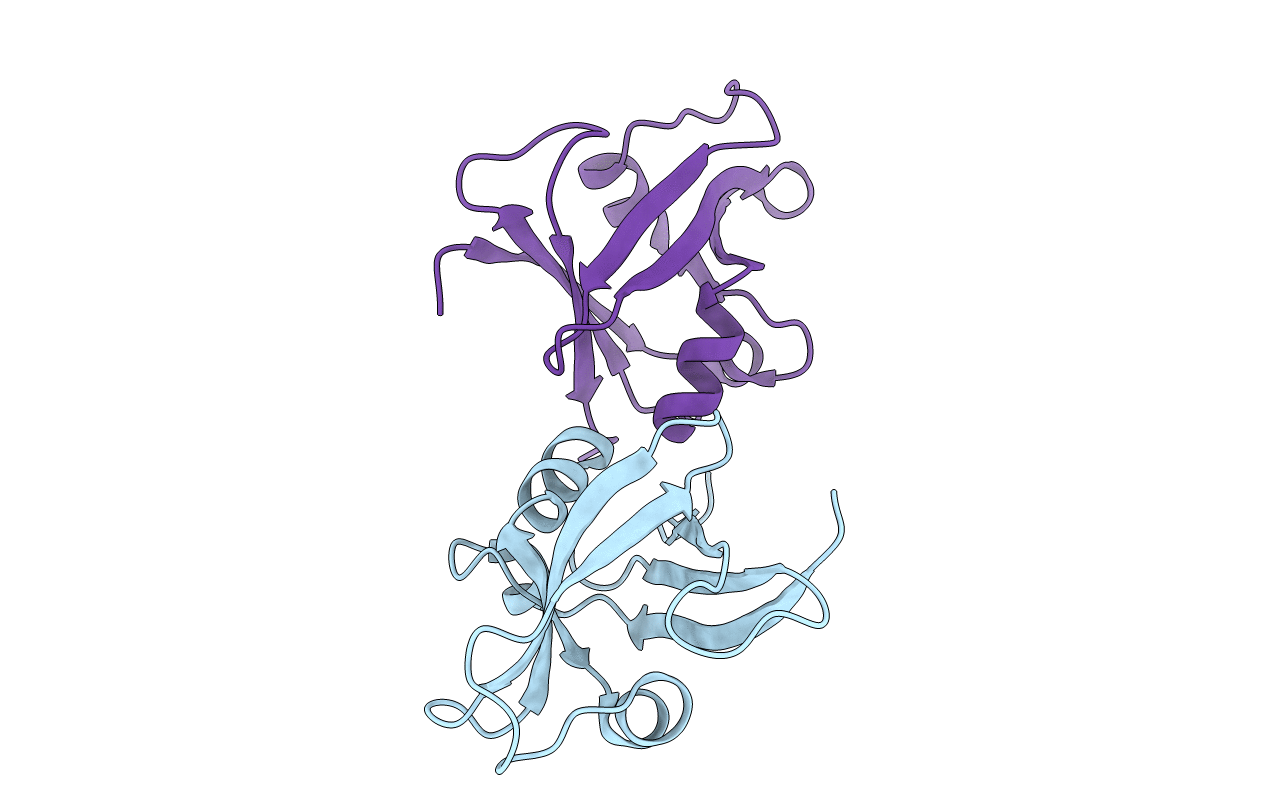
5OS9 image
Deposition Date 2017-08-17
Release Date 2018-09-05
Last Version Date 2024-11-06
Entry Detail
PDB ID:
5OS9
Title:
Structure of the B3 DNA-Binding Domain of NGA1
Biological Source:
Source Organism:
Host Organism:
Method Details:
Experimental Method:
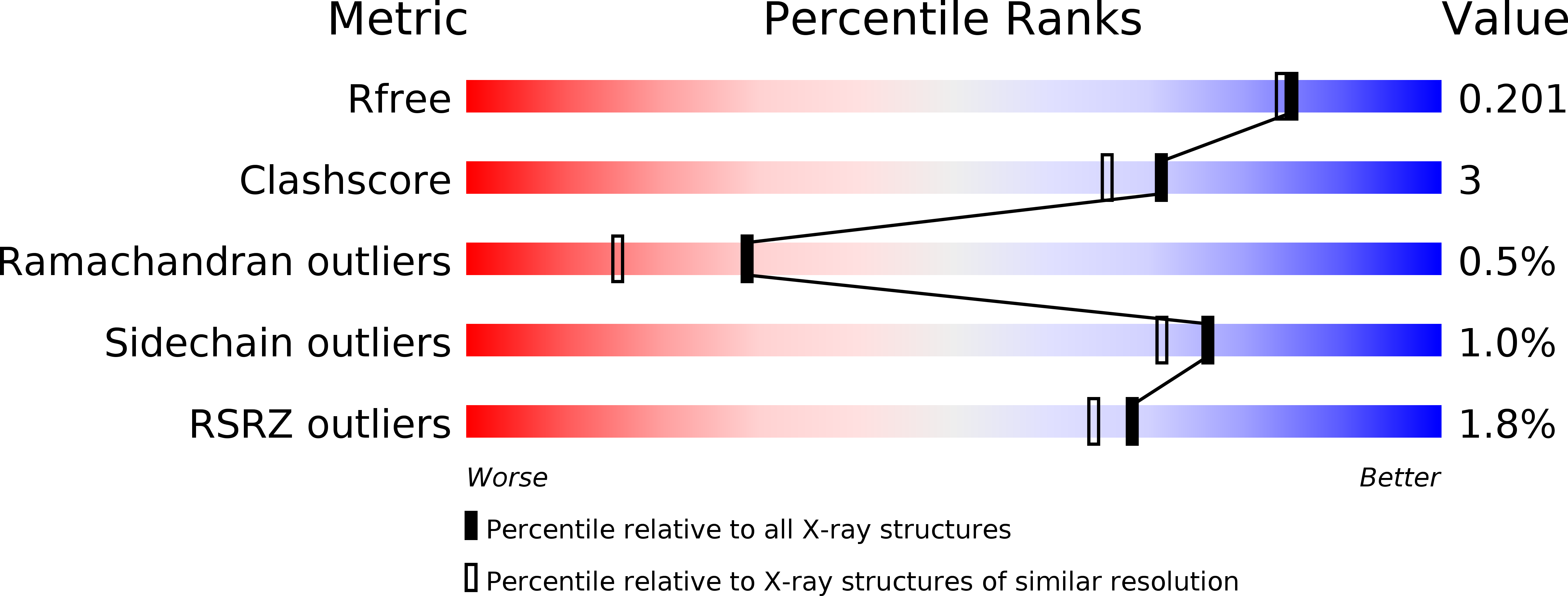
Resolution:
1.80 Å
R-Value Free:
0.19
R-Value Work:
0.14
R-Value Observed:
0.15
Space Group:
P 21 21 21
Macromolecular Entities
Structures with similar UniProt ID
Protein Blast
Polymer Type:polypeptide(L)
Molecule:B3 domain-containing transcription factor NGA1
Gene (Uniprot):NGA1
Chain IDs:A, B
Chain Length:124
Number of Molecules:2
Biological Source:Arabidopsis thaliana
Modified Residue
Compound ID Chain ID Parent Comp ID Details 2D Image
CME A CYS modified residue
Primary Citation
DNA recognition by Arabidopsis transcription factors ABI3 and NGA1.
FEBS J. 285 4041 4059 (2018)
PMID: 30183137 DOI: 10.1111/febs.14649

Abstact

B3 transcription factors constitute a large plant-specific protein superfamily, which plays a central role in plant life. Family members are characterized by the presence of B3 DNA-binding domains (DBDs). To date, only a few B3 DBDs were structurally characterized; therefore, the DNA recognition mechanism of other family members remains to be elucidated. Here, we analyze DNA recognition mechanism of two structurally uncharacterized B3 transcription factors, ABI3 and NGA1. Guided by the structure of the DNA-bound B3 domain of Arabidopsis transcriptional repressor VAL1, we have performed mutational analysis of the ABI3 B3 domain. We demonstrate that both VAL1-B3 and ABI3-B3 recognize the Sph/RY DNA sequence 5'-TGCATG-3' via a conserved set of base-specific contacts. We have also solved a 1.8 Å apo-structure of NGA1-B3, DBD of Arabidopsis transcription factor NGA1. We show that NGA1-B3, like the structurally related RAV1-B3 domain, is specific for the 5'-CACCTG-3' DNA sequence, albeit tolerates single base pair substitutions at the 5'-terminal half of the recognition site. Employing distance-dependent fluorophore quenching, we show that NGA1-B3 binds the asymmetric recognition site in a defined orientation, with the 'N-arm' and 'C-arm' structural elements interacting with the 5'- and 3'-terminal nucleotides of the 5'-CACCTG-3' sequence, respectively. Mutational analysis guided by the model of DNA-bound NGA1-B3 helped us identify NGA1-B3 residues involved in base-specific and DNA backbone contacts, providing new insights into the mechanism of DNA recognition by plant B3 domains of RAV and REM families. DATABASES: RCSB Protein Data Bank, accession number 5OS9.

Legend

Protein

Chemical

Disease

Primary Citation of related structures
Feedback Form
Name
Email
Institute
Feedback