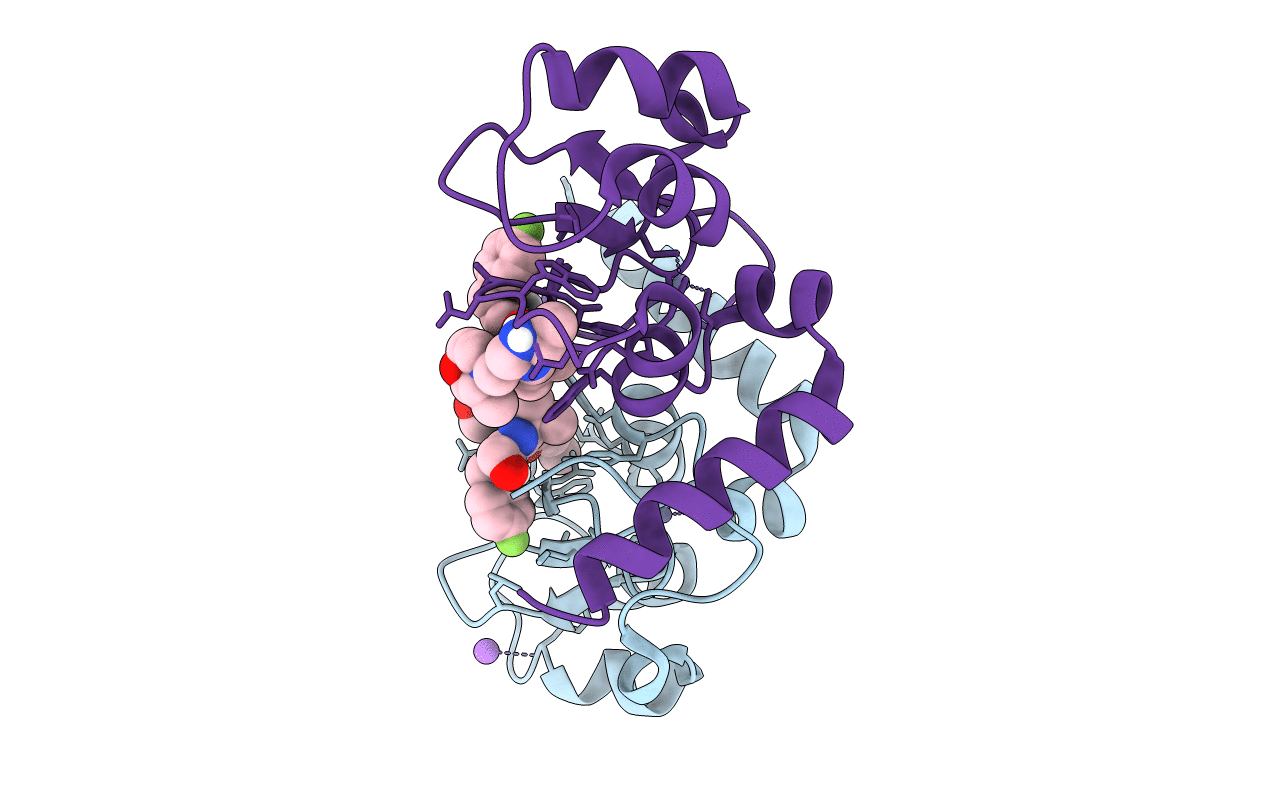
5OQW image
Deposition Date 2017-08-14
Release Date 2018-06-27
Last Version Date 2024-05-08
Entry Detail
PDB ID:
5OQW
Keywords:
Title:
XIAP in complex with small molecule
Biological Source:
Source Organism:
Homo sapiens (Taxon ID: 9606)
Method Details:
Experimental Method:
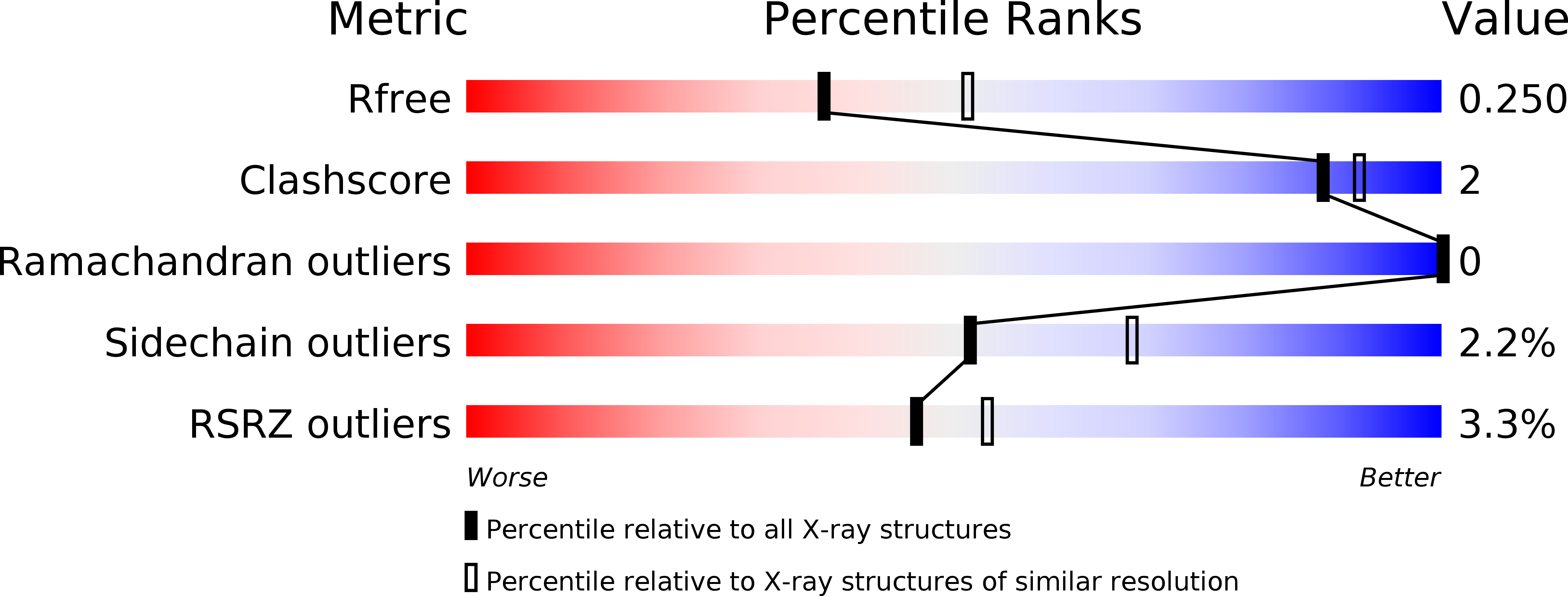
Resolution:
2.31 Å
R-Value Free:
0.24
R-Value Work:
0.21
R-Value Observed:
0.21
Space Group:
P 41 21 2
Macromolecular Entities
Structures with similar UniProt ID
Protein Blast
Polymer Type:polypeptide(L)
Molecule:E3 ubiquitin-protein ligase XIAP
Gene (Uniprot):XIAP
Chain IDs:A, B
Chain Length:127
Number of Molecules:2
Biological Source:Homo sapiens
Primary Citation
ASTX660, a Novel Non-peptidomimetic Antagonist of cIAP1/2 and XIAP, Potently Induces TNF alpha-Dependent Apoptosis in Cancer Cell Lines and Inhibits Tumor Growth.
Mol. Cancer Ther. 17 1381 1391 (2018)
PMID: 29695633 DOI: 10.1158/1535-7163.MCT-17-0848

Abstact

Because of their roles in the evasion of apoptosis, inhibitor of apoptosis proteins (IAP) are considered attractive targets for anticancer therapy. Antagonists of these proteins have the potential to switch prosurvival signaling pathways in cancer cells toward cell death. Various SMAC-peptidomimetics with inherent cIAP selectivity have been tested clinically and demonstrated minimal single-agent efficacy. ASTX660 is a potent, non-peptidomimetic antagonist of cIAP1/2 and XIAP, discovered using fragment-based drug design. The antagonism of XIAP and cIAP1 by ASTX660 was demonstrated on purified proteins, cells, and in vivo in xenograft models. The compound binds to the isolated BIR3 domains of both XIAP and cIAP1 with nanomolar potencies. In cells and xenograft tissue, direct antagonism of XIAP was demonstrated by measuring its displacement from caspase-9 or SMAC. Compound-induced proteasomal degradation of cIAP1 and 2, resulting in downstream effects of NIK stabilization and activation of noncanonical NF-κB signaling, demonstrated cIAP1/2 antagonism. Treatment with ASTX660 led to TNFα-dependent induction of apoptosis in various cancer cell lines in vitro, whereas dosing in mice bearing breast and melanoma tumor xenografts inhibited tumor growth. ASTX660 is currently being tested in a phase I-II clinical trial (NCT02503423), and we propose that its antagonism of cIAP1/2 and XIAP may offer improved efficacy over first-generation antagonists that are more cIAP1/2 selective. Mol Cancer Ther; 17(7); 1381-91. ©2018 AACR.

Legend

Protein

Chemical

Disease

Primary Citation of related structures
Feedback Form
Name
Email
Institute
Feedback