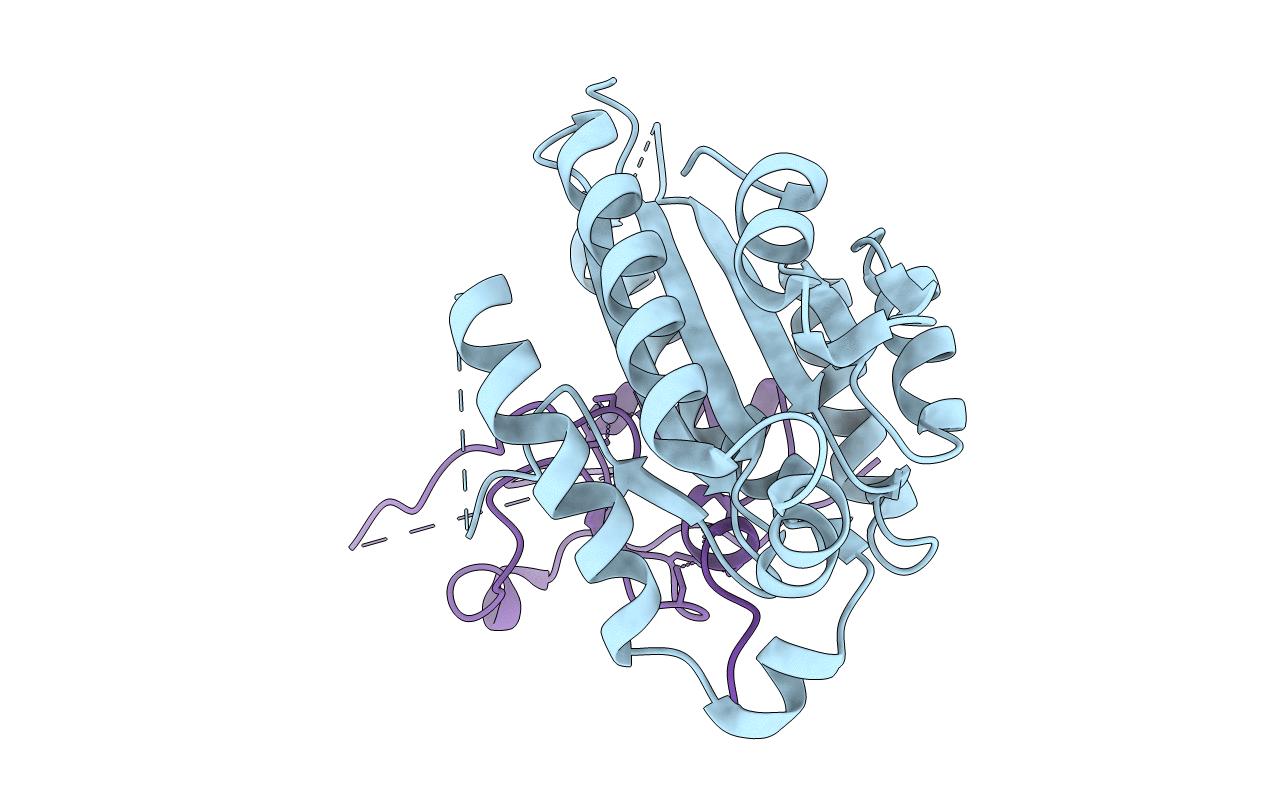
5OBZ image
Deposition Date 2017-06-29
Release Date 2017-10-18
Last Version Date 2024-01-17
Entry Detail
PDB ID:
5OBZ
Keywords:
Title:
low resolution structure of the p34ct/p44ct minimal complex
Biological Source:
Method Details:
Experimental Method:
Resolution:
3.70 Å
R-Value Free:
0.24
R-Value Work:
0.19
R-Value Observed:
0.19
Space Group:
P 63 2 2
Macromolecular Entities
Structures with similar UniProt ID
Protein Blast
Polymer Type:polypeptide(L)
Molecule:Putative transcription factor
Gene (Uniprot):CTHT_0004460
Chain IDs:A
Chain Length:303
Number of Molecules:1
Biological Source:Chaetomium thermophilum (strain DSM 1495 / CBS 144.50 / IMI 039719)
Structures with similar UniProt ID
Protein Blast
Polymer Type:polypeptide(L)
Molecule:Putative transcription factor
Gene (Uniprot):CTHT_0002690
Chain IDs:B
Chain Length:167
Number of Molecules:1
Biological Source:Chaetomium thermophilum (strain DSM 1495 / CBS 144.50 / IMI 039719)
Ligand Molecules
Primary Citation
The intricate network between the p34 and p44 subunits is central to the activity of the transcription/DNA repair factor TFIIH.
Nucleic Acids Res. 45 10872 10883 (2017)
PMID: 28977422 DOI: 10.1093/nar/gkx743

Abstact

The general transcription factor IIH (TFIIH) is a multi-protein complex and its 10 subunits are engaged in an intricate protein-protein interaction network critical for the regulation of its transcription and DNA repair activities that are so far little understood on a molecular level. In this study, we focused on the p44 and the p34 subunits, which are central for the structural integrity of core-TFIIH. We solved crystal structures of a complex formed by the p34 N-terminal vWA and p44 C-terminal zinc binding domains from Chaetomium thermophilum and from Homo sapiens. Intriguingly, our functional analyses clearly revealed the presence of a second interface located in the C-terminal zinc binding region of p34, which can rescue a disrupted interaction between the p34 vWA and the p44 RING domain. In addition, we demonstrate that the C-terminal zinc binding domain of p34 assumes a central role with respect to the stability and function of TFIIH. Our data reveal a redundant interaction network within core-TFIIH, which may serve to minimize the susceptibility to mutational impairment. This provides first insights why so far no mutations in the p34 or p44 TFIIH-core subunits have been identified that would lead to the hallmark nucleotide excision repair syndromes xeroderma pigmentosum or trichothiodystrophy.

Legend

Protein

Chemical

Disease

Primary Citation of related structures
Feedback Form
Name
Email
Institute
Feedback