5O7A image
Deposition Date 2017-06-08
Release Date 2017-07-05
Last Version Date 2024-05-08
Entry Detail
PDB ID:
5O7A
Keywords:
Title:
Quinolin-6-yloxyacetamides are microtubule destabilizing agents that bind to the colchicine site of tubulin
Biological Source:
Source Organism:
Rattus norvegicus (Taxon ID: 10116)
Gallus gallus (Taxon ID: 9031)
Bos taurus (Taxon ID: 9913)
Host Organism:
Method Details:
Experimental Method:
Resolution:
2.50 Å
R-Value Free:
0.25
R-Value Work:
0.20
R-Value Observed:
0.20
Space Group:
P 21 21 21
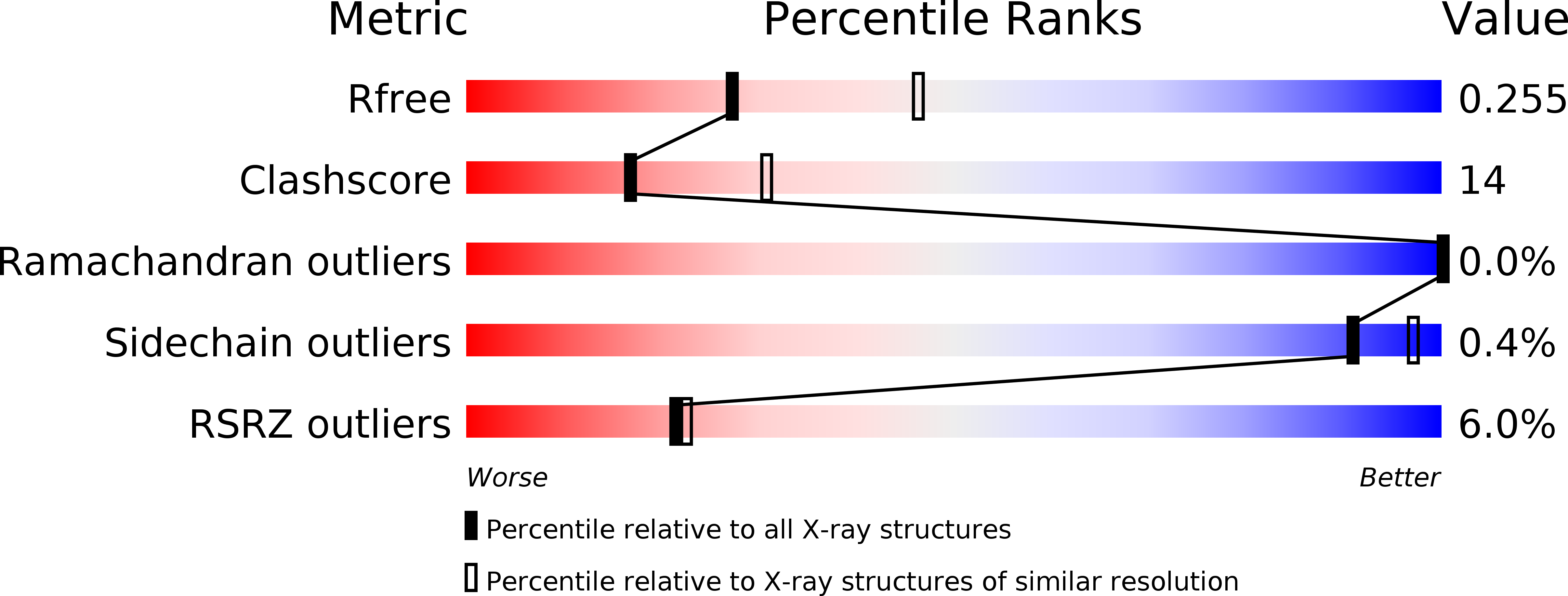
Macromolecular Entities
Structures with similar UniProt ID
Protein Blast
Polymer Type:polypeptide(L)
Molecule:Tubulin alpha-1B chain
Chain IDs:A, C
Chain Length:451
Number of Molecules:2
Biological Source:Bos taurus
Structures with similar UniProt ID
Protein Blast
Polymer Type:polypeptide(L)
Molecule:Tubulin beta-2B chain
Gene (Uniprot):TUBB2B
Chain IDs:B, D
Chain Length:445
Number of Molecules:2
Biological Source:Bos taurus
Structures with similar UniProt ID
Protein Blast
Polymer Type:polypeptide(L)
Molecule:Stathmin-4
Gene (Uniprot):Stmn4
Chain IDs:E
Chain Length:143
Number of Molecules:1
Biological Source:Rattus norvegicus
Polymer Type:polypeptide(L)
Molecule:Uncharacterized protein
Chain IDs:F
Chain Length:384
Number of Molecules:1
Biological Source:Gallus gallus
Primary Citation
Quinolin-6-Yloxyacetamides Are Microtubule Destabilizing Agents That Bind to the Colchicine Site of Tubulin.
Int J Mol Sci 18 ? ? (2017)
PMID: 28640209 DOI: 10.3390/ijms18071336

Abstact

Quinolin-6-yloxyacetamides (QAs) are a chemical class of tubulin polymerization inhibitors that were initially identified as fungicides. Here, we report that QAs are potent anti-proliferative agents against human cancer cells including ones that are drug-resistant. QAs act by disrupting the microtubule cytoskeleton and by causing severe mitotic defects. We further demonstrate that QAs inhibit tubulin polymerization in vitro. The high resolution crystal structure of the tubulin-QA complex revealed that QAs bind to the colchicine site on tubulin, which is targeted by microtubule-destabilizing agents such as colchicine and nocodazole. Together, our data establish QAs as colchicine-site ligands and explain the molecular mechanism of microtubule destabilization by this class of compounds. They further extend our structural knowledge on antitubulin agents and thus should aid in the development of new strategies for the rational design of ligands against multidrug-resistant cancer cells.

Legend

Protein

Chemical

Disease

Primary Citation of related structures
Feedback Form
Name
Email
Institute
Feedback