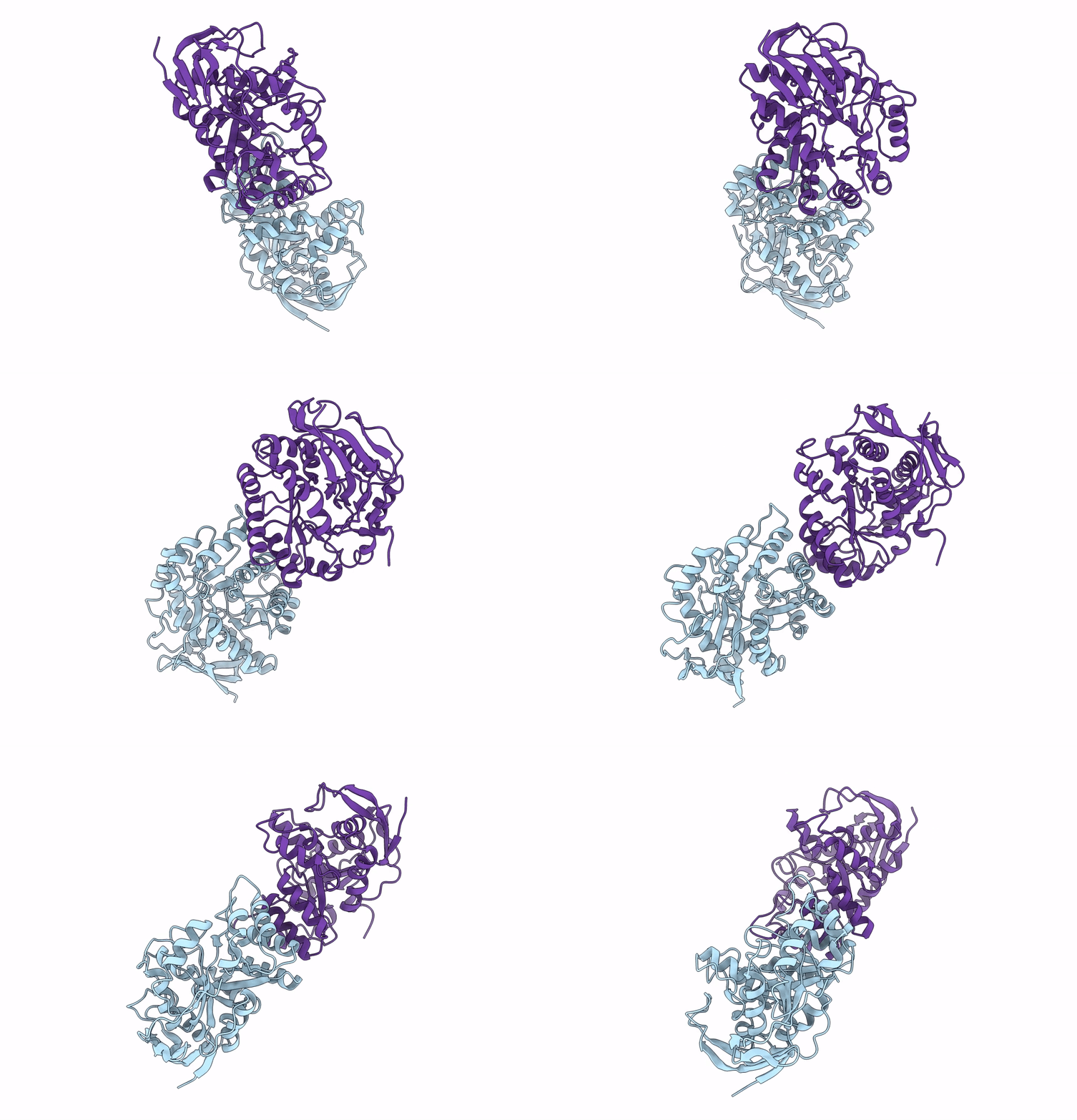
5NNL image
Deposition Date 2017-04-10
Release Date 2017-06-07
Last Version Date 2024-11-13
Entry Detail
PDB ID:
5NNL
Keywords:
Title:
Inactive dihydroorotase-like domain of Chaetomium thermophilum CAD-like multifunctional protein
Biological Source:
Source Organism(s):
Expression System(s):
Method Details:
Experimental Method:
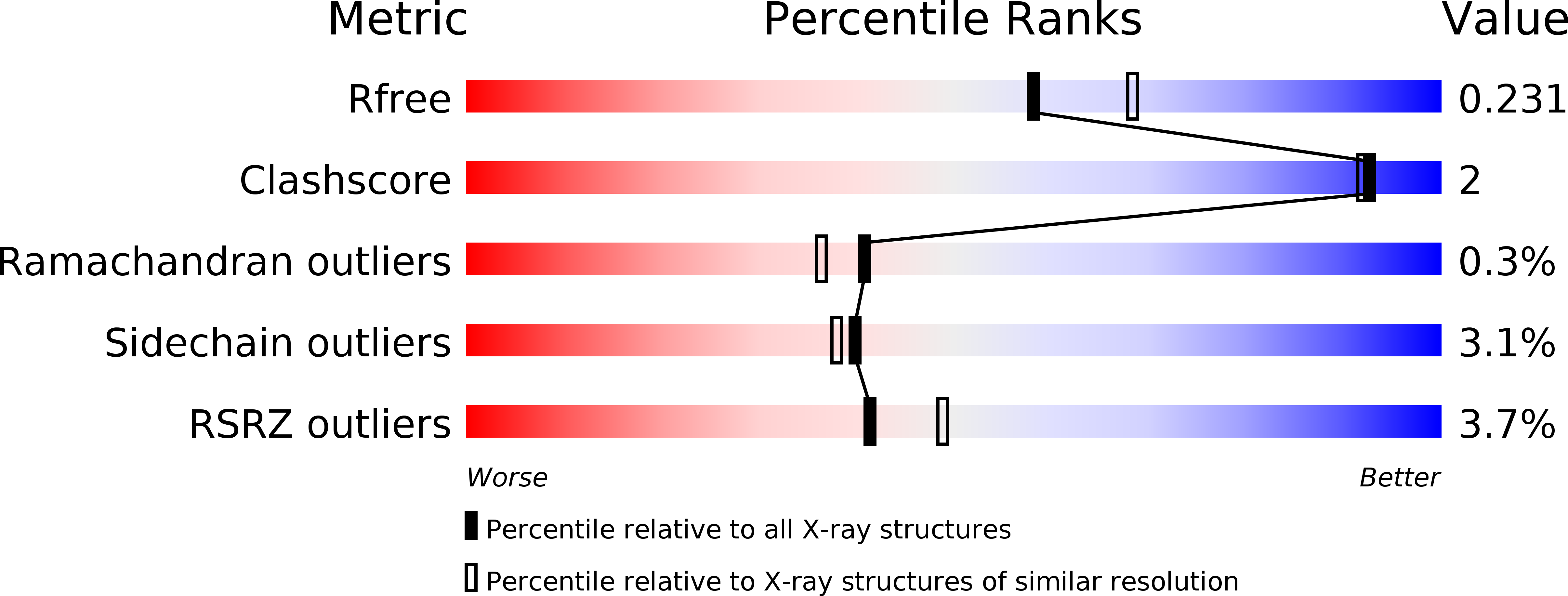
Resolution:
2.13 Å
R-Value Free:
0.23
R-Value Work:
0.19
R-Value Observed:
0.20
Space Group:
P 21 21 2
Macromolecular Entities
Structures with similar UniProt ID
Protein Blast
Polymer Type:polypeptide(L)
Molecule:Inactive dihydroorotase-like domain
Gene (Uniprot):CTHT_0032600
Chain IDs:A, B
Chain Length:342
Number of Molecules:2
Biological Source:Chaetomium thermophilum
Primary Citation
Structural Insight into the Core of CAD, the Multifunctional Protein Leading De Novo Pyrimidine Biosynthesis.
Structure 25 912 923.e5 (2017)
PMID: 28552578 DOI: 10.1016/j.str.2017.04.012

Abstact

CAD, the multifunctional protein initiating and controlling de novo biosynthesis of pyrimidines in animals, self-assembles into ∼1.5 MDa hexamers. The structures of the dihydroorotase (DHO) and aspartate transcarbamoylase (ATC) domains of human CAD have been previously determined, but we lack information on how these domains associate and interact with the rest of CAD forming a multienzymatic unit. Here, we prove that a construct covering human DHO and ATC oligomerizes as a dimer of trimers and that this arrangement is conserved in CAD-like from fungi, which holds an inactive DHO-like domain. The crystal structures of the ATC trimer and DHO-like dimer from the fungus Chaetomium thermophilum confirm the similarity with the human CAD homologs. These results demonstrate that, despite being inactive, the fungal DHO-like domain has a conserved structural function. We propose a model that sets the DHO and ATC complex as the central element in the architecture of CAD.

Legend

Protein

Chemical

Disease

Primary Citation of related structures
Feedback Form
Name
Email
Institute
Feedback