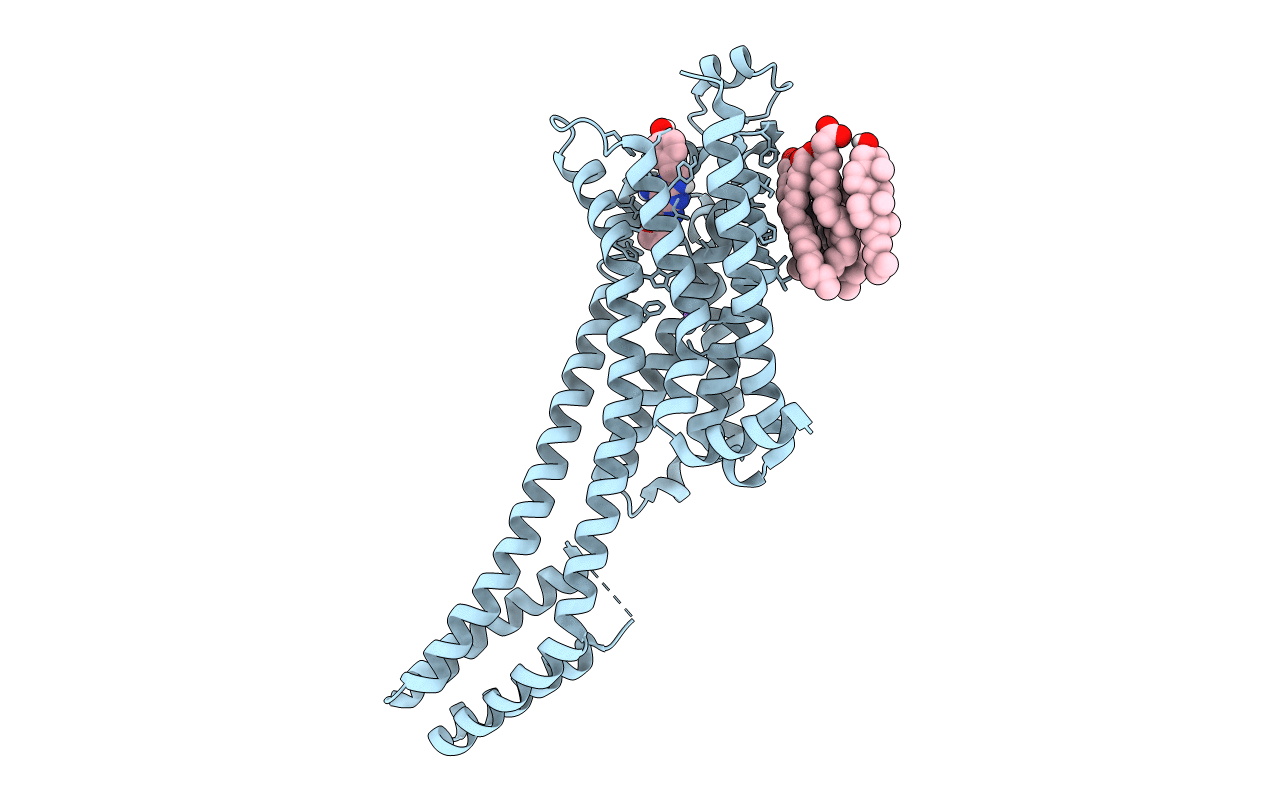
5NLX image
Deposition Date 2017-04-05
Release Date 2017-09-27
Last Version Date 2024-11-13
Entry Detail
PDB ID:
5NLX
Title:
A2A Adenosine receptor room-temperature structure determined by serial millisecond crystallography
Biological Source:
Source Organism:
Homo sapiens (Taxon ID: 9606)
Escherichia coli (Taxon ID: 562)
Host Organism:
Method Details:
Experimental Method:
Resolution:
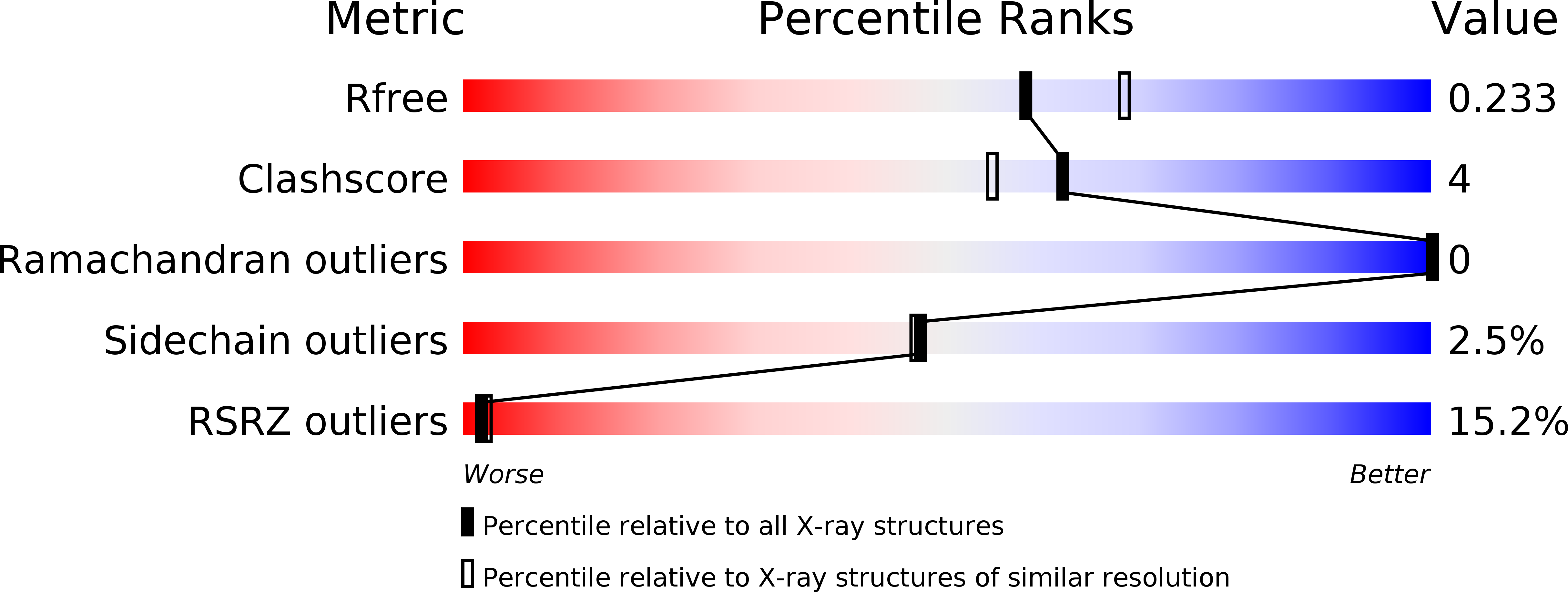
2.14 Å
R-Value Free:
0.22
R-Value Work:
0.19
R-Value Observed:
0.20
Space Group:
C 2 2 21
Macromolecular Entities
Protein Blast
Polymer Type:polypeptide(L)
Molecule:Adenosine receptor A2a,Soluble cytochrome b562,Adenosine receptor A2a
Gene (Uniprot):cybC, ADORA2A
Chain IDs:A
Chain Length:433
Number of Molecules:1
Biological Source:Homo sapiens, Escherichia coli
Primary Citation
Serial millisecond crystallography for routine room-temperature structure determination at synchrotrons.
Nat Commun 8 542 542 (2017)
PMID: 28912485 DOI: 10.1038/s41467-017-00630-4

Abstact

Historically, room-temperature structure determination was succeeded by cryo-crystallography to mitigate radiation damage. Here, we demonstrate that serial millisecond crystallography at a synchrotron beamline equipped with high-viscosity injector and high frame-rate detector allows typical crystallographic experiments to be performed at room-temperature. Using a crystal scanning approach, we determine the high-resolution structure of the radiation sensitive molybdenum storage protein, demonstrate soaking of the drug colchicine into tubulin and native sulfur phasing of the human G protein-coupled adenosine receptor. Serial crystallographic data for molecular replacement already converges in 1,000-10,000 diffraction patterns, which we collected in 3 to maximally 82 minutes. Compared with serial data we collected at a free-electron laser, the synchrotron data are of slightly lower resolution, however fewer diffraction patterns are needed for de novo phasing. Overall, the data we collected by room-temperature serial crystallography are of comparable quality to cryo-crystallographic data and can be routinely collected at synchrotrons.Serial crystallography was developed for protein crystal data collection with X-ray free-electron lasers. Here the authors present several examples which show that serial crystallography using high-viscosity injectors can also be routinely employed for room-temperature data collection at synchrotrons.

Legend

Protein

Chemical

Disease

Primary Citation of related structures
Feedback Form
Name
Email
Institute
Feedback