5NHU image
Deposition Date 2017-03-22
Release Date 2017-06-14
Last Version Date 2024-10-23
Entry Detail
PDB ID:
5NHU
Keywords:
Title:
HUMAN ALPHA THROMBIN COMPLEXED WITH ANOPHELES GAMBIAE cE5 ANTICOAGULANT
Biological Source:
Source Organism:
Anopheles gambiae (Taxon ID: 7165)
Homo sapiens (Taxon ID: 9606)
Host Organism:
Method Details:
Experimental Method:
Resolution:
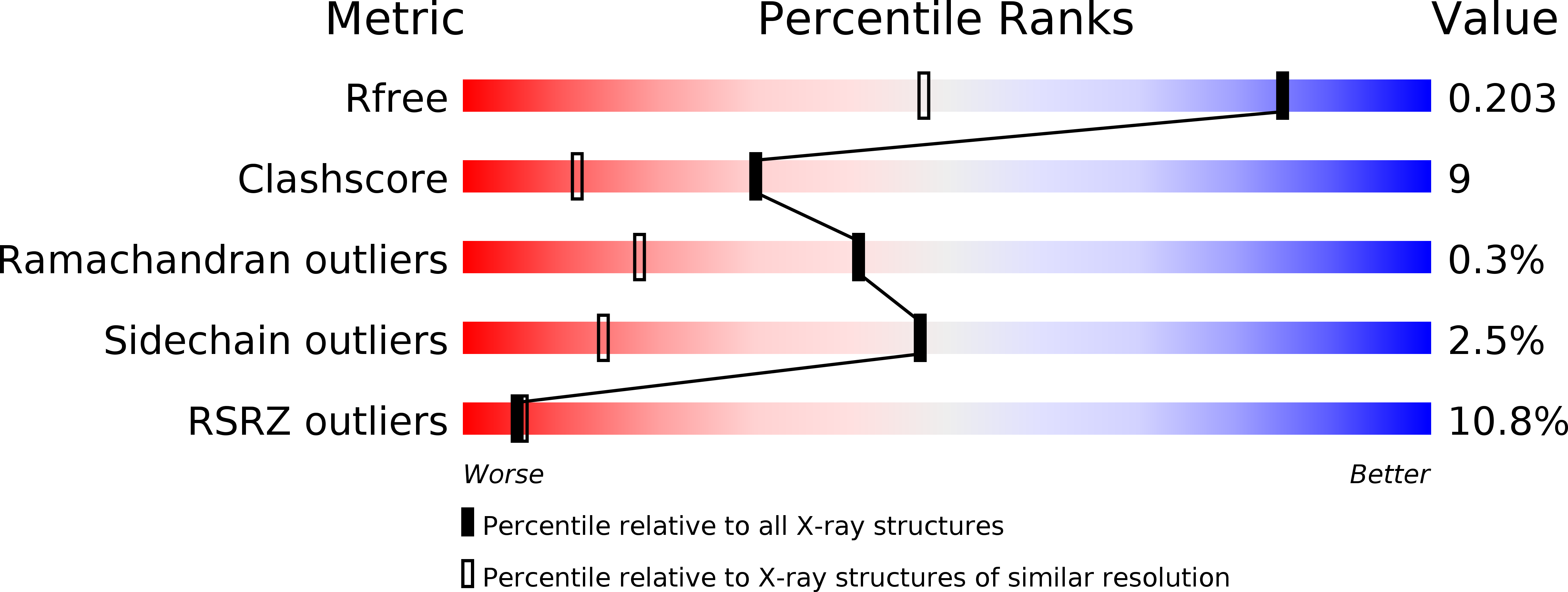
1.45 Å
R-Value Free:
0.20
R-Value Work:
0.17
R-Value Observed:
0.18
Space Group:
I 1 2 1
Macromolecular Entities
Structures with similar UniProt ID
Protein Blast
Polymer Type:polypeptide(L)
Molecule:Prothrombin
Gene (Uniprot):F2
Chain IDs:B (auth: H), D (auth: A), F (auth: C)
Chain Length:259
Number of Molecules:3
Biological Source:Homo sapiens
Structures with similar UniProt ID
Protein Blast
Polymer Type:polypeptide(L)
Molecule:AGAP008004-PA
Gene (Uniprot):AgaP_AGAP008004
Chain IDs:G (auth: I), H (auth: J), I (auth: K)
Chain Length:82
Number of Molecules:3
Biological Source:Anopheles gambiae
Structures with similar UniProt ID
Protein Blast
Polymer Type:polypeptide(L)
Molecule:Prothrombin
Gene (Uniprot):F2
Chain IDs:A (auth: L), C (auth: B), E (auth: D)
Chain Length:36
Number of Molecules:3
Biological Source:Homo sapiens
Primary Citation
Functional analyses yield detailed insight into the mechanism of thrombin inhibition by the antihemostatic salivary protein cE5 from Anopheles gambiae.
J. Biol. Chem. 292 12632 12642 (2017)
PMID: 28592490 DOI: 10.1074/jbc.M117.788042

Abstact

Saliva of blood-feeding arthropods carries several antihemostatic compounds whose physiological role is to facilitate successful acquisition of blood. The identification of novel natural anticoagulants and the understanding of their mechanism of action may offer opportunities for designing new antithrombotics disrupting blood clotting. We report here an in-depth structural and functional analysis of the anophelin family member cE5, a salivary protein from the major African malaria vector Anopheles gambiae that specifically, tightly, and quickly binds and inhibits thrombin. Using calorimetry, functional assays, and complementary structural techniques, we show that the central region of the protein, encompassing amino acids Asp-31-Arg-62, is the region mainly responsible for α-thrombin binding and inhibition. As previously reported for the Anopheles albimanus orthologue anophelin, cE5 binds both thrombin exosite I with segment Glu-35-Asp-47 and the catalytic site with the region Pro-49-Arg-56, which includes the highly conserved DPGR tetrapeptide. Moreover, the N-terminal Ala-1-Ser-30 region of cE5 (which includes an RGD tripeptide) and the additional C-terminal serine-rich Asn-63-Glu-82 region (absent in orthologues from anophelines of the New World species A. albimanus and Anopheles darlingi) also played some functionally relevant role. Indeed, we observed decreased thrombin binding and inhibitory properties even when using the central cE5 fragment (Asp-31-Arg-62) alone. In summary, these results shed additional light on the mechanism of thrombin binding and inhibition by this family of salivary anticoagulants from anopheline mosquitoes.

Legend

Protein

Chemical

Disease

Primary Citation of related structures
Feedback Form
Name
Email
Institute
Feedback