5NCC image
Deposition Date 2017-03-03
Release Date 2017-08-30
Last Version Date 2024-01-17
Entry Detail
PDB ID:
5NCC
Keywords:
Title:
Structure of Fatty acid Photodecarboxylase in complex with FAD and palmitic acid
Biological Source:
Source Organism:
Host Organism:
Method Details:
Experimental Method:
Resolution:
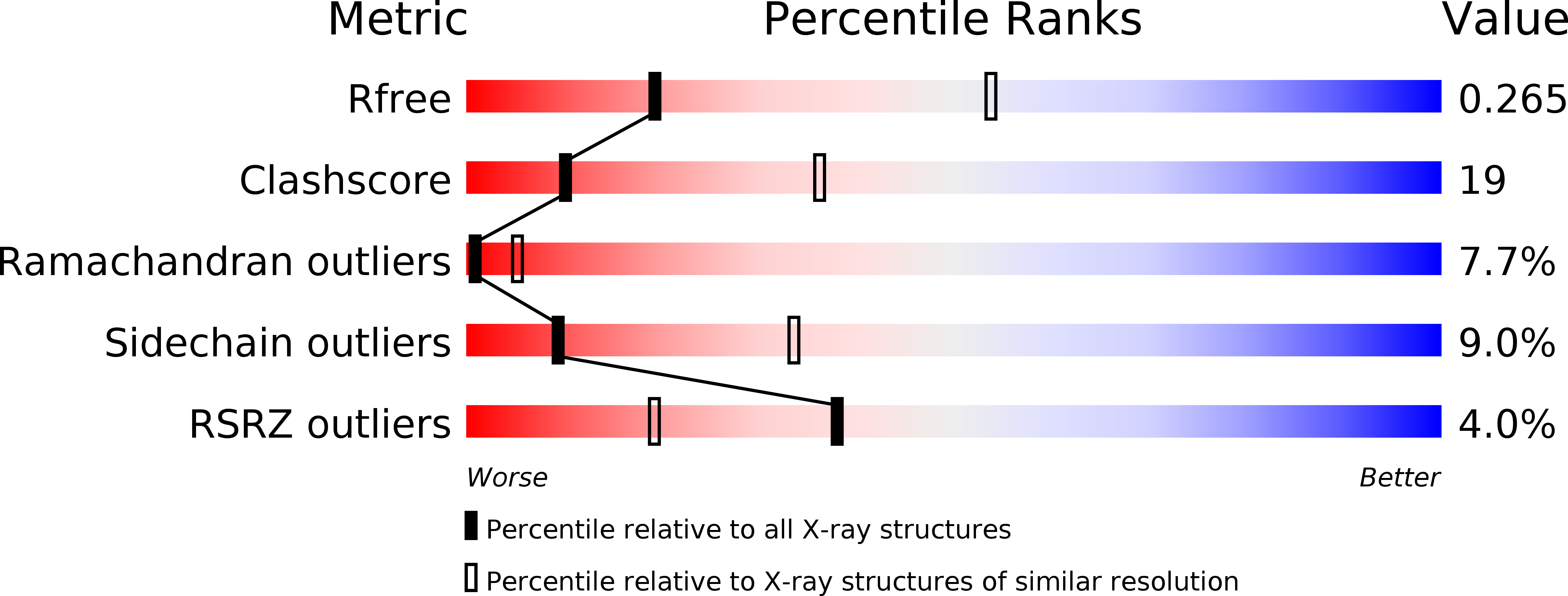
3.12 Å
R-Value Free:
0.27
R-Value Work:
0.22
R-Value Observed:
0.22
Space Group:
P 1 21 1
Macromolecular Entities
Structures with similar UniProt ID
Protein Blast
Polymer Type:polypeptide(L)
Molecule:Fatty acid Photodecarboxylase
Chain IDs:A, B, C, D, E, F
Chain Length:594
Number of Molecules:6
Biological Source:Chlorella variabilis
Primary Citation

Abstact

Although many organisms capture or respond to sunlight, few enzymes are known to be driven by light. Among these are DNA photolyases and the photosynthetic reaction centers. Here, we show that the microalga Chlorella variabilis NC64A harbors a photoenzyme that acts in lipid metabolism. This enzyme belongs to an algae-specific clade of the glucose-methanol-choline oxidoreductase family and catalyzes the decarboxylation of free fatty acids to n-alkanes or -alkenes in response to blue light. Crystal structure of the protein reveals a fatty acid-binding site in a hydrophobic tunnel leading to the light-capturing flavin adenine dinucleotide (FAD) cofactor. The decarboxylation is initiated through electron abstraction from the fatty acid by the photoexcited FAD with a quantum yield >80%. This photoenzyme, which we name fatty acid photodecarboxylase, may be useful in light-driven, bio-based production of hydrocarbons.

Legend

Protein

Chemical

Disease

Primary Citation of related structures
Feedback Form
Name
Email
Institute
Feedback