5N9C image
Deposition Date 2017-02-24
Release Date 2017-06-14
Last Version Date 2024-01-31
Entry Detail
PDB ID:
5N9C
Keywords:
Title:
ENAH EVH1 in complex with Ac-[2-Cl-F]-PP-[ProM-1]-OH
Biological Source:
Source Organism:
Host Organism:
Method Details:
Experimental Method:
Resolution:
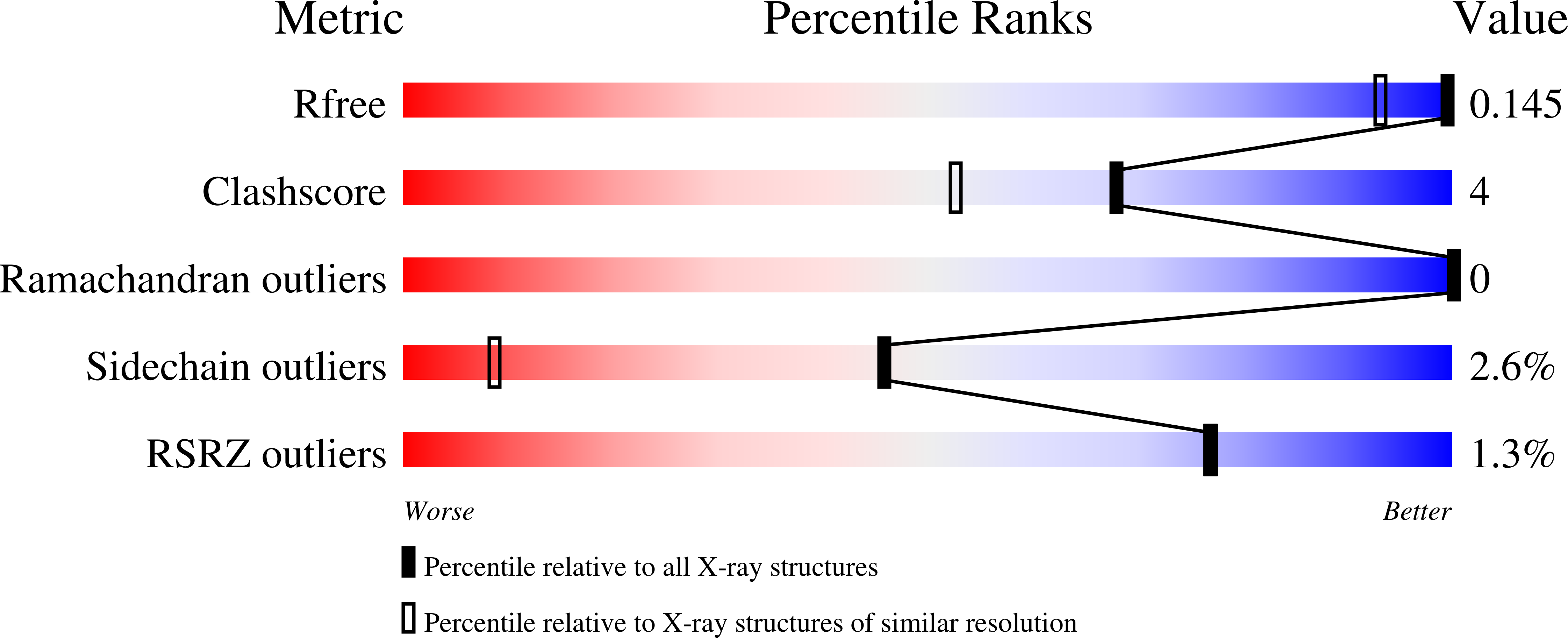
1.16 Å
R-Value Free:
0.16
R-Value Work:
0.13
R-Value Observed:
0.14
Space Group:
P 1
Macromolecular Entities
Structures with similar UniProt ID
Protein Blast
Polymer Type:polypeptide(L)
Molecule:Protein enabled homolog
Gene (Uniprot):ENAH
Chain IDs:A, B
Chain Length:113
Number of Molecules:2
Biological Source:Homo sapiens
Polymer Type:polypeptide(L)
Molecule:Ac-[2-Cl-F]-PP-[ProM-1]-OH
Chain IDs:C (auth: F), D (auth: G), E (auth: H), F (auth: M)
Chain Length:5
Number of Molecules:4
Biological Source:synthetic construct
Primary Citation
Designed nanomolar small-molecule inhibitors of Ena/VASP EVH1 interaction impair invasion and extravasation of breast cancer cells.
Proc.Natl.Acad.Sci.USA 117 29684 29690 (2020)
PMID: 33184177 DOI: 10.1073/pnas.2007213117

Abstact

Battling metastasis through inhibition of cell motility is considered a promising approach to support cancer therapies. In this context, Ena/VASP-depending signaling pathways, in particular interactions with their EVH1 domains, are promising targets for pharmaceutical intervention. However, protein-protein interactions involving proline-rich segments are notoriously difficult to address by small molecules. Hence, structure-based design efforts in combination with the chemical synthesis of additional molecular entities are required. Building on a previously developed nonpeptidic micromolar inhibitor, we determined 22 crystal structures of ENAH EVH1 in complex with inhibitors and rationally extended our library of conformationally defined proline-derived modules (ProMs) to succeed in developing a nanomolar inhibitor ([Formula: see text] Da). In contrast to the previous inhibitor, the optimized compounds reduced extravasation of invasive breast cancer cells in a zebrafish model. This study represents an example of successful, structure-guided development of low molecular weight inhibitors specifically and selectively addressing a proline-rich sequence-recognizing domain that is characterized by a shallow epitope lacking defined binding pockets. The evolved high-affinity inhibitor may now serve as a tool in validating the basic therapeutic concept, i.e., the suppression of cancer metastasis by inhibiting a crucial protein-protein interaction involved in actin filament processing and cell migration.

Legend

Protein

Chemical

Disease

Primary Citation of related structures
Feedback Form
Name
Email
Institute
Feedback