Planned Maintenance: Some services may turn out to be unavailable from 15th January, 2026 to 16th January, 2026. We apologize for the inconvenience!

5MXP image
Deposition Date 2017-01-24
Release Date 2018-07-25
Last Version Date 2024-11-06
Entry Detail
PDB ID:
5MXP
Keywords:
Title:
Haloalkane dehalogenase DmxA from Marinobacter sp. ELB17 possessing a unique catalytic residue
Biological Source:
Source Organism(s):
Expression System(s):
Method Details:
Experimental Method:
Resolution:
1.45 Å
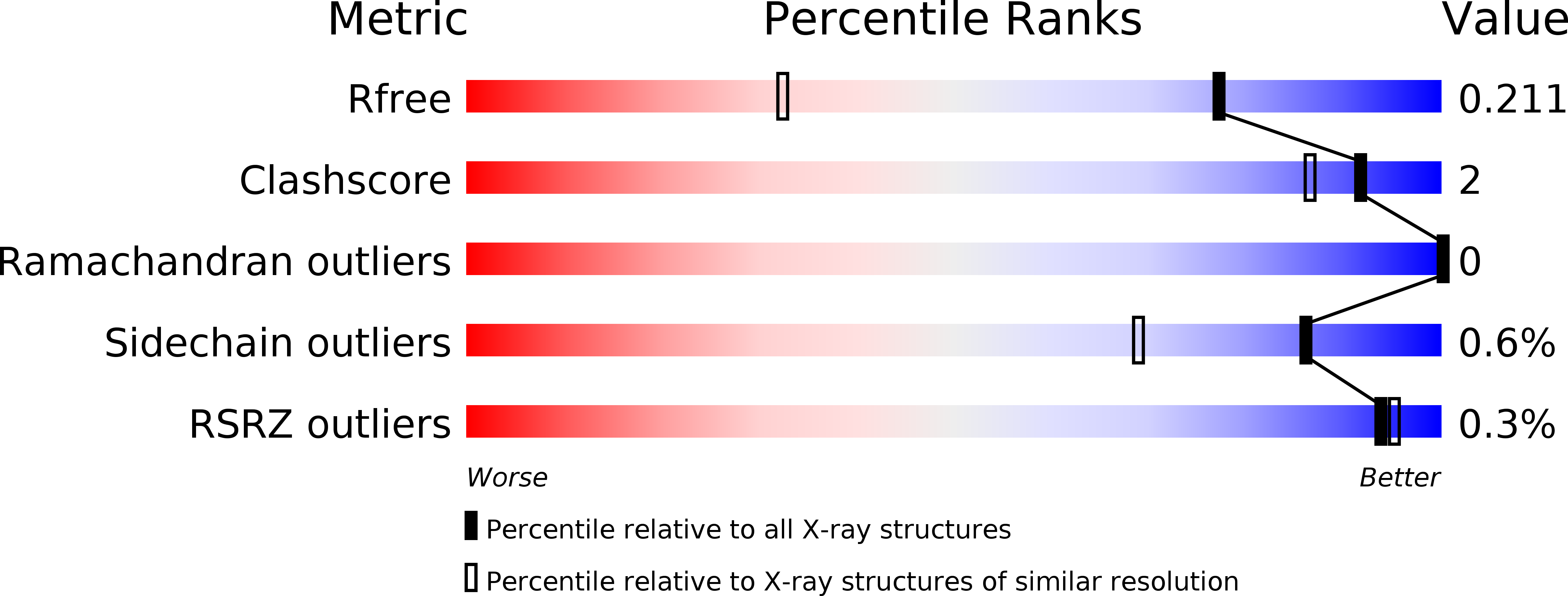
R-Value Free:
0.21
R-Value Work:
0.17
R-Value Observed:
0.17
Space Group:
P 21 21 21
Macromolecular Entities
Structures with similar UniProt ID
Protein Blast
Polymer Type:polypeptide(L)
Molecule:Alpha/beta hydrolase
Gene (Uniprot):MELB17_23105
Chain IDs:A, B
Chain Length:302
Number of Molecules:2
Biological Source:Marinobacter sp. ELB17
Primary Citation
Deciphering the Structural Basis of High Thermostability of Dehalogenase from Psychrophilic BacteriumMarinobactersp. ELB17.
Microorganisms 7 ? ? (2019)
PMID: 31661858 DOI: 10.3390/microorganisms7110498

Abstact

Haloalkane dehalogenases are enzymes with a broad application potential in biocatalysis, bioremediation, biosensing and cell imaging. The new haloalkane dehalogenase DmxA originating from the psychrophilic bacterium Marinobacter sp. ELB17 surprisingly possesses the highest thermal stability (apparent melting temperature Tm,app = 65.9 °C) of all biochemically characterized wild type haloalkane dehalogenases belonging to subfamily II. The enzyme was successfully expressed and its crystal structure was solved at 1.45 Å resolution. DmxA structure contains several features distinct from known members of haloalkane dehalogenase family: (i) a unique composition of catalytic residues; (ii) a dimeric state mediated by a disulfide bridge; and (iii) narrow tunnels connecting the enzyme active site with the surrounding solvent. The importance of narrow tunnels in such paradoxically high stability of DmxA enzyme was confirmed by computational protein design and mutagenesis experiments.

Legend

Protein

Chemical

Disease

Primary Citation of related structures
Feedback Form
Name
Email
Institute
Feedback