5MUA image
Deposition Date 2017-01-12
Release Date 2017-07-12
Last Version Date 2024-11-20
Entry Detail
PDB ID:
5MUA
Title:
PSL1a-E64 complex
Biological Source:
Source Organism:
Method Details:
Experimental Method:
Resolution:
1.49 Å
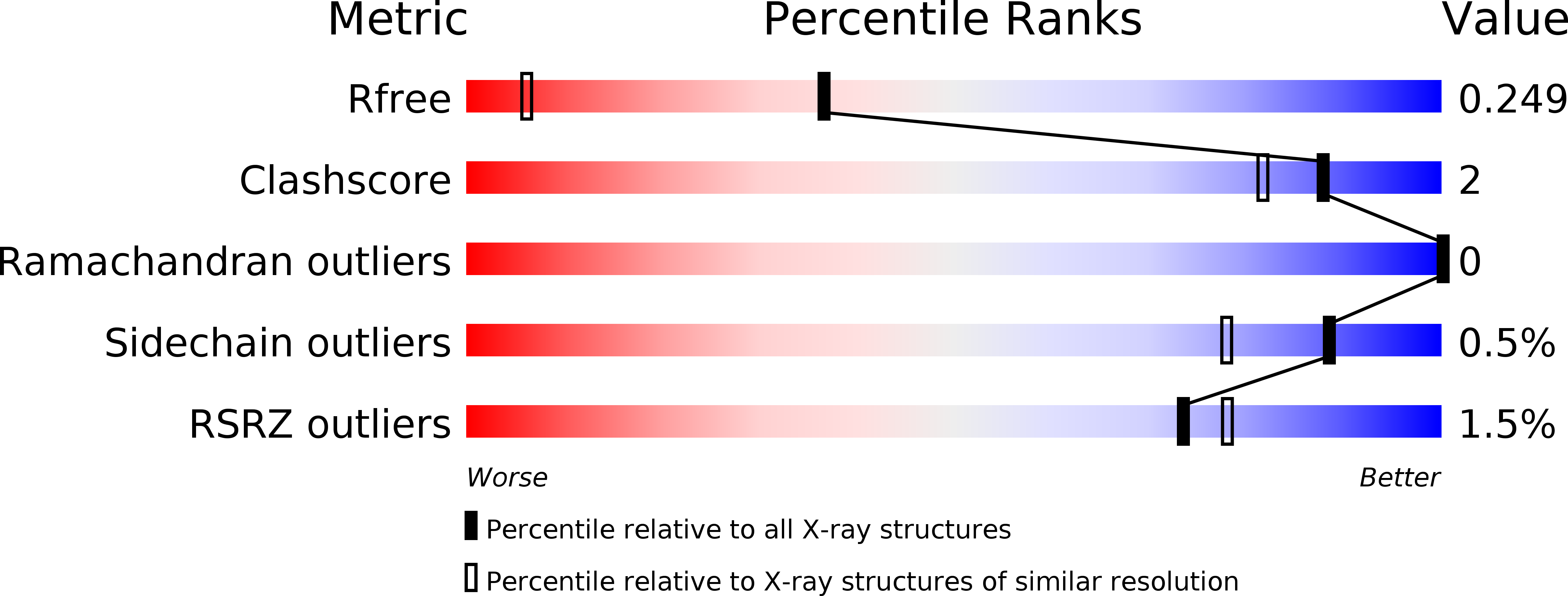
R-Value Free:
0.24
R-Value Work:
0.22
R-Value Observed:
0.22
Space Group:
P 21 21 21
Macromolecular Entities
Structures with similar UniProt ID
Protein Blast
Polymer Type:polypeptide(L)
Molecule:Ricin B-related lectin
Gene (Uniprot):psl1a
Chain IDs:A, B
Chain Length:286
Number of Molecules:2
Biological Source:Polyporus squamosus
Primary Citation
Family of Papain-Like Fungal Chimerolectins with Distinct Ca(2+)-Dependent Activation Mechanism.
Biochemistry 56 4689 4700 (2017)
PMID: 28665586 DOI: 10.1021/acs.biochem.7b00317

Abstact

An important function of fungal lectins is to protect their host. Marasmius oreades agglutinin (MOA) is toxic to nematodes and exerts its protective effect through protease activity. Its proteolytic function is associated with a papain-like dimerization domain. The closest homologue of MOA is Polyporus squamosus lectin 1a (PSL1a). Here, we probed PSL1a for catalytic activity and confirmed that it is a calcium-dependent cysteine protease, like MOA. The X-ray crystal structures of PSL1a (1.5 Å) and MOA (1.3 Å) in complex with calcium and the irreversible cysteine protease inhibitor E-64 elucidated the structural basis for their mechanism of action. The comparison with other calcium-dependent proteases (calpains, LapG) reveals a unique metal-dependent activation mechanism relying on a calcium-induced backbone shift and intradimer cooperation. Intriguingly, the enzymes appear to use a tyrosine-gating mechanism instead of pro-peptide processing. A search for potential MOA orthologues suggests the existence of a whole new family of fungal chimerolectins with these unique features.

Legend

Protein

Chemical

Disease

Primary Citation of related structures
Feedback Form
Name
Email
Institute
Feedback