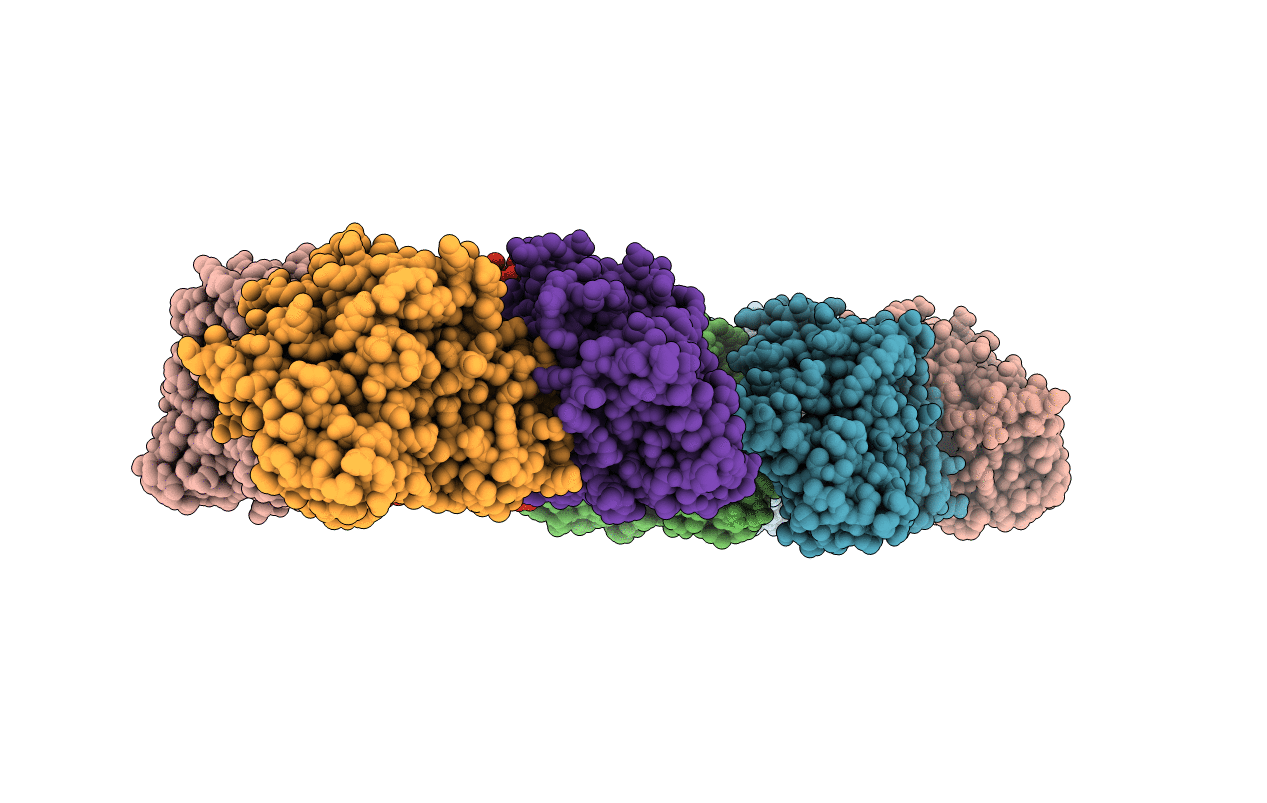
5MGY image
Deposition Date 2016-11-22
Release Date 2016-12-14
Last Version Date 2024-11-13
Entry Detail
PDB ID:
5MGY
Keywords:
Title:
Crystal structure of Pseudomonas stutzeri flavinyl transferase ApbE, apo form
Biological Source:
Host Organism:
Method Details:
Experimental Method:
Resolution:
2.60 Å
R-Value Free:
0.27
R-Value Work:
0.23
R-Value Observed:
0.23
Space Group:
P 1 21 1
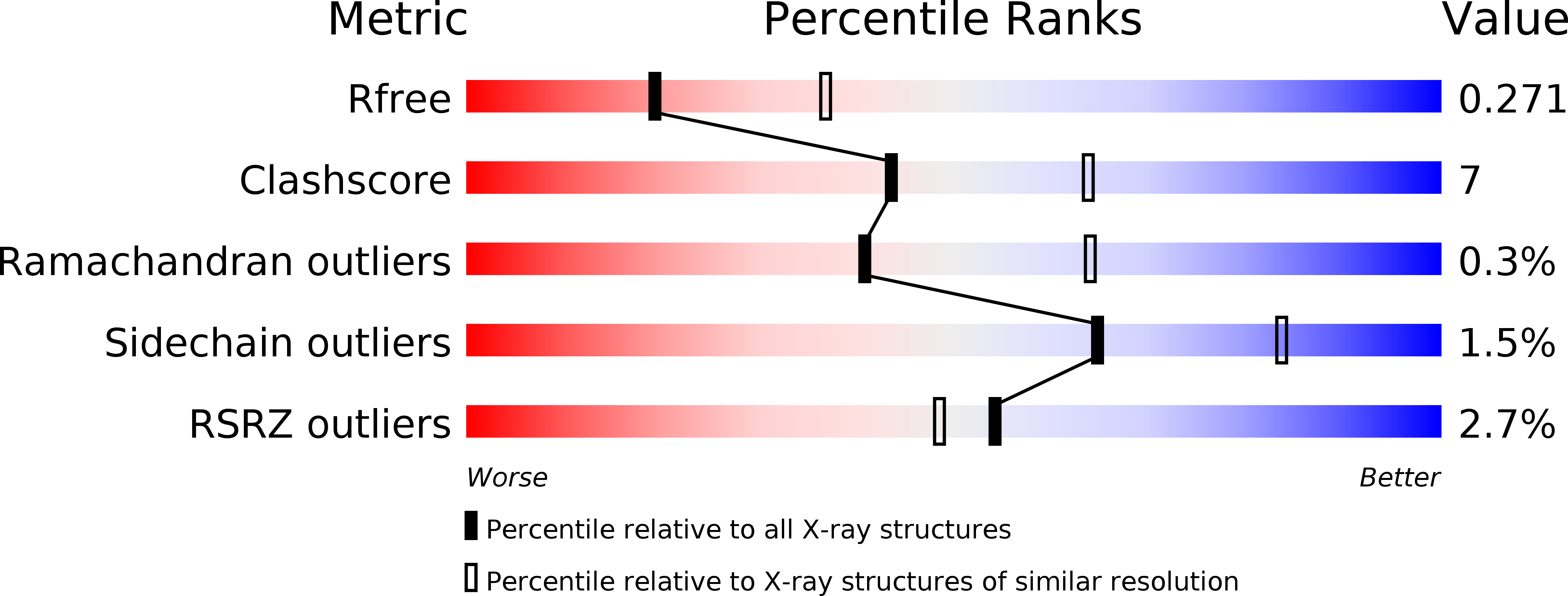
Macromolecular Entities
Structures with similar UniProt ID
Protein Blast
Polymer Type:polypeptide(L)
Molecule:FAD:protein FMN transferase
Gene (Uniprot):CXK99_00610
Chain IDs:A (auth: H), B, C (auth: G), D (auth: A), E (auth: C), F (auth: D), G (auth: E), H (auth: F)
Chain Length:332
Number of Molecules:8
Biological Source:Pseudomonas stutzeri ATCC 14405 = CCUG 16156
Ligand Molecules
Primary Citation
The flavinyl transferase ApbE of Pseudomonas stutzeri matures the NosR protein required for nitrous oxide reduction.
Biochim. Biophys. Acta 1858 95 102 (2016)
PMID: 27864152 DOI: 10.1016/j.bbabio.2016.11.008

Abstact

The copper-containing enzyme nitrous oxide reductase (N2OR) catalyzes the transformation of nitrous oxide (N2O) to dinitrogen (N2) in microbial denitrification. Several accessory factors are essential for assembling the two copper sites CuA and CuZ, and for maintaining the activity. In particular, the deletion of either the transmembrane iron-sulfur flavoprotein NosR or the periplasmic protein NosX, a member of the ApbE family, abolishes N2O respiration. Here we demonstrate through biochemical and structural studies that the ApbE protein from Pseudomonas stutzeri, where the nosX gene is absent, is a monomeric FAD-binding protein that can serve as the flavin donor for NosR maturation via covalent flavinylation of a threonine residue. The flavin transfer reaction proceeds both in vivo and in vitro to generate post-translationally modified NosR with covalently bound FMN. Only FAD can act as substrate and the reaction requires a divalent cation, preferably Mg2+ that was also present in the crystal structure. In addition, the reaction is species-specific to a certain extent.

Legend

Protein

Chemical

Disease

Primary Citation of related structures
Feedback Form
Name
Email
Institute
Feedback