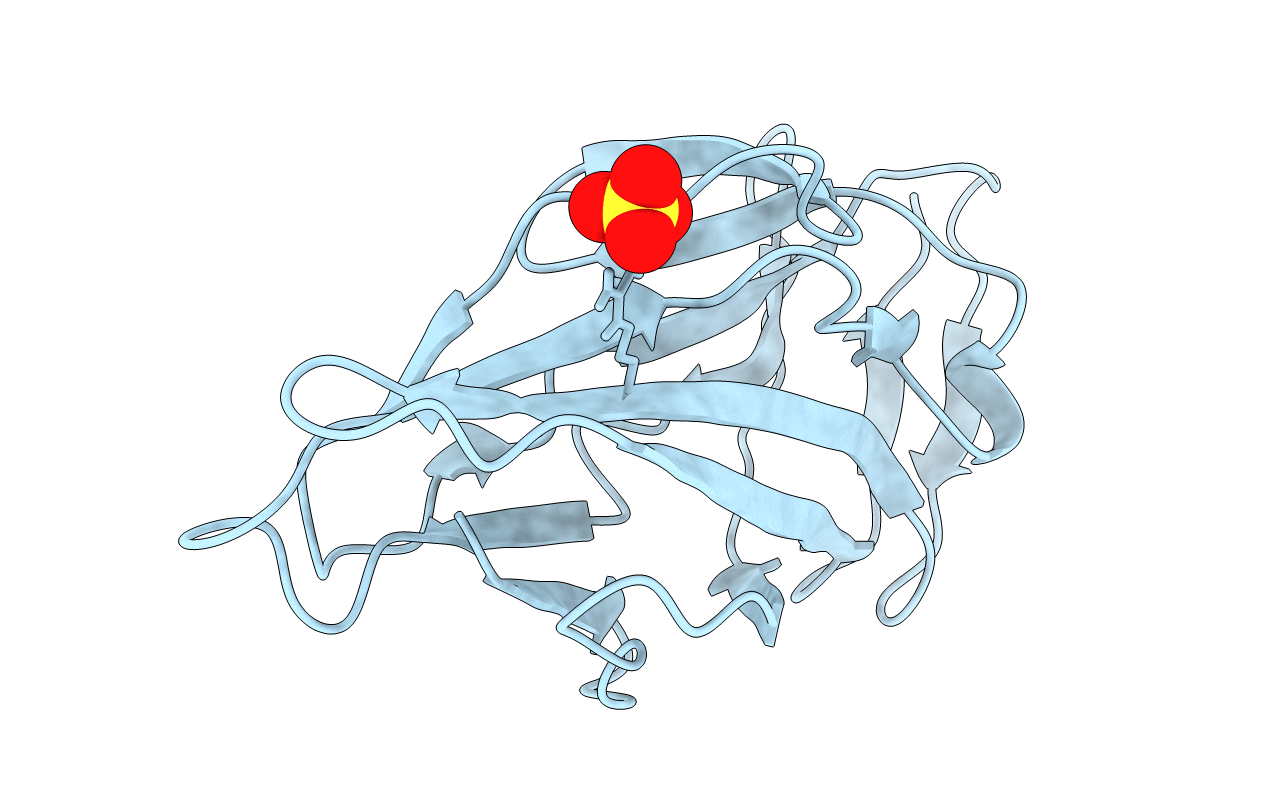
5MCA image
Deposition Date 2016-11-09
Release Date 2017-12-06
Last Version Date 2024-11-13
Entry Detail
PDB ID:
5MCA
Title:
Crystal structure of FimH-LD R60P variant in the apo state
Biological Source:
Source Organism:
Method Details:
Experimental Method:
Resolution:
1.60 Å
R-Value Free:
0.17
R-Value Work:
0.14
R-Value Observed:
0.14
Space Group:
P 21 21 21
Macromolecular Entities
Structures with similar UniProt ID
Protein Blast
Polymer Type:polypeptide(L)
Molecule:Protein FimH
Gene (Uniprot):fimH
Mutagens:R60P
Chain IDs:A
Chain Length:159
Number of Molecules:1
Biological Source:Escherichia coli K-12
Ligand Molecules
Primary Citation
Conformational switch of the bacterial adhesin FimH in the absence of the regulatory domain: Engineering a minimalistic allosteric system.
J. Biol. Chem. 293 1835 1849 (2018)
PMID: 29180452 DOI: 10.1074/jbc.M117.802942

Abstact

For many biological processes such as ligand binding, enzymatic catalysis, or protein folding, allosteric regulation of protein conformation and dynamics is fundamentally important. One example is the bacterial adhesin FimH, where the C-terminal pilin domain exerts negative allosteric control over binding of the N-terminal lectin domain to mannosylated ligands on host cells. When the lectin and pilin domains are separated under shear stress, the FimH-ligand interaction switches in a so-called catch-bond mechanism from the low- to high-affinity state. So far, it has been assumed that the pilin domain is essential for the allosteric propagation within the lectin domain that would otherwise be conformationally rigid. To test this hypothesis, we generated mutants of the isolated FimH lectin domain and characterized their thermodynamic, kinetic, and structural properties using isothermal titration calorimetry, surface plasmon resonance, nuclear magnetic resonance, and X-ray techniques. Intriguingly, some of the mutants mimicked the conformational and kinetic behaviors of the full-length protein and, even in absence of the pilin domain, conducted the cross-talk between allosteric sites and the mannoside-binding pocket. Thus, these mutants represent a minimalistic allosteric system of FimH, useful for further mechanistic studies and antagonist design.

Legend

Protein

Chemical

Disease

Primary Citation of related structures
Feedback Form
Name
Email
Institute
Feedback