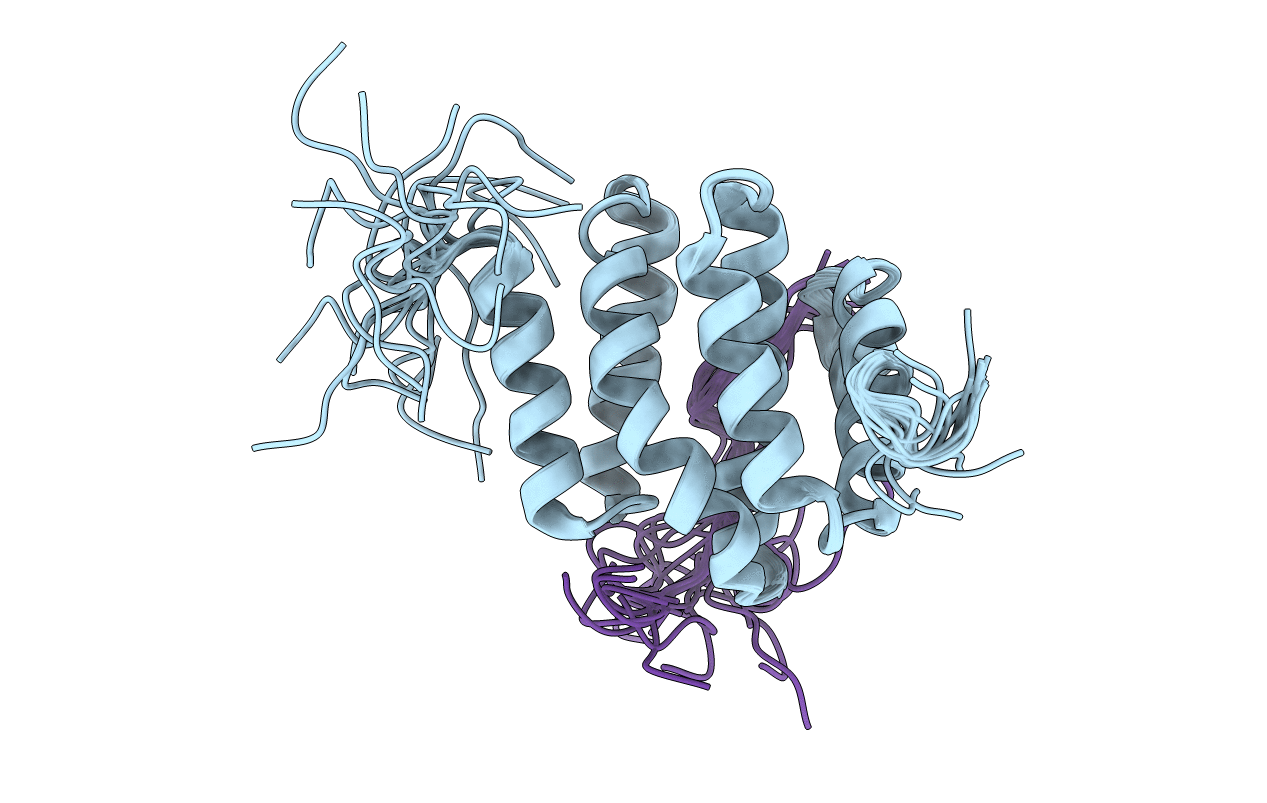
5LVF image
Deposition Date 2016-09-14
Release Date 2017-05-10
Last Version Date 2024-11-20
Entry Detail
PDB ID:
5LVF
Keywords:
Title:
Solution structure of Rtt103 CTD-interacting domain bound to a Thr4 phosphorylated CTD peptide
Biological Source:
Source Organism(s):
Expression System(s):
Method Details:
Experimental Method:
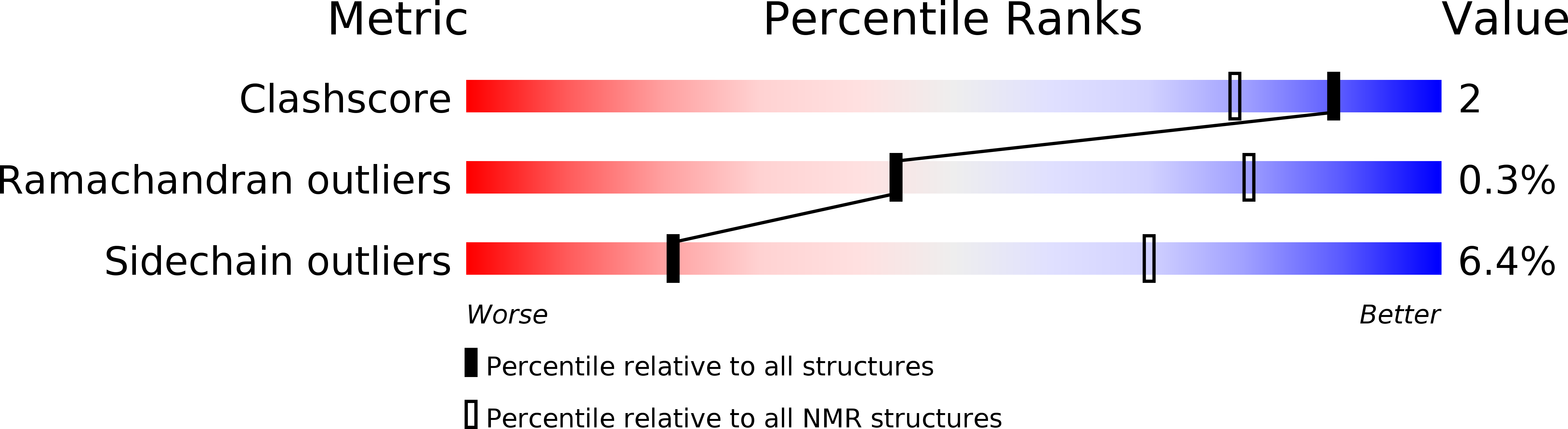
Conformers Calculated:
50
Conformers Submitted:
20
Selection Criteria:
structures with the lowest energy
Macromolecular Entities
Structures with similar UniProt ID
Protein Blast
Polymer Type:polypeptide(L)
Molecule:Regulator of Ty1 transposition protein 103
Gene (Uniprot):RTT103
Chain IDs:A
Chain Length:142
Number of Molecules:1
Biological Source:Saccharomyces cerevisiae
Structures with similar UniProt ID
Protein Blast
Polymer Type:polypeptide(L)
Molecule:PRO-SER-TYR-SER-PRO-PTH-SER-PRO-SER-TYR-SER-PRO-THR-SER-PRO-SER
Chain IDs:B
Chain Length:16
Number of Molecules:1
Biological Source:Saccharomyces cerevisiae
Ligand Molecules
Primary Citation
Structural insight into recognition of phosphorylated threonine-4 of RNA polymerase II C-terminal domain by Rtt103p.
EMBO Rep. 18 906 913 (2017)
PMID: 28468956 DOI: 10.15252/embr.201643723

Abstact

Phosphorylation patterns of the C-terminal domain (CTD) of largest subunit of RNA polymerase II (called the CTD code) orchestrate the recruitment of RNA processing and transcription factors. Recent studies showed that not only serines and tyrosines but also threonines of the CTD can be phosphorylated with a number of functional consequences, including the interaction with yeast transcription termination factor, Rtt103p. Here, we report the solution structure of the Rtt103p CTD-interacting domain (CID) bound to Thr4 phosphorylated CTD, a poorly understood letter of the CTD code. The structure reveals a direct recognition of the phospho-Thr4 mark by Rtt103p CID and extensive interactions involving residues from three repeats of the CTD heptad. Intriguingly, Rtt103p's CID binds equally well Thr4 and Ser2 phosphorylated CTD A doubly phosphorylated CTD at Ser2 and Thr4 diminishes its binding affinity due to electrostatic repulsion. Our structural data suggest that the recruitment of a CID-containing CTD-binding factor may be coded by more than one letter of the CTD code.

Legend

Protein

Chemical

Disease

Primary Citation of related structures
Feedback Form
Name
Email
Institute
Feedback