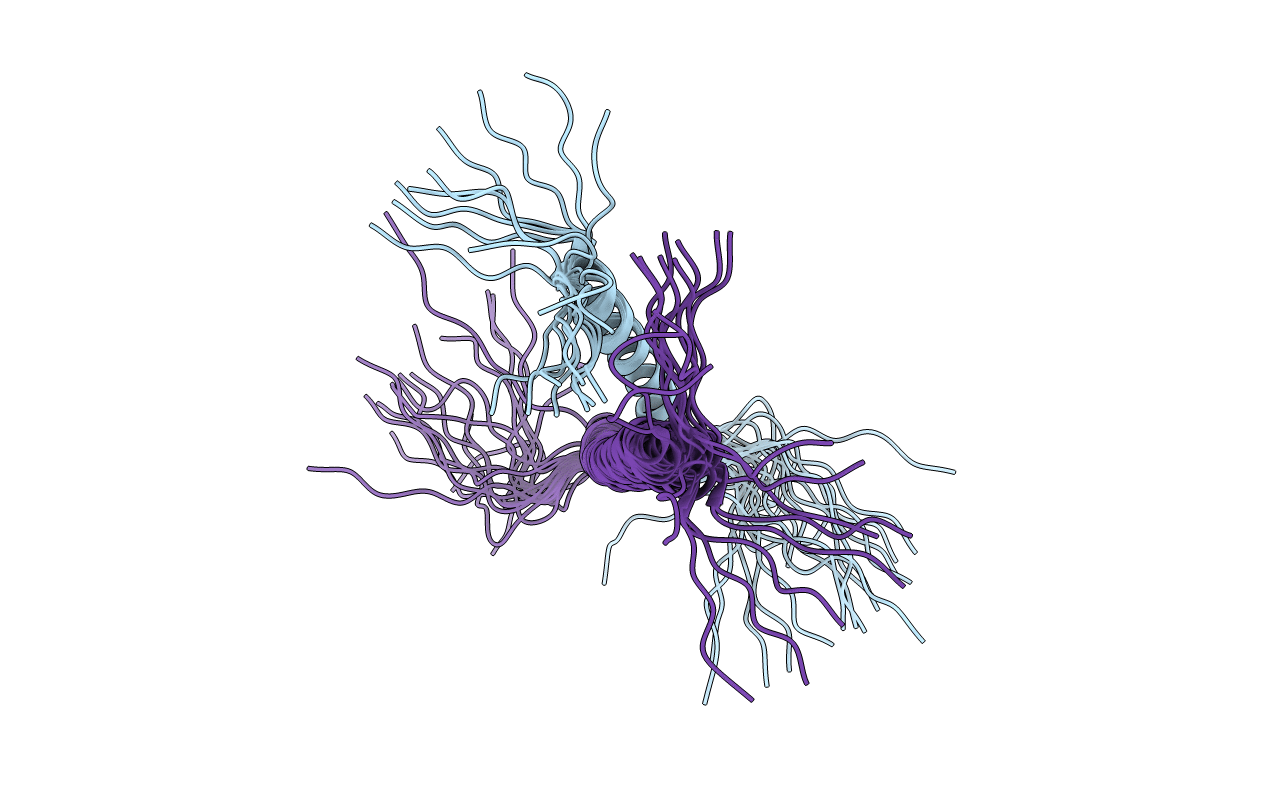
5LV6 image
Deposition Date 2016-09-12
Release Date 2017-04-05
Last Version Date 2024-06-19
Entry Detail
PDB ID:
5LV6
Keywords:
Title:
N-terminal motif dimerization of EGFR transmembrane domain in bicellar environment
Biological Source:
Source Organism:
Homo sapiens (Taxon ID: 9606)
Host Organism:
Method Details:
Experimental Method:
Conformers Calculated:
20
Conformers Submitted:
20
Selection Criteria:
structures with the least restraint violations
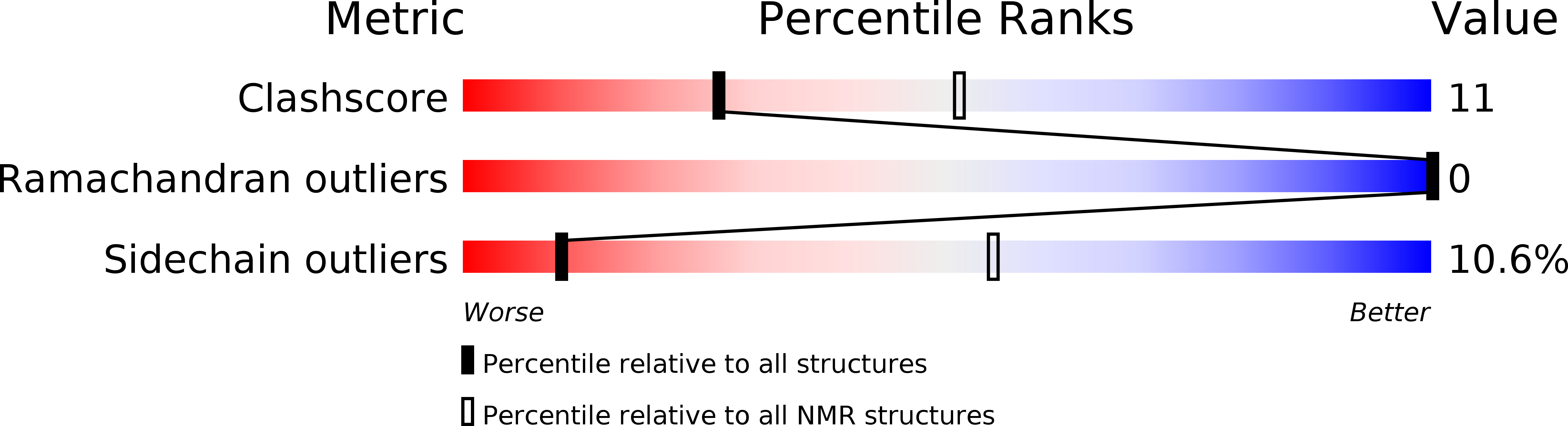
Macromolecular Entities
Structures with similar UniProt ID
Protein Blast
Polymer Type:polypeptide(L)
Molecule:Epidermal growth factor receptor
Gene (Uniprot):EGFR
Chain IDs:A, B
Chain Length:44
Number of Molecules:2
Biological Source:Homo sapiens
Ligand Molecules
Primary Citation
The Conformation of the Epidermal Growth Factor Receptor Transmembrane Domain Dimer Dynamically Adapts to the Local Membrane Environment.
Biochemistry 56 1697 1705 (2017)
PMID: 28291355 DOI: 10.1021/acs.biochem.6b01085

Abstact

The epidermal growth factor receptor (EGFR) family is an important class of receptor tyrosine kinases, mediating a variety of cellular responses in normal biological processes and in pathological states of multicellular organisms. Different modes of dimerization of the human EGFR transmembrane domain (TMD) in different membrane mimetics recently prompted us to propose a novel signal transduction mechanism based on protein-lipid interaction. However, the experimental evidence for it was originally obtained with slightly different TMD fragments used in the two different mimetics, compromising the validity of the comparison. To eliminate ambiguity, we determined the nuclear magnetic resonance (NMR) structure of the bicelle-incorporated dimer of the EGFR TMD fragment identical to the one previously used in micelles. The NMR results augmented by molecular dynamics simulations confirm the mutual influence of the TMD and lipid environment, as is required for the proposed lipid-mediated activation mechanism. They also reveal the possible functional relevance of a subtle interplay between the concurrent processes in the lipid and protein during signal transduction.

Legend

Protein

Chemical

Disease

Primary Citation of related structures
Feedback Form
Name
Email
Institute
Feedback