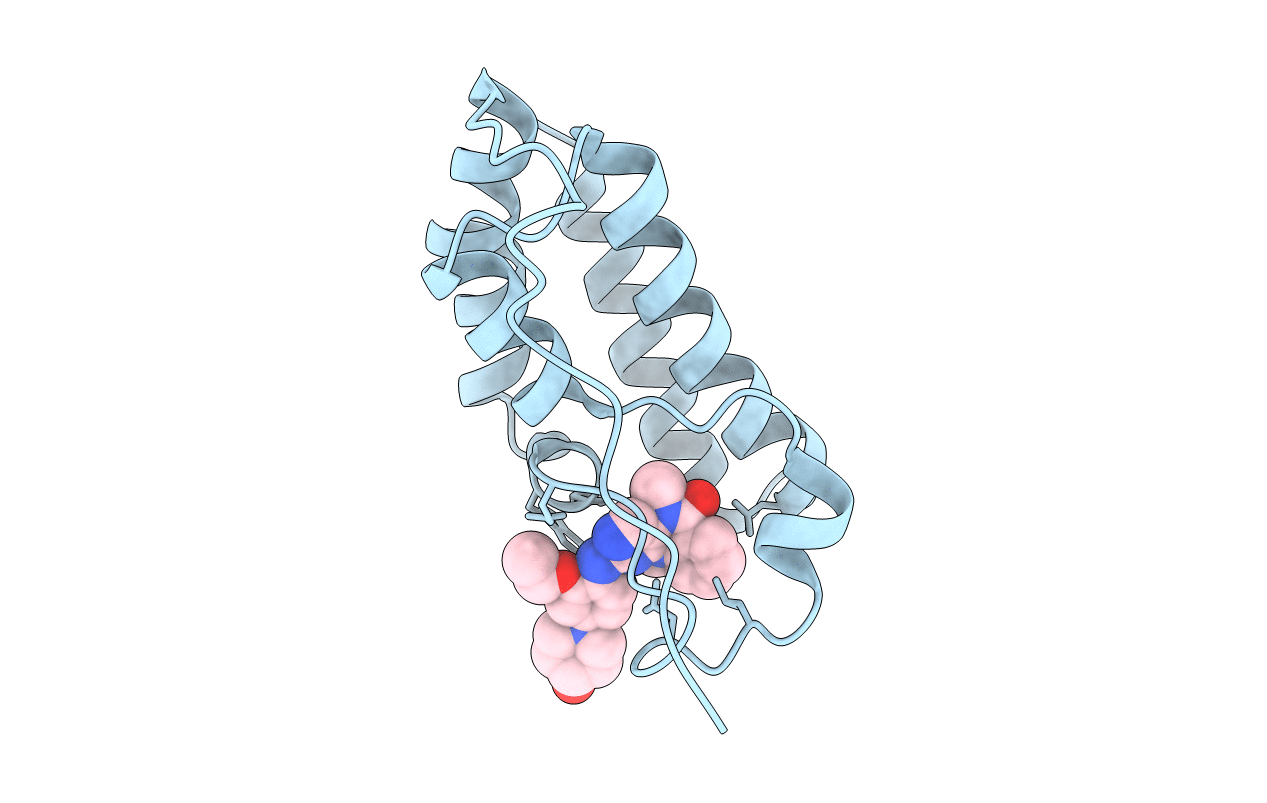
5LRQ image
Deposition Date 2016-08-19
Release Date 2017-08-30
Last Version Date 2024-01-17
Entry Detail
PDB ID:
5LRQ
Keywords:
Title:
BRD4 in complex with ERK5 inhibitor XMD8-92
Biological Source:
Source Organism:
Homo sapiens (Taxon ID: 9606)
Method Details:
Experimental Method:
Resolution:
1.70 Å
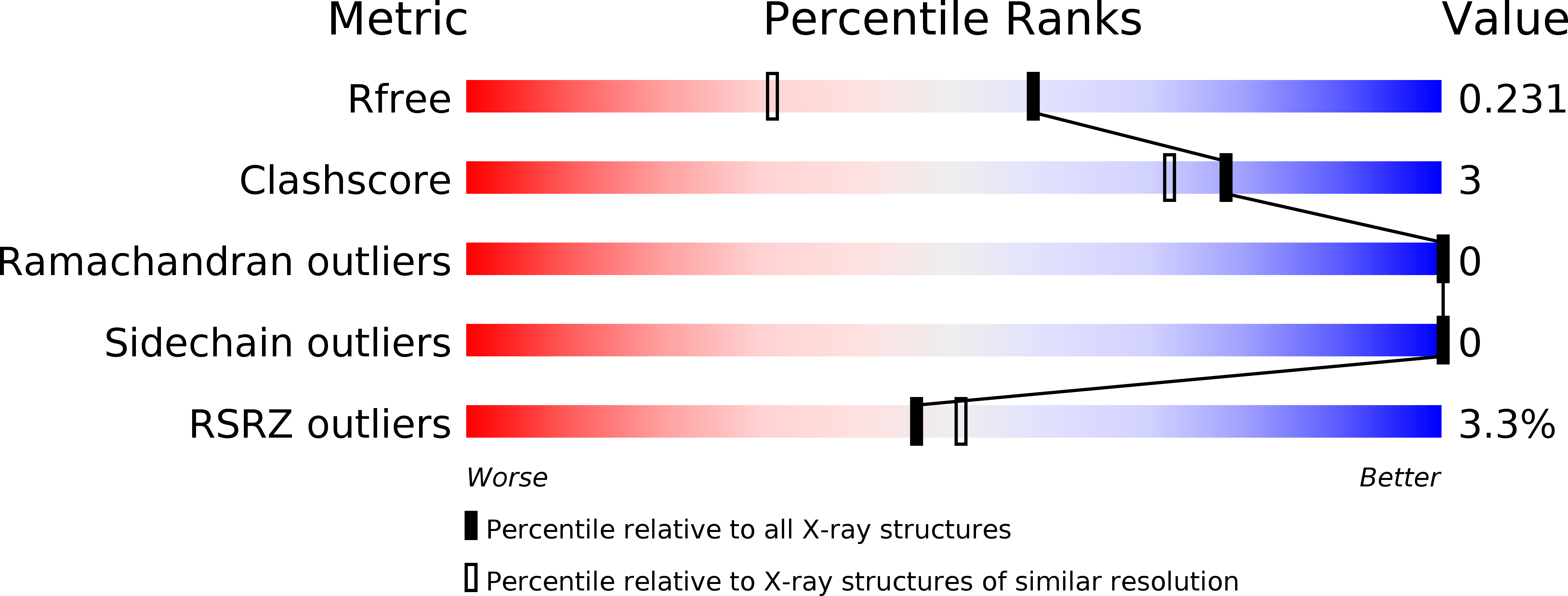
R-Value Free:
0.23
R-Value Work:
0.18
R-Value Observed:
0.18
Space Group:
P 32 2 1
Macromolecular Entities
Structures with similar UniProt ID
Protein Blast
Polymer Type:polypeptide(L)
Molecule:Bromodomain-containing protein 4
Gene (Uniprot):BRD4
Chain IDs:A
Chain Length:143
Number of Molecules:1
Biological Source:Homo sapiens
Ligand Molecules
Primary Citation

Abstact

Extracellular regulated kinase 5 (ERK5) signalling has been implicated in driving a number of cellular phenotypes including endothelial cell angiogenesis and tumour cell motility. Novel ERK5 inhibitors were identified using high throughput screening, with a series of pyrrole-2-carboxamides substituted at the 4-position with an aroyl group being found to exhibit IC50 values in the micromolar range, but having no selectivity against p38α MAP kinase. Truncation of the N-substituent marginally enhanced potency (∼3-fold) against ERK5, but importantly attenuated inhibition of p38α. Systematic variation of the substituents on the aroyl group led to the selective inhibitor 4-(2-bromo-6-fluorobenzoyl)-N-(pyridin-3-yl)-1H-pyrrole-2-carboxamide (IC50 0.82 μM for ERK5; IC50 > 120 μM for p38α). The crystal structure (PDB 5O7I) of this compound in complex with ERK5 has been solved. This compound was orally bioavailable and inhibited bFGF-driven Matrigel plug angiogenesis and tumour xenograft growth. The selective ERK5 inhibitor described herein provides a lead for further development into a tool compound for more extensive studies seeking to examine the role of ERK5 signalling in cancer and other diseases.

Legend

Protein

Chemical

Disease

Primary Citation of related structures
Feedback Form
Name
Email
Institute
Feedback