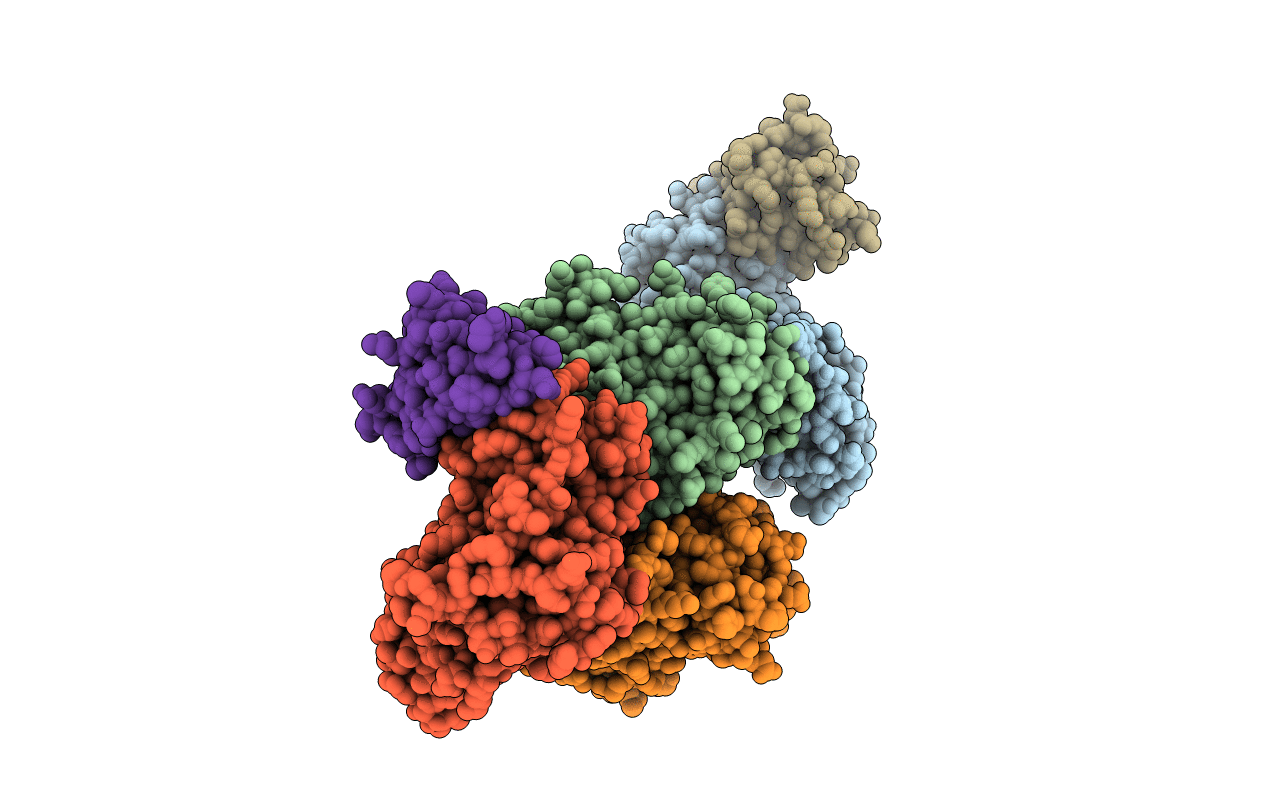
5LQF image
Deposition Date 2016-08-17
Release Date 2017-01-11
Last Version Date 2024-01-10
Entry Detail
PDB ID:
5LQF
Keywords:
Title:
CDK1/CyclinB1/CKS2 in complex with NU6102
Biological Source:
Source Organism:
Homo sapiens (Taxon ID: 9606)
Host Organism:
Method Details:
Experimental Method:
Resolution:
2.06 Å
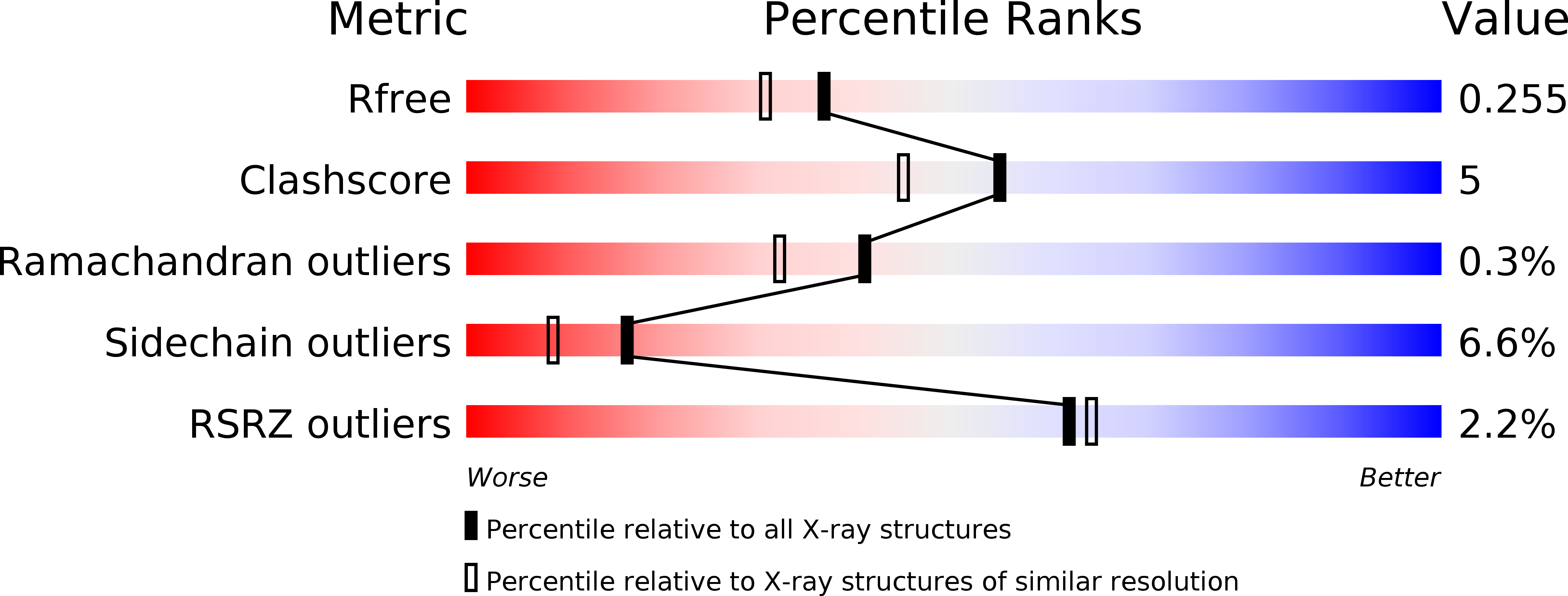
R-Value Free:
0.25
R-Value Work:
0.19
R-Value Observed:
0.20
Space Group:
P 1
Macromolecular Entities
Structures with similar UniProt ID
Protein Blast
Polymer Type:polypeptide(L)
Molecule:Cyclin-dependent kinase 1
Gene (Uniprot):CDK1
Chain IDs:A, D
Chain Length:302
Number of Molecules:2
Biological Source:Homo sapiens
Structures with similar UniProt ID
Protein Blast
Polymer Type:polypeptide(L)
Molecule:G2/mitotic-specific cyclin-B1
Gene (Uniprot):CCNB1
Chain IDs:B, E
Chain Length:273
Number of Molecules:2
Biological Source:Homo sapiens
Structures with similar UniProt ID
Protein Blast
Polymer Type:polypeptide(L)
Molecule:Cyclin-dependent kinases regulatory subunit 2
Gene (Uniprot):CKS2
Chain IDs:C, F
Chain Length:84
Number of Molecules:2
Biological Source:Homo sapiens
Ligand Molecules
Primary Citation
Cyclin-Dependent Kinase (CDK) Inhibitors: Structure-Activity Relationships and Insights into the CDK-2 Selectivity of 6-Substituted 2-Arylaminopurines.
J. Med. Chem. 60 1746 1767 (2017)
PMID: 28005359 DOI: 10.1021/acs.jmedchem.6b01254

Abstact

Purines and related heterocycles substituted at C-2 with 4'-sulfamoylanilino and at C-6 with a variety of groups have been synthesized with the aim of achieving selectivity of binding to CDK2 over CDK1. 6-Substituents that favor competitive inhibition at the ATP binding site of CDK2 were identified and typically exhibited 10-80-fold greater inhibition of CDK2 compared to CDK1. Most impressive was 4-((6-([1,1'-biphenyl]-3-yl)-9H-purin-2-yl)amino) benzenesulfonamide (73) that exhibited high potency toward CDK2 (IC50 0.044 μM) but was ∼2000-fold less active toward CDK1 (IC50 86 μM). This compound is therefore a useful tool for studies of cell cycle regulation. Crystal structures of inhibitor-kinase complexes showed that the inhibitor stabilizes a glycine-rich loop conformation that shapes the ATP ribose binding pocket and that is preferred in CDK2 but has not been observed in CDK1. This aspect of the active site may be exploited for the design of inhibitors that distinguish between CDK1 and CDK2.

Legend

Protein

Chemical

Disease

Primary Citation of related structures
Feedback Form
Name
Email
Institute
Feedback