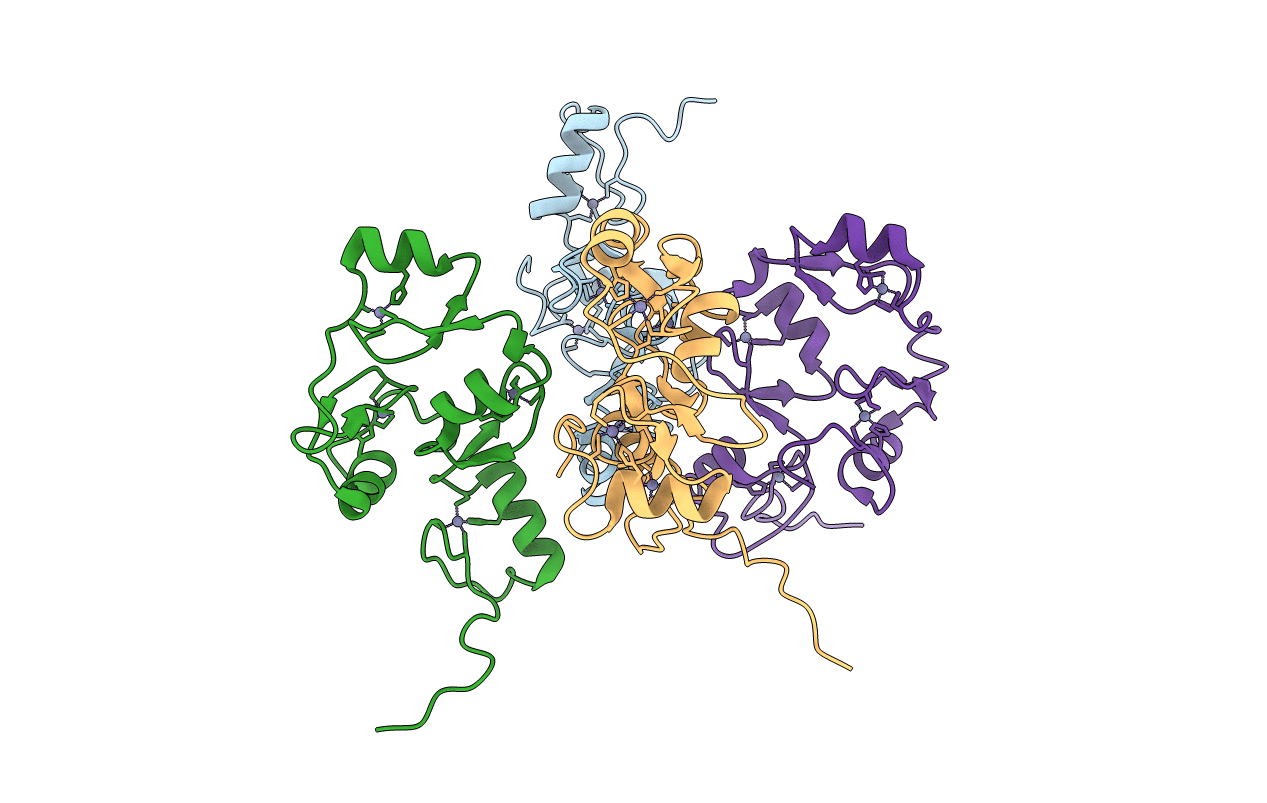
5LPI image
Deposition Date 2016-08-13
Release Date 2017-01-11
Last Version Date 2024-05-08
Entry Detail
PDB ID:
5LPI
Keywords:
Title:
Structure of the zinc finger array of Cep104
Biological Source:
Source Organism:
Homo sapiens (Taxon ID: 9606)
Method Details:
Experimental Method:
Resolution:
1.80 Å
R-Value Free:
0.22
R-Value Work:
0.19
R-Value Observed:
0.19
Space Group:
P 21 21 21
Macromolecular Entities
Structures with similar UniProt ID
Protein Blast
Polymer Type:polypeptide(L)
Molecule:Centrosomal protein of 104 kDa
Gene (Uniprot):CEP104
Chain IDs:A (auth: D), B (auth: C), C (auth: A), D (auth: B)
Chain Length:134
Number of Molecules:4
Biological Source:Homo sapiens
Ligand Molecules
Primary Citation
The Ciliopathy-Associated Cep104 Protein Interacts with Tubulin and Nek1 Kinase.
Structure 25 146 156 (2017)
PMID: 28017521 DOI: 10.1016/j.str.2016.11.014

Abstact

Cilia are thin cell projections with essential roles in cell motility, fluid movement, sensing, and signaling. They are templated from centrioles that dock against the plasma membrane and subsequently extend their peripheral microtubule array. The molecular mechanisms underpinning cilia assembly are incompletely understood. Cep104 is a key factor involved in cilia formation and length regulation that rides on the ends of elongating and shrinking cilia. It is mutated in Joubert syndrome, a genetically heterogeneous ciliopathy. Here we provide structural and biochemical data that Cep104 contains a tubulin-binding TOG (tumor overexpressed gene) domain and a novel C2HC zinc finger array. Furthermore, we identify the kinase Nek1, another ciliopathy-associated protein, as a potential binding partner of this array. Finally, we show that Nek1 competes for binding to Cep104 with the distal centriole-capping protein CP110. Our data suggest a model for Cep104 activity during ciliogenesis and provide a novel link between Cep104 and Nek1.

Legend

Protein

Chemical

Disease

Primary Citation of related structures
Feedback Form
Name
Email
Institute
Feedback