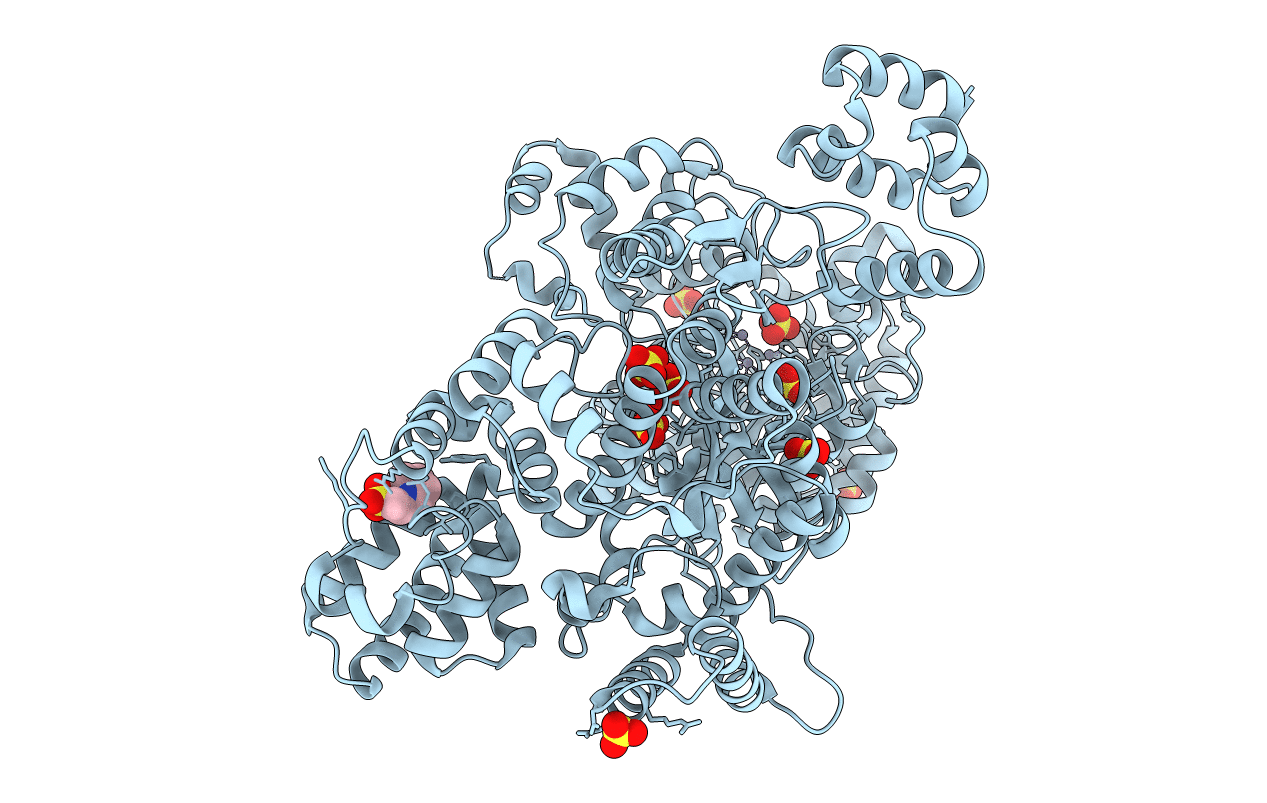
5LEW image
Deposition Date 2016-06-30
Release Date 2017-10-25
Last Version Date 2024-01-10
Entry Detail
PDB ID:
5LEW
Keywords:
Title:
DNA polymerase
Biological Source:
Method Details:
Experimental Method:
Resolution:
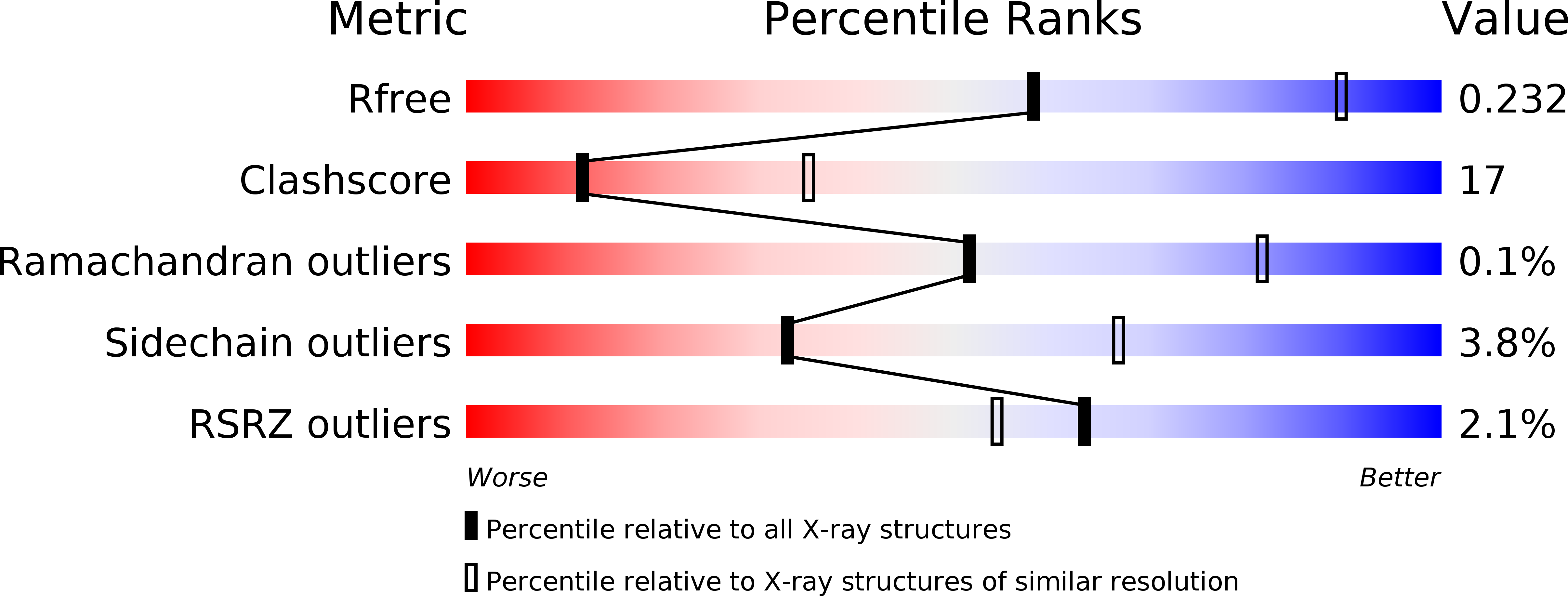
2.80 Å
R-Value Free:
0.23
R-Value Work:
0.19
R-Value Observed:
0.19
Space Group:
H 3 2
Macromolecular Entities
Structures with similar UniProt ID
Protein Blast
Polymer Type:polypeptide(L)
Molecule:DNA polymerase III subunit alpha
Gene (Uniprot):dnaE1
Chain IDs:A
Chain Length:927
Number of Molecules:1
Biological Source:Mycobacterium tuberculosis (strain ATCC 25618 / H37Rv)
Primary Citation
High-fidelity DNA replication in Mycobacterium tuberculosis relies on a trinuclear zinc center.
Nat Commun 8 855 855 (2017)
PMID: 29021523 DOI: 10.1038/s41467-017-00886-w

Abstact

High-fidelity DNA replication depends on a proofreading 3'-5' exonuclease that is associated with the replicative DNA polymerase. The replicative DNA polymerase DnaE1 from the major pathogen Mycobacterium tuberculosis (Mtb) uses its intrinsic PHP-exonuclease that is distinct from the canonical DEDD exonucleases found in the Escherichia coli and eukaryotic replisomes. The mechanism of the PHP-exonuclease is not known. Here, we present the crystal structure of the Mtb DnaE1 polymerase. The PHP-exonuclease has a trinuclear zinc center, coordinated by nine conserved residues. Cryo-EM analysis reveals the entry path of the primer strand in the PHP-exonuclease active site. Furthermore, the PHP-exonuclease shows a striking similarity to E. coli endonuclease IV, which provides clues regarding the mechanism of action. Altogether, this work provides important insights into the PHP-exonuclease and reveals unique properties that make it an attractive target for novel anti-mycobacterial drugs.The polymerase and histidinol phosphatase (PHP) domain in the DNA polymerase DnaE1 is essential for mycobacterial high-fidelity DNA replication. Here, the authors determine the DnaE1 crystal structure, which reveals the PHP-exonuclease mechanism that can be exploited for antibiotic development.

Legend

Protein

Chemical

Disease

Primary Citation of related structures
Feedback Form
Name
Email
Institute
Feedback