5L3S image
Deposition Date 2016-05-24
Release Date 2016-06-08
Last Version Date 2025-12-17
Entry Detail
PDB ID:
5L3S
Title:
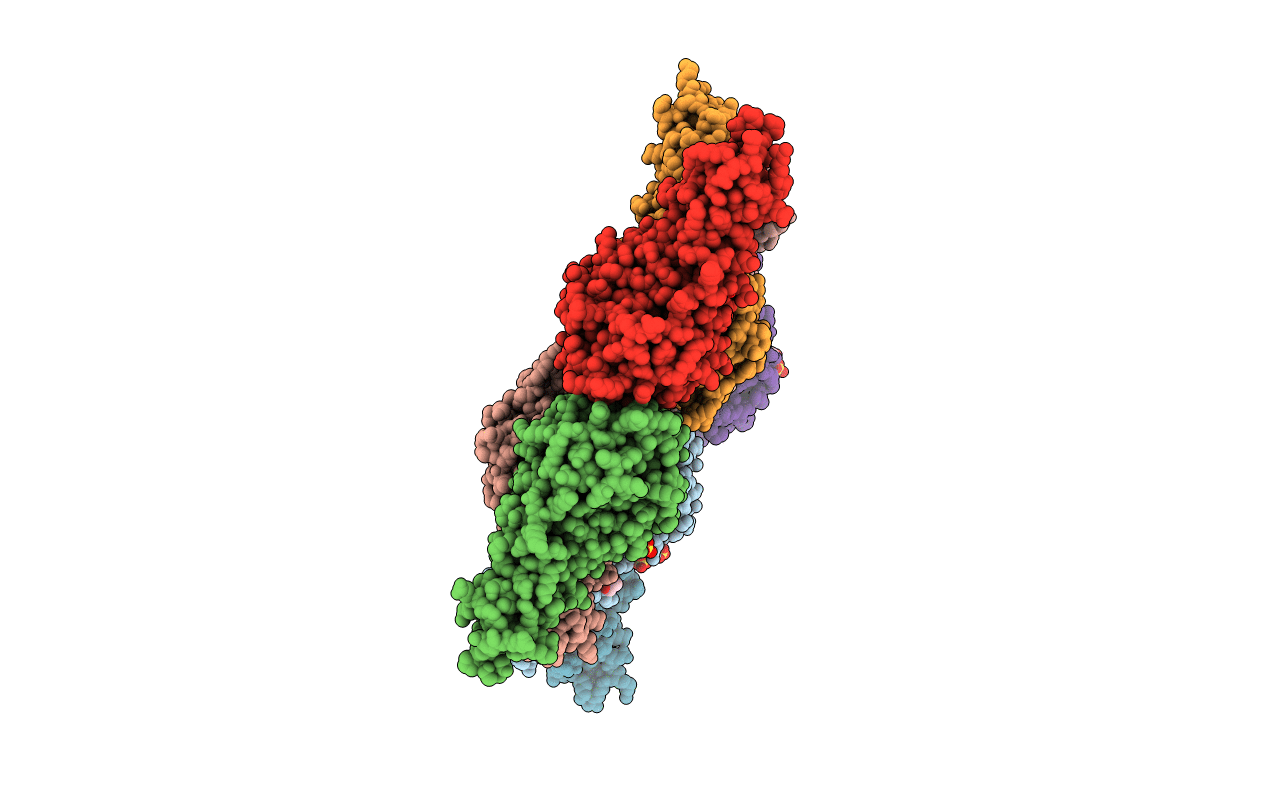
Structure of the GTPase heterodimer of crenarchaeal SRP54 and FtsY
Biological Source:
Method Details:
Experimental Method:
Resolution:
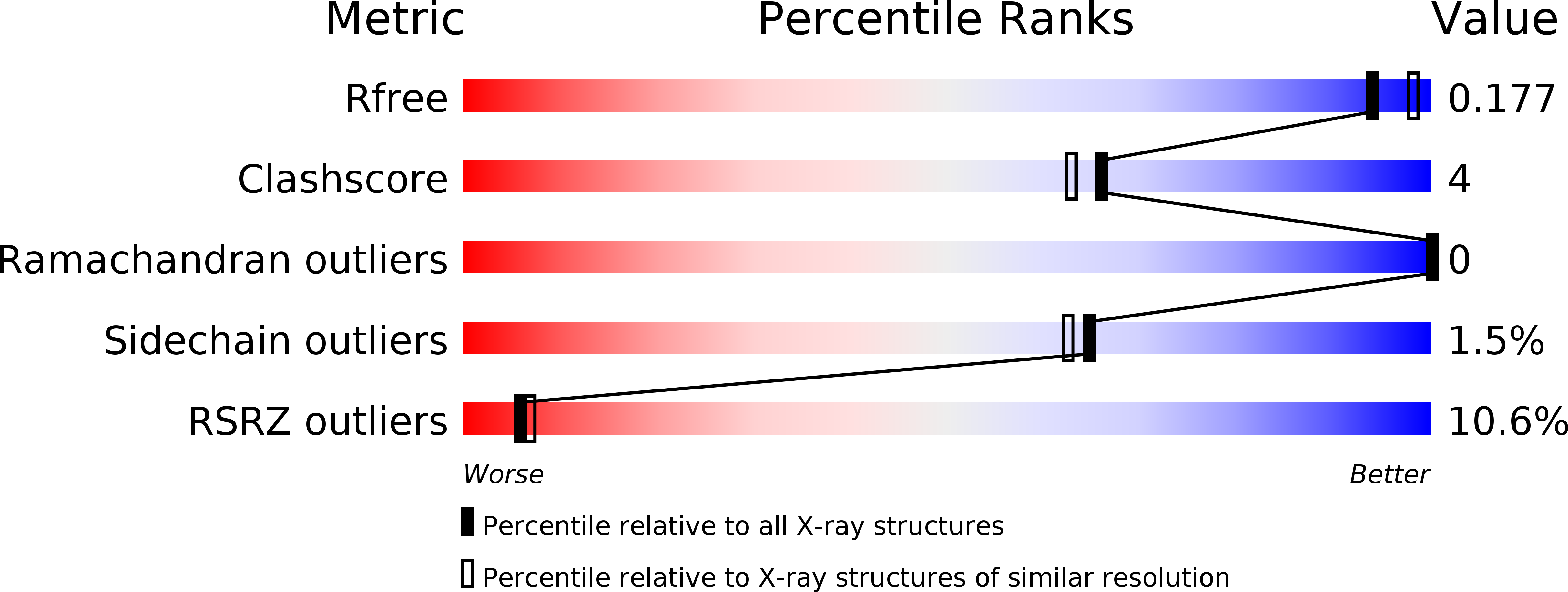
1.90 Å
R-Value Free:
0.21
R-Value Work:
0.17
R-Value Observed:
0.17
Space Group:
P 1 21 1
Macromolecular Entities
Structures with similar UniProt ID
Protein Blast
Polymer Type:polypeptide(L)
Molecule:Signal recognition particle 54 kDa protein
Gene (Uniprot):srp54
Chain IDs:A, C, E, G
Chain Length:298
Number of Molecules:4
Biological Source:Sulfolobus solfataricus (strain ATCC 35092 / DSM 1617 / JCM 11322 / P2)
Structures with similar UniProt ID
Protein Blast
Polymer Type:polypeptide(L)
Molecule:Signal recognition particle receptor FtsY
Gene (Uniprot):ftsY
Chain IDs:B, D, F, H
Chain Length:296
Number of Molecules:4
Biological Source:Sulfolobus acidocaldarius
Primary Citation
Structural Basis for Conserved Regulation and Adaptation of the Signal Recognition Particle Targeting Complex.
J.Mol.Biol. 428 2880 2897 (2016)
PMID: 27241309 DOI: 10.1016/j.jmb.2016.05.015

Abstact

The signal recognition particle (SRP) is a ribonucleoprotein complex with a key role in targeting and insertion of membrane proteins. The two SRP GTPases, SRP54 (Ffh in bacteria) and FtsY (SRα in eukaryotes), form the core of the targeting complex (TC) regulating the SRP cycle. The architecture of the TC and its stimulation by RNA has been described for the bacterial SRP system while this information is lacking for other domains of life. Here, we present the crystal structures of the GTPase heterodimers of archaeal (Sulfolobus solfataricus), eukaryotic (Homo sapiens), and chloroplast (Arabidopsis thaliana) SRP systems. The comprehensive structural comparison combined with Brownian dynamics simulations of TC formation allows for the description of the general blueprint and of specific adaptations of the quasi-symmetric heterodimer. Our work defines conserved external nucleotide-binding sites for SRP GTPase activation by RNA. Structural analyses of the GDP-bound, post-hydrolysis states reveal a conserved, magnesium-sensitive switch within the I-box. Overall, we provide a general model for SRP cycle regulation by RNA.

Legend

Protein

Chemical

Disease

Primary Citation of related structures
Feedback Form
Name
Email
Institute
Feedback