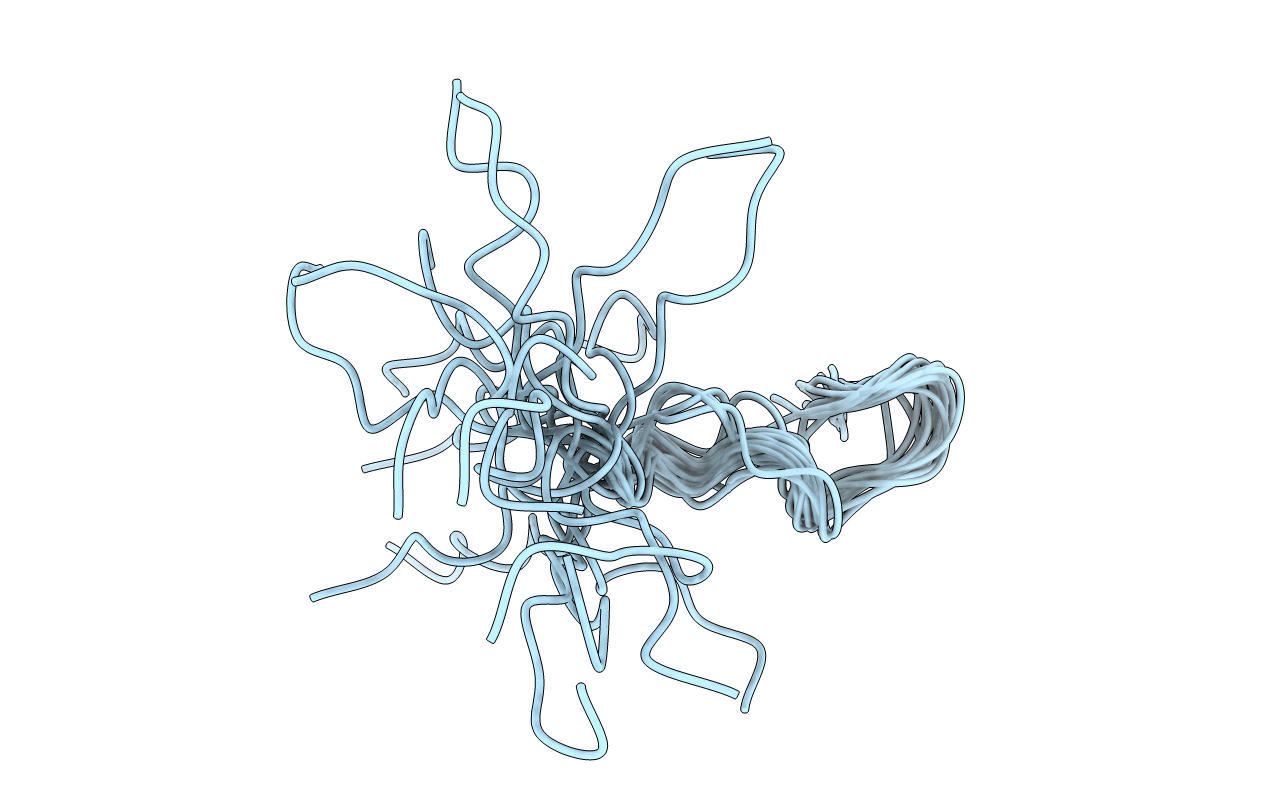
Alterations in gap junctions underlie the etiologies of syndromic deafness (KID) and Charcot-Marie Tooth disease (CMTX). Functional gap junctions are composed of connexin molecules with N-termini containing a flexible turn around G12, inserting the N-termini into the channel pore allowing voltage gating. The loss of this turn correlates with loss of Connexin 32 (Cx32) function by impaired trafficking to the cell membrane. Using (1)H NMR we show the N-terminus of a syndromic deafness mutation Cx26G12R, producing "leaky channels", contains a turn around G12 which is less structured and more flexible than wild-type. In contrast, the N-terminal structure of the same mutation in Cx32 chimera, Cx32*43E1G12R shows a larger constricted turn and no membrane current expression but forms membrane inserted hemichannels. Their function was rescued by formation of heteromeric channels with wild type subunits. We suggest the inflexible Cx32G12R N-terminus blocks ion conduction in homomeric channels and this channel block is relieved by incorporation of wild type subunits. In contrast, the increased open probability of Cx26G12R hemichannels is likely due to the addition of positive charge in the channel pore changing pore electrostatics and impairing hemichannel regulation by Ca(2+). These results provide mechanistic information on aberrant channel activity observed in disease.
Legend
Protein
Chemical
Disease