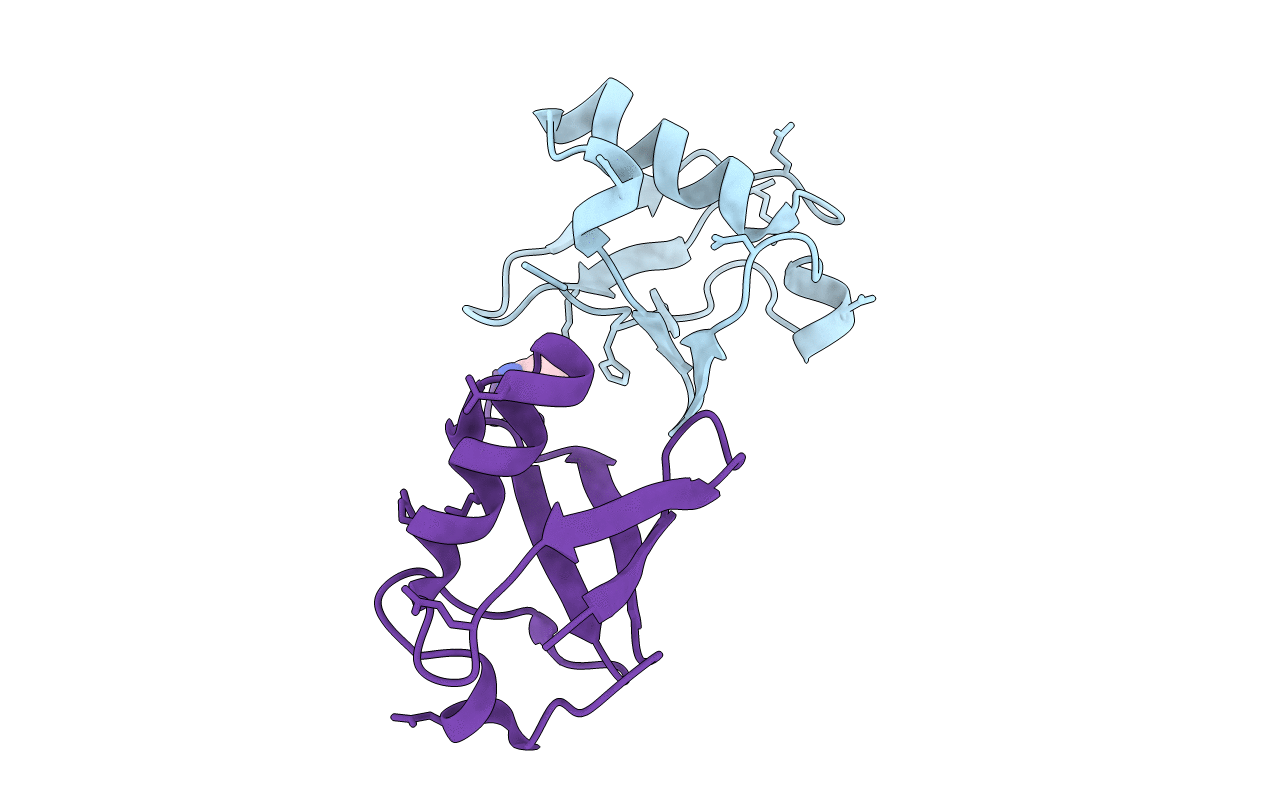
5KHY image
Deposition Date 2016-06-16
Release Date 2016-09-14
Last Version Date 2023-11-15
Entry Detail
PDB ID:
5KHY
Title:
Crystal structure of oxime-linked K6 diubiquitin
Biological Source:
Source Organism(s):
Homo sapiens (Taxon ID: 9606)
Expression System(s):
Method Details:
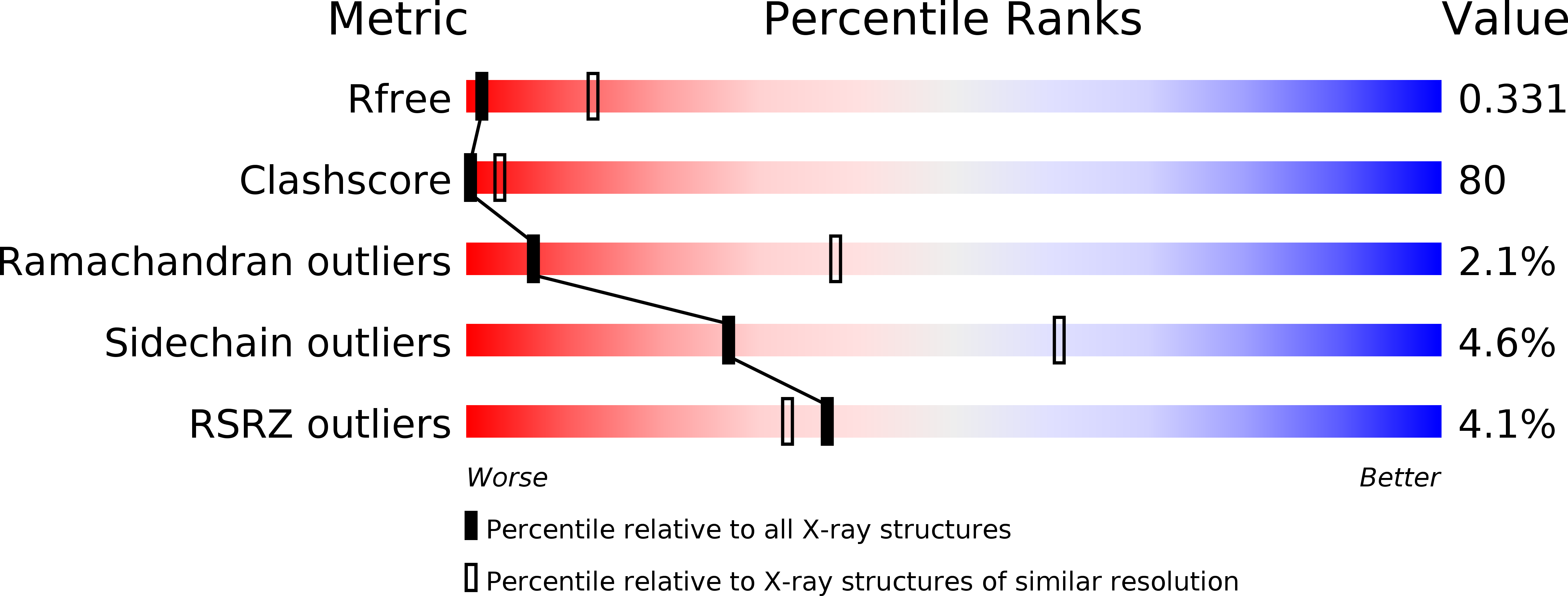
Experimental Method:
Resolution:
3.50 Å
R-Value Free:
0.33
R-Value Work:
0.28
R-Value Observed:
0.29
Space Group:
P 43 3 2
Macromolecular Entities
Structures with similar UniProt ID
Protein Blast
Polymer Type:polypeptide(L)
Molecule:Polyubiquitin-B
Gene (Uniprot):UBB
Mutagens:Unnatural aminoxylysine amino acid at position 6
Chain IDs:A
Chain Length:73
Number of Molecules:1
Biological Source:Homo sapiens
Structures with similar UniProt ID
Protein Blast
Polymer Type:polypeptide(L)
Molecule:Polyubiquitin-B
Gene (Uniprot):UBB
Mutagens:unnatural residue 76 oxime linked to chain A
Chain IDs:B
Chain Length:75
Number of Molecules:1
Biological Source:Homo sapiens
Modified Residue
Compound ID Chain ID Parent Comp ID Details 2D Image
19W A LYS modified residue
Primary Citation
Genetically Directed Production of Recombinant, Isosteric and Nonhydrolysable Ubiquitin Conjugates.
Chembiochem 17 1472 1480 (2016)
PMID: 27197715 DOI: 10.1002/cbic.201600138

Abstact

We describe the genetically directed incorporation of aminooxy functionality into recombinant proteins by using a mutant Methanosarcina barkeri pyrrolysyl-tRNA synthetase/tRNACUA pair. This allows the general production of nonhydrolysable ubiquitin conjugates of recombinant origin by bioorthogonal oxime ligation. This was exemplified by the preparation of nonhydrolysable versions of diubiquitin, polymeric ubiquitin chains and ubiquitylated SUMO. The conjugates exhibited unrivalled isostery with the native isopeptide bond, as inferred from structural and biophysical characterisation. Furthermore, the conjugates functioned as nanomolar inhibitors of deubiquitylating enzymes and were recognised by linkage-specific antibodies. This technology should provide a versatile platform for the development of powerful tools for studying deubiquitylating enzymes and for elucidating the cellular roles of diverse polyubiquitin linkages.

Legend

Protein

Chemical

Disease

Primary Citation of related structures
Feedback Form
Name
Email
Institute
Feedback