5KHK image
Deposition Date 2016-06-14
Release Date 2016-09-14
Last Version Date 2023-09-27
Entry Detail
PDB ID:
5KHK
Title:
HCN2 CNBD in complex with 2-aminopurine riboside-3', 5'-cyclic monophosphate (2-NH2-cPuMP)
Biological Source:
Source Organism:
Mus musculus (Taxon ID: 10090)
Host Organism:
Method Details:
Experimental Method:
Resolution:
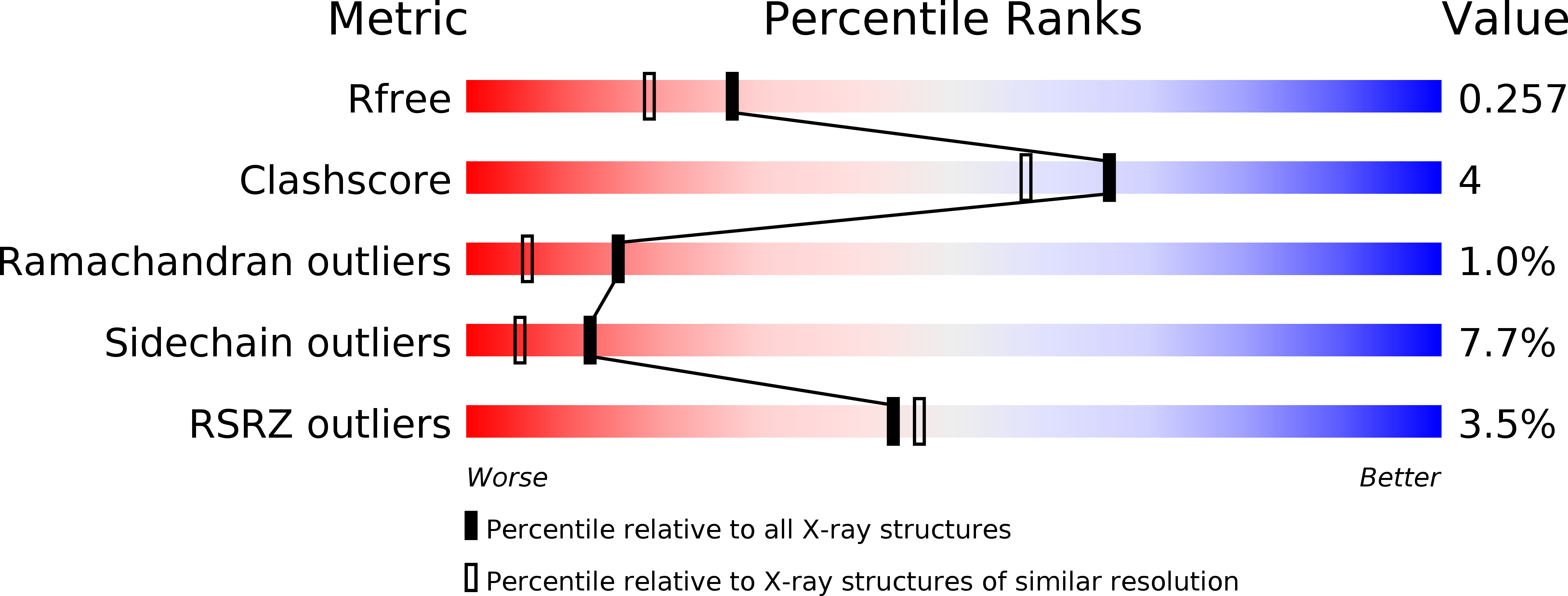
2.07 Å
R-Value Free:
0.26
R-Value Work:
0.21
R-Value Observed:
0.21
Space Group:
P 4 21 2
Macromolecular Entities
Structures with similar UniProt ID
Protein Blast
Polymer Type:polypeptide(L)
Molecule:Potassium/sodium hyperpolarization-activated cyclic nucleotide-gated channel 2
Gene (Uniprot):Hcn2
Chain IDs:A
Chain Length:204
Number of Molecules:1
Biological Source:Mus musculus
Modified Residue
Compound ID Chain ID Parent Comp ID Details 2D Image
CSX A CYS modified residue
Ligand Molecules
Primary Citation
Cyclic Purine and Pyrimidine Nucleotides Bind to the HCN2 Ion Channel and Variably Promote C-Terminal Domain Interactions and Opening.
Structure 24 1629 1642 (2016)
PMID: 27568927 DOI: 10.1016/j.str.2016.06.024

Abstact

Cyclic AMP is thought to facilitate the opening of the HCN2 channel by binding to a C-terminal domain and promoting or inhibiting interactions between subunits. Here, we correlated the ability of cyclic nucleotides to promote interactions of isolated HCN2 C-terminal domains in solution with their ability to facilitate channel opening. Cyclic IMP, a cyclic purine nucleotide, and cCMP, a cyclic pyrimidine nucleotide, bind to a C-terminal domain containing the cyclic nucleotide-binding domain but, in contrast to other cyclic nucleotides examined, fail to promote its oligomerization, and produce only modest facilitation of opening of the full-length channel. Comparisons between ligand bound structures identify a region between the sixth and seventh β strands and the distal C helix as important for facilitation and tight binding. We propose that promotion of interactions between the C-terminal domains by a given ligand contribute to its ability to facilitate opening of the full-length channel.

Legend

Protein

Chemical

Disease

Primary Citation of related structures
Feedback Form
Name
Email
Institute
Feedback