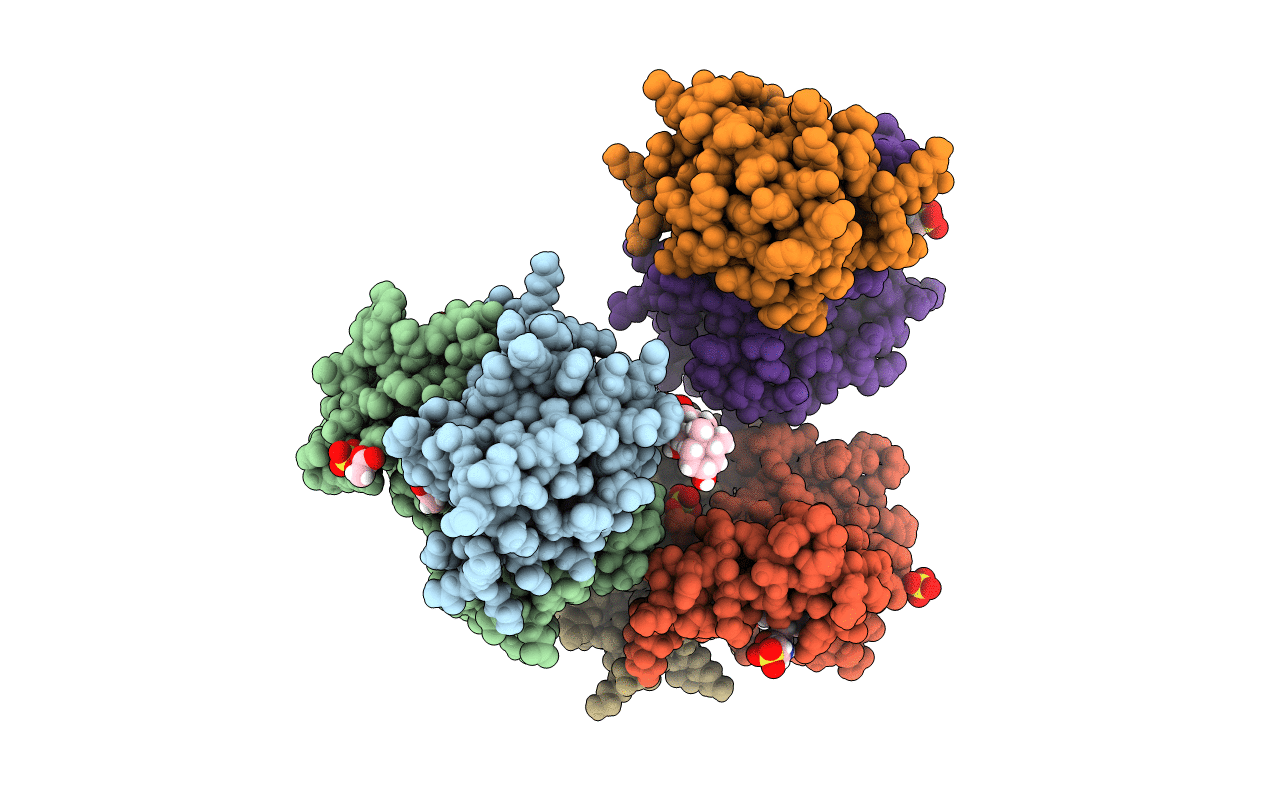
5KEW image
Deposition Date 2016-06-10
Release Date 2016-07-20
Last Version Date 2024-03-06
Entry Detail
PDB ID:
5KEW
Title:
Vibrio parahaemolyticus VtrA/VtrC complex bound to the bile salt taurodeoxycholate
Biological Source:
Method Details:
Experimental Method:
Resolution:
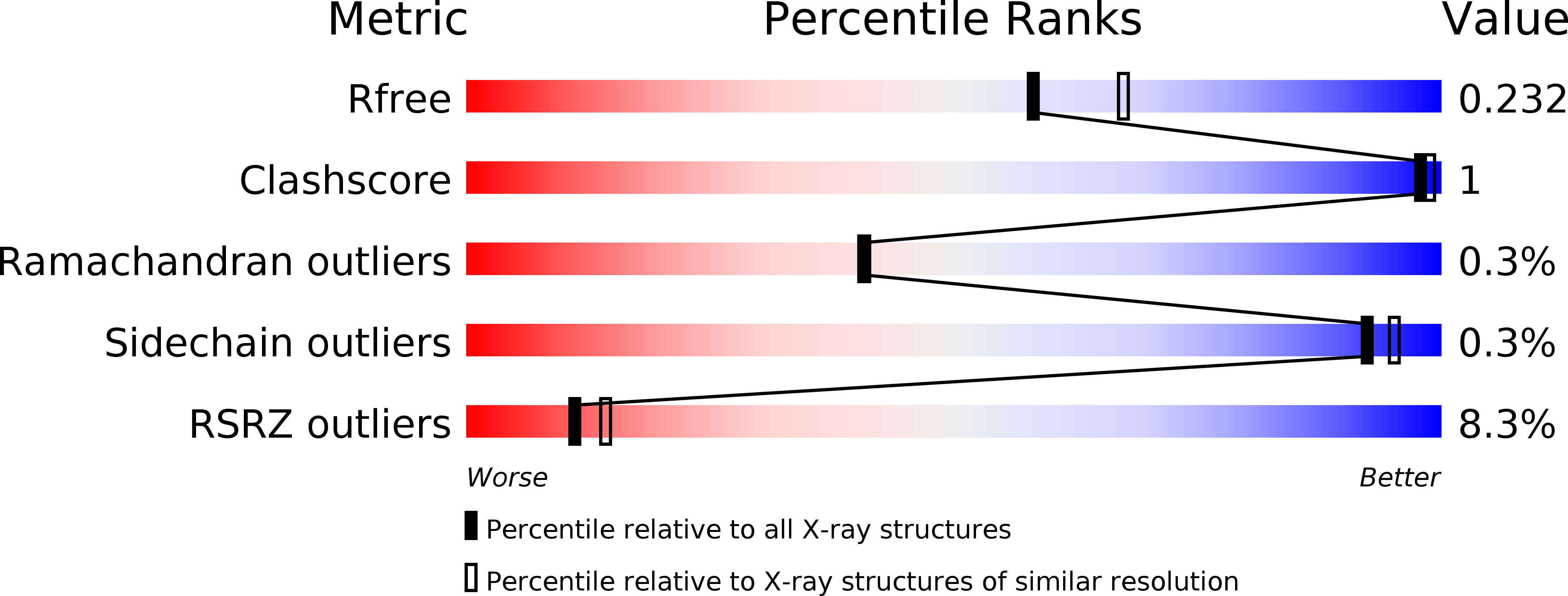
2.10 Å
R-Value Free:
0.23
R-Value Work:
0.19
R-Value Observed:
0.19
Space Group:
P 21 21 21
Macromolecular Entities
Structures with similar UniProt ID
Protein Blast
Polymer Type:polypeptide(L)
Molecule:VtrA Protein
Gene (Uniprot):VPA1332
Chain IDs:A, C, E
Chain Length:94
Number of Molecules:3
Biological Source:Vibrio parahaemolyticus serotype O3:K6 (strain RIMD 2210633)
Structures with similar UniProt ID
Protein Blast
Polymer Type:polypeptide(L)
Molecule:VtrC Protein
Gene (Uniprot):VPA1333
Chain IDs:B, D, F
Chain Length:144
Number of Molecules:3
Biological Source:Vibrio parahaemolyticus serotype O3:K6 (strain RIMD 2210633)
Primary Citation
Bile salt receptor complex activates a pathogenic type III secretion system.
Elife 5 ? ? (2016)
PMID: 27377244 DOI: 10.7554/eLife.15718

Abstact

Bile is an important component of the human gastrointestinal tract with an essential role in food absorption and antimicrobial activities. Enteric bacterial pathogens have developed strategies to sense bile as an environmental cue to regulate virulence genes during infection. We discovered that Vibrio parahaemolyticus VtrC, along with VtrA and VtrB, are required for activating the virulence type III secretion system 2 in response to bile salts. The VtrA/VtrC complex activates VtrB in the presence of bile salts. The crystal structure of the periplasmic domains of the VtrA/VtrC heterodimer reveals a β-barrel with a hydrophobic inner chamber. A co-crystal structure of VtrA/VtrC with bile salt, along with biophysical and mutational analysis, demonstrates that the hydrophobic chamber binds bile salts and activates the virulence network. As part of a family of conserved signaling receptors, VtrA/VtrC provides structural and functional insights into the evolutionarily conserved mechanism used by bacteria to sense their environment.

Legend

Protein

Chemical

Disease

Primary Citation of related structures
Feedback Form
Name
Email
Institute
Feedback